



Ukrainian forces used drones fitted with mesh radios as airborne relay nodes — “flying modems” — to guide missiles and strike drones onto the Kerch Strait Bridge without relying on Starshield, the military version of Elon Musk’s Starlink satellite network, according to the Financial Times, as reported by UAS Vision. The operation collapsed a road-span arch of the bridge, the most severe damage yet to the $3.5 billion crossing that links Russia to occupied Crimea, and it did so with primarily Ukrainian-developed or adapted technologies. The strikes, carried out over several days in mid-November, are the clearest demonstration yet that Ukraine can run long-range precision strikes without the satellite communications it once depended on — and the relay-drone detail, which rests on the Financial Times‘ sourcing, is the most significant tactical revelation of the operation.
The bridge matters because it is both a supply route and a symbol. Built to cement Russia’s claim over Crimea, opened in 2018, and personally crossed by President Vladimir Putin in a construction truck and later a Mercedes, the Kerch Strait Bridge carries road and rail traffic between Russia and the peninsula, and it has been a Ukrainian target since the full-scale invasion began. It was damaged by a truck bomb in October 2022 and by mines planted under its supports in 2025, and Russia repaired it both times. The November strikes are different: they brought down a steel arch of the road span, and engineering experts told The New York Times that repairs to the roadway alone could take two years. This article sets out what happened, how the relay network worked, why Starshield was avoided, and what the operation means for the drone war.
The Relay Network: Flying Modems

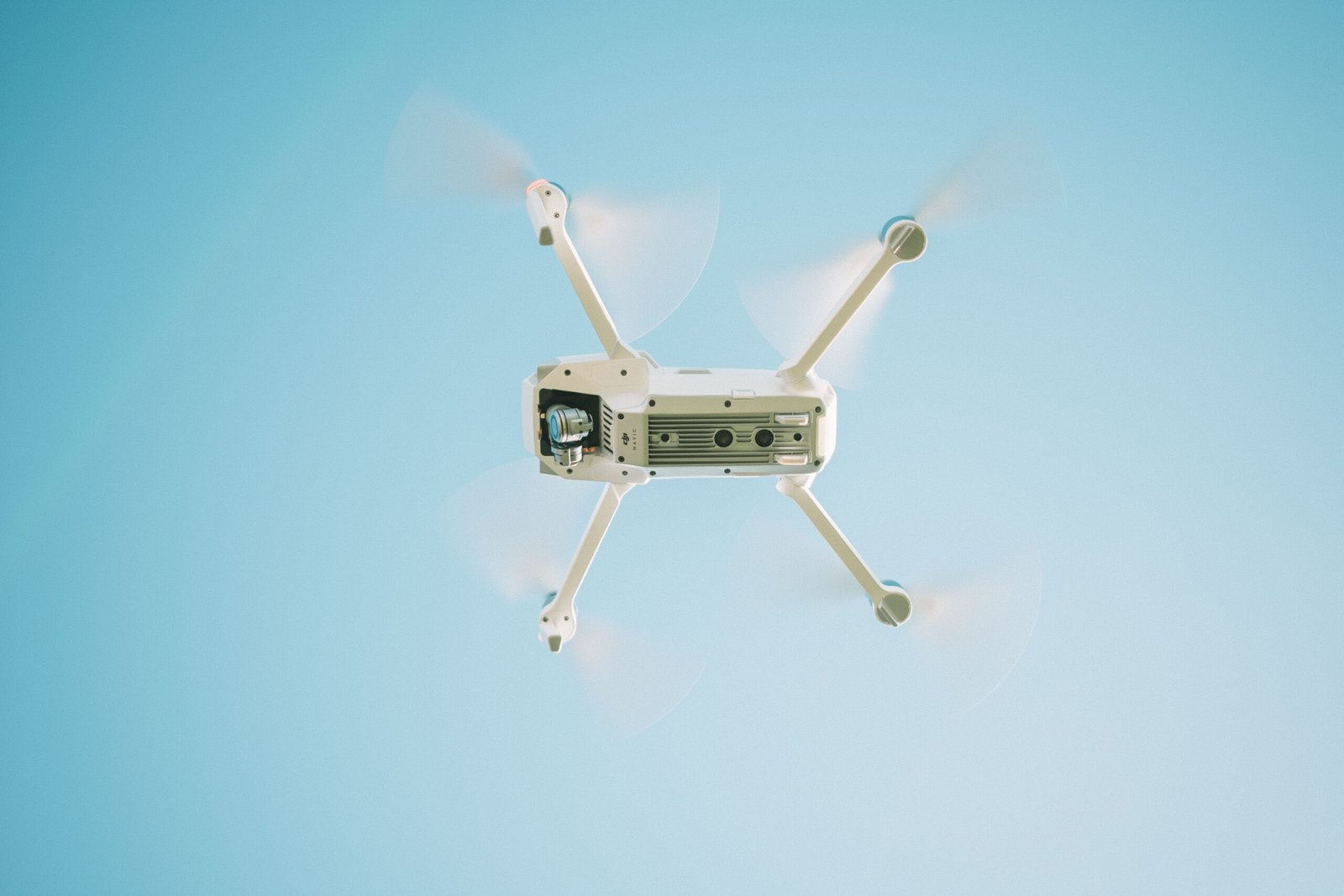
The core of the operation was a flying mesh network. Ukrainian forces used drones equipped with mesh radios to create an airborne communications network, with each networked drone acting as a relay node to extend the communication link between human operators and remotely piloted missiles and strike drones. The technique was adapted from a Russian battlefield innovation: Russia began using mesh-relay drones to support its own long-range drone and missile strikes on Ukrainian cities, and Ukraine has now adopted the same approach for its own use. During the Kerch Bridge attacks, the flying mesh network allowed operators located more than 250 kilometres away to remotely guide missiles and drones in evading Russian air defences while also homing in on the bridge’s weakest structural points, according to the Financial Times.
The relay drones pass signals from one to the next, keeping operators in contact with strike drones and missiles across hundreds of kilometres. Operators could change routes in real time, avoid Russian air defences and aim at weak points on the structure. Retired Lieutenant General Ihor Romanenko, discussing the strikes, said the operation did not rely on the Starshield satellite system and that control was maintained through relay drones — and that this applied not only to drone guidance but to the overall deployment of strike assets, according to 112.ua. “Starshield was not involved; control was executed through relay drones,” Romanenko said, describing the operation as a practical command model that operates independently of satellite-based systems.
The operation was prepared over several weeks and carried out in seven stages, according to President Volodymyr Zelenskyy, as reported in coverage of the Financial Times account. Ukrainian forces first carried out preparatory strikes that systematically destroyed or degraded the Russian air-defence weapons, radars and electronic warfare equipment arrayed to protect the bridge. Then, on the nights of 15 and 16 November, coordinated waves of Ukrainian drones and missiles caused enough damage to collapse one of the two steel arches supporting the bridge’s roadway, according to an Institute for the Study of War update cited in the reporting. Further strikes followed on 17 November, when Palianytsia drones targeted the roadway while Neptune missiles and Ruta and FP-5 drones struck the rail section, and on 19 November. Russian sources said several hundred Ukrainian drones first overwhelmed Russian air defences to pave the way for the remotely controlled missile strikes, which prominently included Ukraine’s homegrown Flamingo cruise missile.
Why Starshield Was Avoided

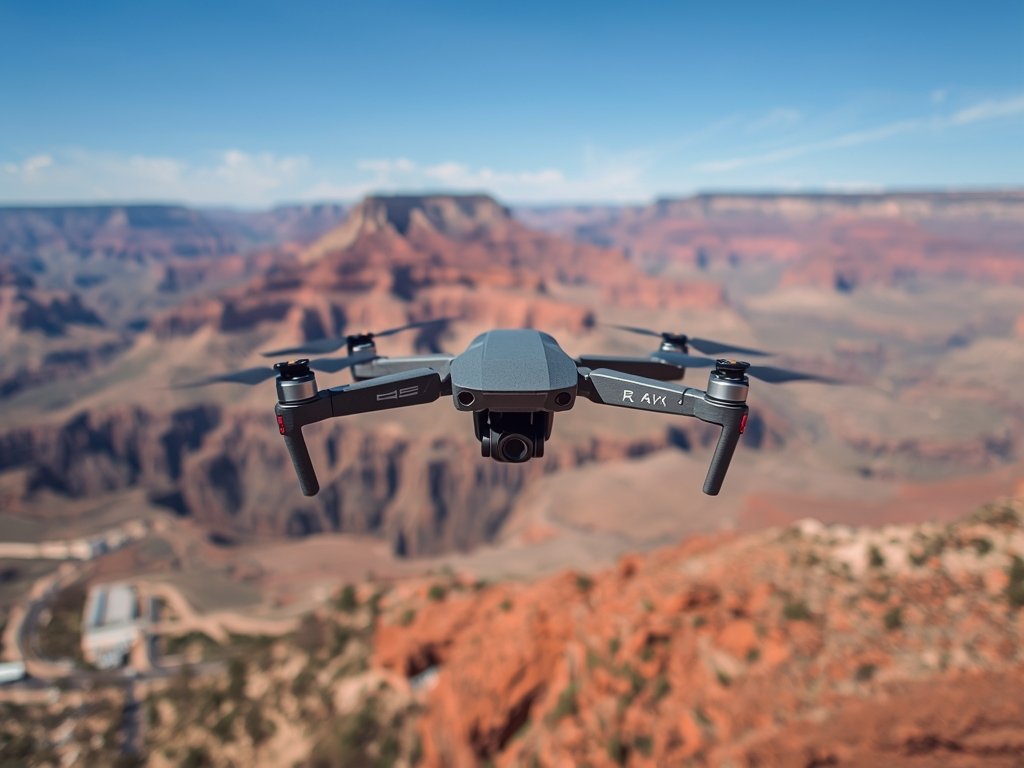
Ukrainian units involved in the operation deliberately avoided using Starshield, the military version of Musk’s Starlink satellite network, because of recent US restrictions that prevent Ukraine from using Starshield on drones or anything else travelling more than 100 miles per hour, the Financial Times reported. The speed limit matters because the missiles and strike drones used in a long-range attack travel far faster than 100 mph, and a control link that cuts out above that speed is useless for guiding them. President Zelenskyy said the latest US-imposed restrictions on Starshield have not yet been lifted, although SpaceX denied that the restrictions had returned. The competing accounts leave the policy status contested, but the bridge operation demonstrated an alternative communications method built largely around Ukrainian-developed or adapted technology.
The Starshield dispute has a history. Similar limits applied from mid-October until 24 October, and on 12 November Zelenskyy said Starshield terminals were being limited to 161 kilometres per hour (100 mph) along the front line and in occupied areas. Zelenskyy described the speed limit as interfering with some Ukrainian drone interceptor technologies designed to defend against Russian drones attacking Ukrainian cities and infrastructure. Kyiv says it received no explanation from the Pentagon, the White House or SpaceX for the limits. The Kerch operation is, in that light, not only a strike on a bridge but a demonstration that Ukraine can fight without the system — and a signal to Washington that restricting it does not stop Ukrainian operations, it only forces Ukraine to build its own alternatives.
That is the wider significance of the relay network. Ukraine is, by most accounts, the leading country in developing new battlefield uses of drones, and the Kerch operation shows it learning to fight without relying on Starlink — the system that carried much of its communications in the first years of the war. The relay drones are a Ukrainian adaptation of a Russian technique, built with Ukrainian-developed or adapted technologies, and they worked over a distance of more than 250 kilometres, against defended airspace, to hit a specific structural weakness. It is a capability that does not depend on any foreign provider’s permission, and that is precisely the point.
The Bridge and What Was Hit
The Kerch Strait Bridge was built as a physical link to cement Russia’s claim over Crimea, and Putin personally drove a construction truck across it to commemorate its opening in 2018. It is a $3.5 billion structure carrying a road and a railway across the Kerch Strait, which connects the Sea of Azov and the Black Sea, and it is the most direct supply route between Russia and the Crimean peninsula. The other overland supply route runs through highways in Russian-occupied southern Ukraine, and Ukrainian forces have already been striking that highway infrastructure and the supply trucks running along it.
The November strikes hit both the road and the rail sections. The road arch collapsed, and fallen debris from the collapsed arch may prevent large ship traffic from passing through the Kerch Strait, according to a Telegram channel owner based in Crimea, which would make it even more difficult for Russia to resupply the peninsula by sea. Ukrainian drones have previously struck dozens of Russian ships in the Sea of Azov. The railway portion also sustained significant damage, according to Romanenko’s account. The weapons used included Ukrainian-developed systems — Dovbush, Vendetta, Da Vinci, Sichen, MICH 2000, Ruta, Palianytsia, An-197 and FP-1 drones, FP-5 Flamingo cruise missiles and R-360 Neptune missiles — a list that shows how much of the operation was built on domestic Ukrainian technology rather than foreign-supplied systems.
What Happens to the Bridge Now
The bridge’s future prospects look much bleaker now than after the earlier attacks. It was initially constructed in two years, and engineering experts told The New York Times that repairs to the roadway could also take two years under normal circumstances — but they agreed that any damage to the bridge’s piers could extend that repair time, and that Russian repair efforts would be at risk from future Ukrainian missile and drone attacks. A bridge that takes two years to repair, and that can be hit again while it is being repaired, is a very different asset from one that can be patched in weeks. That is the strategic effect of the November strikes, and it is why the operation matters beyond the immediate damage.
What the Operation Shows About the Drone War
The Kerch operation shows three things about where the drone war is heading. The first is that the communications link is now as important as the weapon. A long-range strike is only as good as the link between the operator and the missile, and the side that controls that link controls the strike. Ukraine’s relay network is a decentralised, airborne link that does not depend on satellites, and it is much harder to jam or to switch off than a satellite service — because there is no single provider to pressure and no single frequency to block. The mesh approach, in which each drone relays for the next, is resilient by design: lose one node and the network routes around it.
The second is that battlefield innovation now flows in both directions. Russia pioneered the mesh-relay technique for its strikes on Ukrainian cities; Ukraine adopted it, adapted it, and used it against a target Russia considered well defended. The same pattern holds across the war: fibre-optic FPV drones, interceptor drones, long-range strike drones and now relay networks have all been copied, adapted and improved by both sides within months of their first appearance. Our guide to long-endurance military drone systems explains how the range and communications of uncrewed aircraft determine what they can do, and the Kerch operation is a case study in how a communications innovation can unlock a strike that would otherwise have been impossible.
The third is that Ukraine’s defence industry is maturing into something that can design and execute an operation of this complexity with its own technology. The Flamingo cruise missile, the Palianytsia and Ruta drones, the relay network itself — these are Ukrainian systems, built by Ukrainian companies, for Ukrainian purposes. That matters for the war, because it reduces Ukraine’s dependence on foreign suppliers and on foreign permission, and it matters for the drone industry, because the systems proven in Ukraine are the systems that will be sold, copied and countered around the world in the years ahead. The UK’s pledge of 1,000 long-range drones to Ukraine, covered in our report on the UK’s 1,000-drone package, is part of the same story: a war in which drones are the central weapon, and in which the ability to build them at home is a strategic asset.
What It Means for Drone Pilots and Buyers
For civilian drone pilots, the Kerch operation is a reminder that the technology in their hands and the technology on the battlefield are the same technology, separated only by intent. Mesh networking, long-range control links, autonomous navigation and precision guidance are all features that appear in civilian drones, and the relay-drone technique is, at its core, a mesh network carried by aircraft. The difference is one of purpose, not of engineering, and that dual-use reality is why drone regulation, export controls and airspace rules have become so contentious. Our guide to drone no-fly zones explained covers how restricted airspace works, and why military activity creates temporary restrictions that override normal flying permissions — a principle that applies with particular force around the Kerch Strait, where the airspace is a war zone in every sense.
For buyers, the operation is a signal about where drone technology is heading. Mesh networking and relay capability, once exotic military features, are becoming standard expectations for professional drones, and the companies that build them — including the Swedish interceptor now heading for tests in Ukraine, covered in our report on Sweden’s K200 drone interceptor — are designing for a world in which the control link is the decisive factor. A drone that can stay connected over hundreds of kilometres, through jamming and without satellites, is a drone that can do things a conventionally controlled aircraft cannot, and the Kerch operation is the proof of that claim.
For the defence world, the operation raises a question that will be debated for years: how do you defend a fixed, high-value target against an attack that can be guided in real time, from more than 250 kilometres away, by a network that routes around jamming and does not depend on any satellite? The Kerch Bridge was defended by air-defence weapons, radars and electronic warfare equipment, and the preparatory strikes degraded them before the main attack arrived. That sequence — degrade the defences, then strike the target through a resilient link — is a template, and it will be studied by every military that operates fixed infrastructure within range of an adversary’s drones.
What to watch next. The first thing to watch is the bridge itself: whether Russia can restore road and rail traffic, how long repairs take, and whether Ukrainian strikes continue against the repair effort. The second is the relay network: whether Ukraine uses it for further long-range strikes, and whether Russia adapts its own mesh-relay operations in response. The third is Starshield: whether the US restrictions are lifted, as Zelenskyy has asked, or remain in place — and whether Ukraine’s demonstrated ability to operate without it changes the political calculation in Washington. And the fourth is the wider pattern: the Kerch operation was one of several long-range Ukrainian drone operations in the same week, including the suspected strike on the Sparta II in the Gulf of Finland, and the question is whether the relay-drone capability marks a step-change in what Ukraine can hit, or a one-off demonstration against a single, well-known target.
Frequently Asked Questions
What are relay drones? Drones fitted with mesh radios that act as airborne relay nodes, passing control signals from one to the next to extend the communication link between operators and strike drones or missiles. In the Kerch Bridge operation, the relay network let operators more than 250 kilometres away guide weapons onto the bridge in real time.
Why did Ukraine avoid Starshield? According to the Financial Times, Ukrainian units deliberately avoided Starshield, the military version of Starlink, because of US restrictions that prevent Ukraine from using it on drones or anything else travelling more than 100 miles per hour. President Zelenskyy said the restrictions have not yet been lifted; SpaceX denied they had returned.
How badly was the Kerch Bridge damaged? A steel arch of the road span collapsed, and the railway section also sustained significant damage, according to the reporting. Engineering experts told The New York Times that roadway repairs could take two years, and damage to the piers could extend that further. Debris from the collapsed arch may also block large ship traffic through the Kerch Strait.
Is the relay-drone account confirmed? The underlying strikes on the bridge are confirmed, and a retired Ukrainian general has described the relay-drone control method on the record. The detailed account of the mesh network rests on the Financial Times‘ sourcing, as reported by UAS Vision and Ars Technica, and should be read as sourced reporting rather than an official Ukrainian statement.
What weapons were used? The operation used primarily Ukrainian-developed or adapted systems, including Flamingo cruise missiles, Neptune missiles, Palianytsia drones and Ruta drones, alongside relay drones carrying the mesh network.
Join Our Pilot Community
Connect with fellow drone enthusiasts, share your aerial shots, and get access to free PDF ebook guides.




