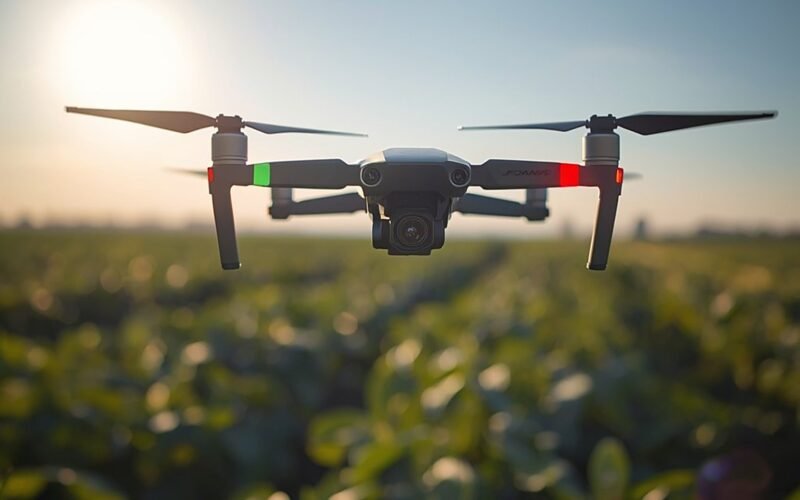
“Long endurance” means four different things in military aviation, and the honest numbers span from twenty hours to two months. This guide replaces our earlier hype with the actual classes: HALE aircraft like the RQ-4 Global Hawk that patrol for 30+ hours at the edge of the stratosphere, MALE workhorses like the MQ-9 Reaper (~27 hours), tactical systems like the ScanEagle that outlast a day from a ship’s deck, and solar HAPS platforms that measure flights in weeks. One correction up front: solar panels do not give conventional military drones “indefinite flight” — they power an entirely separate, featherweight class, explained below.

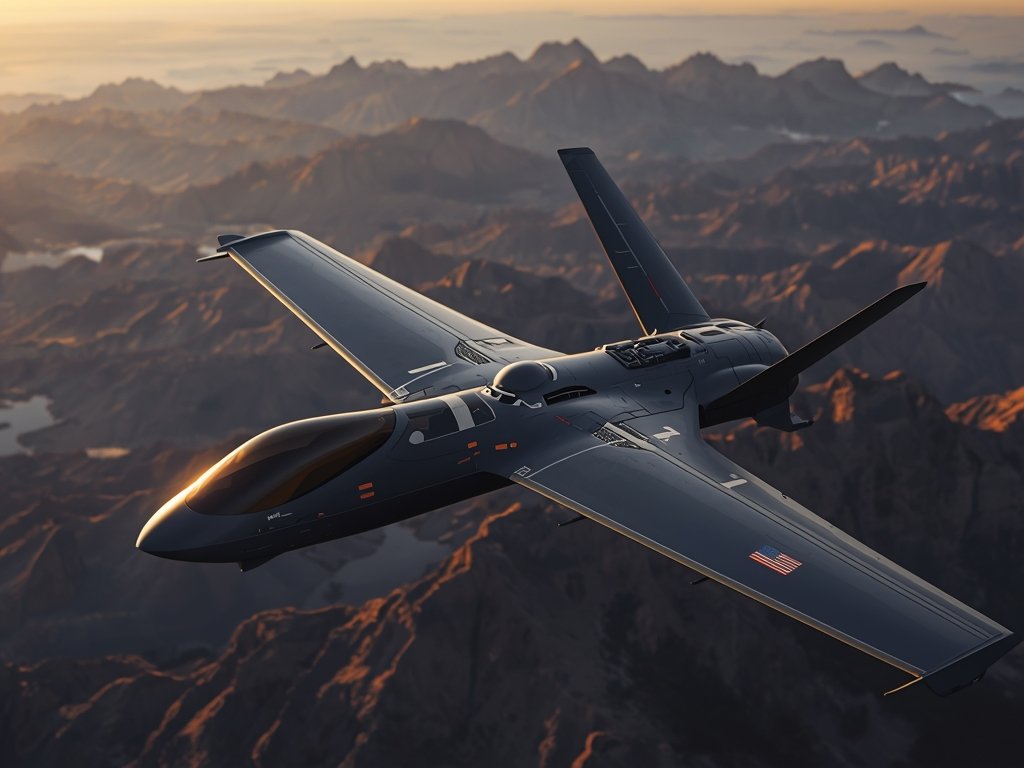
The Classes, With Real Numbers
HALE — high altitude, longest reach
The RQ-4 Global Hawk and its maritime sibling the MQ-4C Triton fly above 55,000 ft for 30+ hours, surveying enormous areas with radar and electro-optical sensors. Northrop Grumman’s HALE lineage is built around a simple exchange: altitude and patience instead of speed, with satellite links feeding analysts continents away.
MALE — the persistent workhorse
The MQ-9 Reaper class (General Atomics’ MQ-9 family) flies roughly 27 hours in surveillance configuration — less with external stores — at medium altitude. It’s the aircraft behind two decades of persistent ISR and strike operations, and the same airframe US Customs and Border Protection flies domestically.
Tactical long-endurance — small, shipborne, stubborn
Insitu’s ScanEagle trades size for persistence at unit level: 20+ hours from a catapult launcher and a skyhook recovery, no runway, organic to ships and expeditionary units. Endurance here serves the commander on the scene rather than the theatre.
HAPS — the solar stratospheric class
High-Altitude Pseudo-Satellites like Airbus’s Zephyr fly in the stratosphere on solar-charged batteries at the weight of a large suitcase spread over a 25-metre wing: flights are measured in weeks (a 2022 test flight exceeded two months). The payload is small and the weather window narrow — this class watches and relays; it does not haul. It is also fragile by design: a structure optimised for grams does not shrug off storms, which is why HAPS operations are planned around stratospheric weather seasons rather than sortie schedules.

The Enabling Technologies
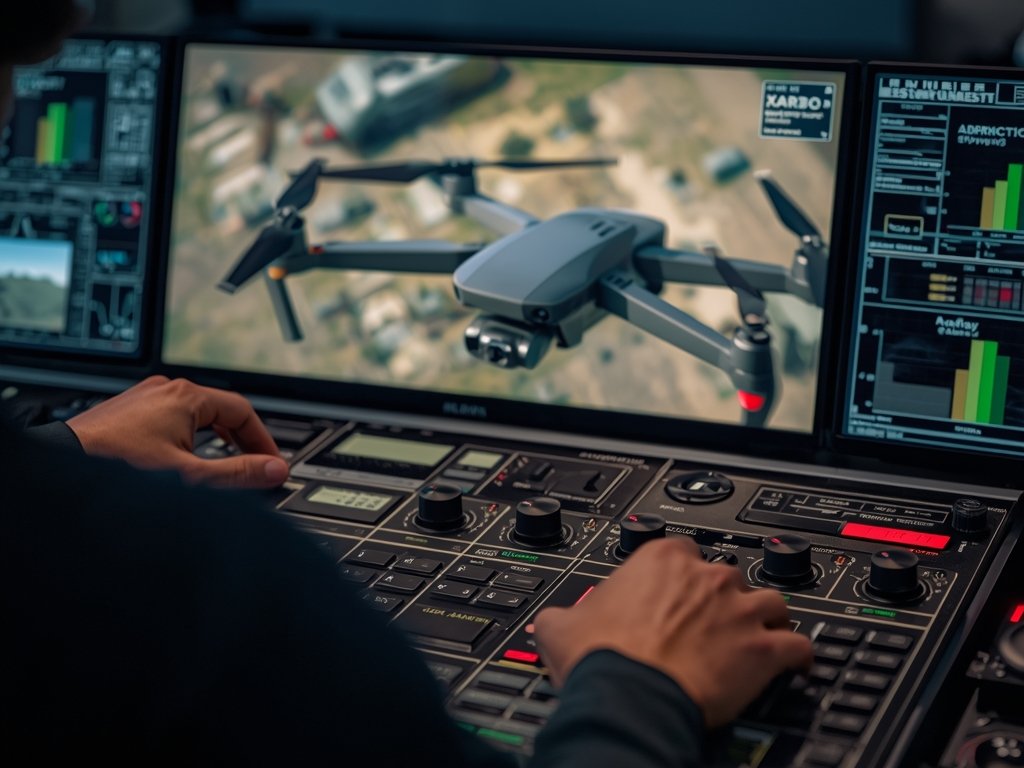
- Satellite control (BLOS): beyond-line-of-sight satellite links let crews in Nevada fly aircraft over other continents — with real latency, which is why automatic takeoff/landing and high onboard automation are endurance technologies too: the aircraft handles the twitchy moments itself.
- Efficient propulsion: turboprops and heavy-fuel piston engines chosen for economy over speed; every knot of cruise speed not demanded is fuel not burned.
- Aerodynamics of patience: long, straight, high-aspect-ratio wings — gliders’ geometry — because endurance is mostly a wing problem wearing a military uniform.
- Sense-and-avoid and airspace integration: the unglamorous tech deciding where these aircraft may routinely fly, especially domestically; detect-and-avoid maturity, not airframe hours, is the current frontier for routine operations.
- Alternative power at the small end: fuel cells and hydrogen concepts chase multi-hour endurance for tactical electric aircraft — real progress, narrower results than the headlines; batteries alone still cap small electric endurance near the hour mark.
A Short Timeline
- 1990s: the Predator emerges as an endurance ISR concept — persistence as the product, before it was a weapons platform.
- 2000s: satellite control matures, fleets scale, and the MQ-9 defines the MALE era; Global Hawk proves HALE at operational scale.
- 2010s: Triton takes HALE maritime; ScanEagle-class tactical endurance becomes standard shipboard equipment; Zephyr sets a 26-day solar record in 2018.
- 2020s: Zephyr-class flights stretch past two months; the strategic debate shifts to survivability and distributed persistence (see below).
Why Persistence Wins
- Staring beats sweeping. A sensor that watches one valley for 27 hours notices the one changed thing; a fast jet’s snapshots mostly document normality. Pattern-of-life intelligence is an endurance product.
- Orbit economics. Holding a continuous orbit with manned aircraft takes multiple airframes and crews cycling; one long-endurance UAS with rotating ground crews holds it alone — the maths that sold the concept.
- The honest cost: people. “Unmanned” is a cockpit description, not a staffing one. A single persistent orbit consumes multiple crews, analysts and maintainers around the clock — endurance in the air is purchased with manpower on the ground, a fact our autonomy guide explores from the automation side.
Endurance as Deterrence: Why Loiter Time Is a Signal
Endurance is usually discussed as a mission capability — how long an aircraft can watch, wait or strike. It is also a message, and the message is sent whether or not a weapon is ever used. An aircraft that can stay overhead for a day tells an adversary the sky above them is occupied, movement will be seen, and the watcher is not going away at the next fuel stop. That is deterrence by presence, and it is the reason the endurance numbers in this guide matter beyond the missions they enable: the MQ-9A Reaper stays airborne for over 27 hours, the extended-range MQ-9B for 34 hours, the RQ-4 Global Hawk for greater than 30 hours, and the MQ-4C Triton for 24 hours or more. Those are the manufacturers’ own published figures — the numbers an adversary reads too.
The signal works because persistence removes the gap that an adversary plans around. A short-endurance aircraft creates windows: it watches, leaves to refuel, and returns — and the gap between departure and return is when things move unseen. A long-endurance aircraft closes that gap, and the closure changes behaviour: convoys move less, launches wait, and the watched side spends its effort hiding rather than acting. That is the point the survivability debate in this guide touches from the other side — an aircraft that is always there is also always targetable — but the deterrence argument does not depend on the aircraft surviving an attack. It depends on the adversary believing it will be there tomorrow, and the day after that, which is a statement about logistics and fleet depth as much as about any single airframe.
The signal also travels to allies. A persistent presence over a partner’s territory is a visible commitment in a way a press release is not: the aircraft is there, and the orbit is flown every day. The same logic runs in reverse: a fleet that cannot sustain the orbit — too few aircraft, too few crews — sends the opposite signal, and the gap between the published figure and the sustained orbit rate is where it is read. The crews and logistics behind the orbit are covered in the iceberg section of this guide. An orbit that flies for a week is a statement; one that flies for a day and stops is a different one, and the difference is measured in crews and spares, not in hours on a data sheet.
There is a limit to what the signal can do. Deterrence by presence works against an adversary who can be deterred — a state, a militia with something to lose, a commander who weighs costs. It works less well against an adversary who does not care about being seen, or who has already decided to act. And it can mislead the operator too: the comfort of a permanent watch can become a substitute for a decision. The General Atomics MQ-9B page lists the 34-hour extended-range figure, and the Northrop Grumman Global Hawk page lists the greater-than-30-hour figure — both manufacturer-published, both checked in November 2026. Read them as the numbers the other side reads. Our surveying guide shows the same persistence logic in civilian work, our long-flight-time guide covers what endurance buys a commercial operator, and our Part 108 guide covers the rules that will decide how much of this persistence is allowed in American skies.
The Trade Triangle
Endurance, payload and survivability pull against each other. Fuel (or sunlight) is weight that isn’t sensors or armour; the slow, efficient wings that sip fuel make large targets; and the satellite link that enables global control is a dependency adversaries study. Every design in the classes above is a chosen corner of that triangle — which is why no single “best endurance drone” exists, and why spec-sheet hours without the payload and altitude attached are marketing, a reading skill that transfers directly to civilian range claims in our long-range guide. At the tactical end the triangle shrinks but never disappears: a small electric aircraft’s endurance is its battery, and its battery is weight its motors must lift — the same equation in its purest form.
Domestic Roles
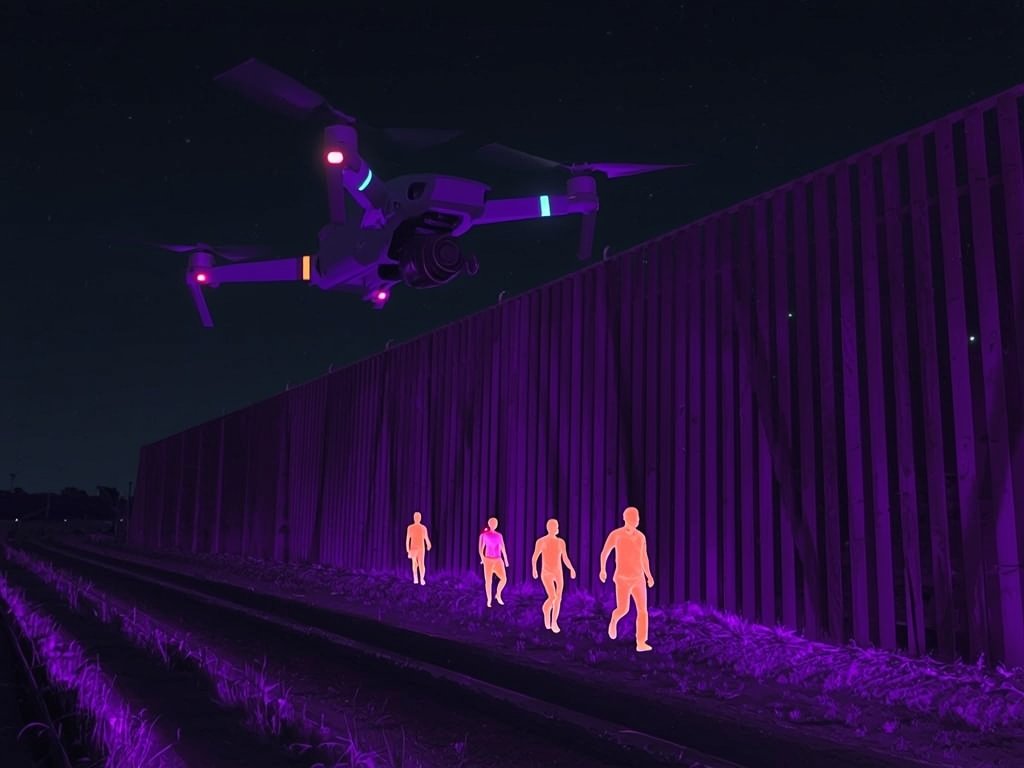
Inside the US, the long-endurance fleet’s emblematic mission is border and maritime surveillance — CBP’s MQ-9s flying long patrols in support of ground agents, the homeland counterpart of the theatre mission, and a close cousin of the civilian patrol doctrine in our security surveillance guide. Disaster response is the second standing role: after hurricanes and wildfires, persistent aircraft provide the wide-area damage picture that rotating smaller drones can’t sustain — wildfire infrared mapping through the night shift is the recurring proof — the same persistence logic, at dock scale, as the automated systems in our drone-in-a-box guide.


Reading an Endurance Claim: Five Questions
- At what payload? Surveillance-fit hours melt when stores, extra sensors or de-icing join the flight.
- At what altitude and profile? Loitering low is thirstier than cruising high; the brochure number assumes the kindest profile.
- With what reserves? Published endurance is often to dry tanks / flat batteries; operational planning lands with margins — hours you may not spend.
- In what weather? Headwinds, icing avoidance and storm detours tax endurance heavily; stratospheric solar aircraft plan seasons, not just sorties.
- Orbit or ferry? “Range” and “endurance on station” are different numbers — transit to a distant orbit eats the very hours the orbit needs.
The Survivability Debate
The open strategic question of the decade: large, slow, non-stealthy endurance aircraft were perfected in permissive skies, and modern air defences — as recent conflicts keep demonstrating — punish exactly those traits. The responses now in motion: push persistence higher and stealthier, distribute it across cheaper attritable aircraft, move the big aircraft to standoff ranges with longer-reaching sensors, and pair crewed jets with collaborative combat aircraft. Expect the class structure above to blur — endurance increasingly delivered by systems of aircraft rather than single marathon airframes.
When Persistence Isn’t the Answer
- Satellites see wider and answer to no weather at the airframe level — but revisit times leave gaps, clouds blind optical sensors, and tasking a satellite is not owning an orbit. Endurance drones exist precisely in the satellites’ gaps.
- Manned ISR aircraft bring self-defence, onboard judgement and diplomatic flexibility; they lose on cost-per-hour and crew endurance, which is the entire trade.
- Aerostats (tethered balloons) deliver the cheapest stare of all over fixed sites — and surrender to weather and geography; several famous programmes have risen and deflated on exactly this trade.
- Rotations of small drones win at short ranges and budgets: five modest aircraft cycling can fake persistence a single platform can’t — the civilian dock model, again, in uniform.
Crews, Maintenance, Logistics: The Iceberg
Persistence is a logistics programme wearing an aircraft costume. Sustaining one continuous orbit has historically been planned around roughly ten crew rotations, plus intelligence analysts consuming the feed and maintainers turning aircraft between sorties; satellite bandwidth is a finite, scheduled resource shared across a theatre; and the big classes need real runways and forward infrastructure. Flight hours also generate maintenance hours at ratios bean-counters know and brochures omit. None of this diminishes the concept — it explains why “buy a 30-hour drone” is never the actual decision, for an air force or anyone else: you’re buying the system that keeps hours aloft continuously, which is a different and larger purchase.
The Civilian Mirror
Commercial operators meet the same physics at smaller scale. A mapping or inspection business that needs all-day presence doesn’t find it in one heroic battery — it builds rotations: multiple aircraft, battery cycles, or a dock that removes humans from the loop entirely. The endurance questions in this guide (payload? reserves? weather? on-station versus transit?) are the same ones that separate honest commercial specs from brochure numbers, and they are exactly the discipline behind our battery-life guide‘s 70–80% rule. Scale changes; the trade triangle doesn’t.
FAQ
What is the maximum flight time of a long-endurance military drone?
By class: conventional HALE aircraft exceed 30 hours; MALE aircraft like the MQ-9 fly around 27 hours in surveillance fit; tactical systems exceed 20. The outright endurance records belong to solar HAPS — the Zephyr class has flown for weeks on sunlight and batteries. Always ask “at what payload and altitude” alongside any hours figure.
How are long-endurance drones used in border security?
US Customs and Border Protection operates MQ-9s on long patrols over land borders and maritime approaches, detecting and tracking activity and cueing ground agents to intercept — persistence applied to coverage no rota of manned aircraft could sustain economically.
What are the key advantages of long-endurance military drones?
Continuous presence (pattern-of-life intelligence), orbit economics versus manned rotations, no aircrew risk over hostile territory, and sensor dwell long enough to catch rare events. The costs: large ground crews, satellite-link dependence, and vulnerability in contested airspace.
How does the US military ensure the security of drone operations?
Layered measures: encrypted command links and video, anti-jam and alternative navigation for GPS-denied environments, rigorous lost-link procedures (aircraft are programmed to behave predictably if the link drops), and network/cyber hardening of the ground stations where the system’s real attack surface lives.
What is the future of long-endurance military drone technology?
Three converging lines: greater onboard autonomy (one operator supervising more aircraft), distributed persistence (many cheaper aircraft sharing one orbit), and stratospheric solar platforms maturing from experiment to infrastructure. The constant is the requirement itself — militaries will keep buying hours of stare; the airframes delivering them will keep changing.
Endurance figures are manufacturers’ published values for surveillance configurations; operational endurance varies with payload, weather and profile.
Join Our Pilot Community
Connect with fellow drone enthusiasts, share your aerial shots, and get access to free PDF ebook guides.