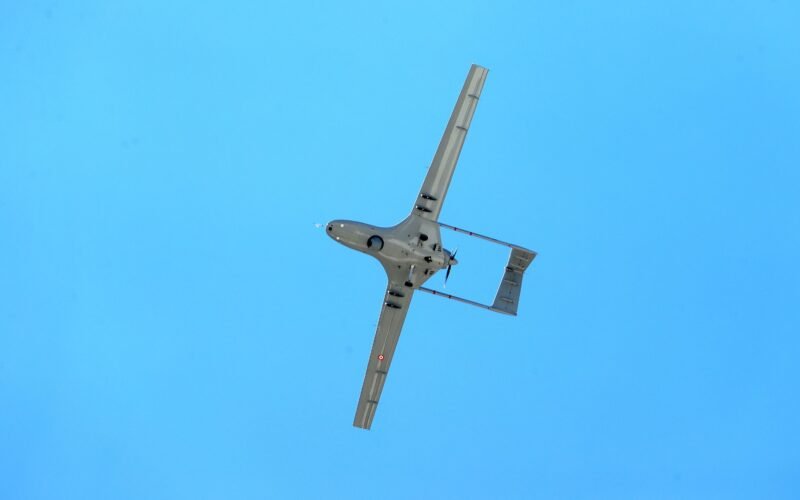
Three objects — probably two missiles and a jet-powered drone — violated Polish airspace overnight during a major Russian attack on Ukraine, according to Reuters. Poland’s Defence Minister, Władysław Kosiniak-Kamysz, said so at a press conference on 20 November, calling the incursion a provocation by Moscow. One confirmed Kh-101 cruise missile came down near the village of Nowy Lipowiec, about 50 km from the Ukrainian border, at about 05:40 GMT, while a second suspected missile fell near Rudnik nad Sanem and fragments believed to be from a jet-powered drone were found scattered across farmland near Mołodycz. No one was injured and no significant infrastructure was damaged in Poland, according to Polish authorities. The breach is the most serious airspace incident involving Poland since Russian drones entered Polish airspace in September 2025, and it came as Polish and allied fighters were already airborne and Patriot air-defence batteries were active.
The timing, according to Prime Minister Donald Tusk, was deliberate. Tusk called the incursion an intentional provocation, timed to coincide with the “Coalition of the Willing” military exercises — known as KOALICJA 26.2, running from 9 to 22 November with 11 countries taking part — at Nowa Dęba in south-eastern Poland. NATO Secretary-General Mark Rutte called the incident a “grave violation” and was due in Warsaw on Saturday. The scale of the Russian attack behind the breach was enormous: according to Lieutenant General Ireneusz Nowak, Russia launched 26 Kalibr cruise missiles, 72 Kh-101 missiles and 503 drones, while President Volodymyr Zelenskyy said the attack on Ukraine involved more than 400 drones and more than 110 missiles, including 27 ballistic missiles, killing at least eight civilians. This article sets out what is confirmed, what officials have described only as “probable”, and what remains unknown — because the distinction matters, and the early reporting left several of the most important questions unanswered.


What Happened Overnight in Eastern Poland
According to Reuters, the breach happened overnight on 19–20 November, during a large Russian attack on Ukraine. Polish operational command assessed 11 objects as threatening Polish airspace, and three of them crossed the border. The Defence Minister, Władysław Kosiniak-Kamysz, told a press conference that three objects — probably two missiles and a jet-powered drone — had violated Polish airspace, and he described the incursion as a provocation by Moscow. The wording matters: the minister’s own account used the word “probably”, and the identification of two of the three objects has not been confirmed. What is confirmed is that objects launched in the Russian attack crossed into Polish territory, and that Polish air defences and allied aircraft were already on alert when they did.
The response on the Polish side was immediate and visible. Polish and allied fighters — Polish F-16s and Swedish Gripens — were airborne, with Patriot air-defence batteries active, according to the reporting. Rzeszów-Jasionka airport, the main airport serving south-eastern Poland, suspended operations, and air traffic controllers were evacuated. The suspension of a civilian airport and the evacuation of its controllers show how seriously the Polish authorities treated the incursion in the moment, even though nothing was ultimately shot down and nothing on the ground was seriously damaged. For a region that has lived with the war next door for nearly four years, the sight of allied jets scrambling and an airport closing is a reminder that the border between a war zone and a NATO member state is, in airspace terms, a line on a map that a missile can cross in seconds.
The attack that produced the breach was one of the largest of the war. According to President Zelenskyy, Russia fired more than 400 drones and more than 110 missiles at Ukraine, including 27 ballistic missiles, killing at least eight civilians. The strikes hit power plants, substations and transmission lines, forcing Ukraine’s three operational nuclear plants to reduce generation, and emergency power outages were imposed in 11 regions. The scale of that attack is the context for the Polish incursion: the objects that crossed the border were part of a barrage of hundreds of weapons, and the Polish assessment of 11 objects threatening its airspace has to be read against that background. According to Lieutenant General Nowak, the Russian launch comprised 26 Kalibr cruise missiles, 72 Kh-101 missiles and 503 drones — a figure that differs slightly from Zelenskyy’s account of the attack on Ukraine, reflecting the different ways the two sides count and report launches.
The Missile That Came Down Near Nowy Lipowiec
The one object whose identity and impact point are confirmed is a Kh-101 cruise missile that came down near Nowy Lipowiec, about 50 km from the Ukrainian border, at about 05:40 GMT. According to Reuters, the missile was about seven metres long, and local residents saw black smoke and what the local mayor, Andrzej Borowiec, described as a “mushroom cloud”. The missile’s fall was the most concrete event of the night: a large, identifiable weapon, in a specific place, at a specific time, seen by people on the ground. It is also the object about which the most is known, and it is worth being precise about it, because the other two objects are described in much vaguer terms.
According to SOFREP, citing Lieutenant General Ireneusz Nowak, a Swedish Gripen fighter closed on the Kh-101 as it approached Polish airspace, but poor weather denied the pilot visual identification, and nobody fired. That detail is important, because it is the closest the night came to an interception, and it explains why a missile that was tracked and approached was nevertheless allowed to fly on and crash. The Gripen pilot could not see the object clearly enough in the weather conditions to confirm what it was, and without that confirmation no shot was taken. It is a reminder that air defence is not simply a matter of having fighters in the air: identification, weather, rules of engagement and the risk of firing at an object that might not be what it seems all have to be resolved in minutes, in the dark, in bad weather.
Nowy Lipowiec is about 50 km from the border, which means the missile flew a considerable distance inside Polish territory before it came down. That distance raises questions that have not yet been answered in the public reporting: where exactly the missile was first detected, how long it was tracked, and at what point the decision was made — or not made — to attempt an interception. None of those questions has an established answer in the statements released on 20 November, and it would be wrong to fill the gap with speculation. What can be said is that the missile’s impact point, the time of its fall and the absence of injuries or significant damage are all confirmed by Polish authorities, and that the weapon has been identified as a Kh-101, a Russian air-launched cruise missile that has been used extensively against Ukraine throughout the war.
The Second Missile and the Jet-Powered Drone
The other two objects are described in the official accounts with much less certainty, and the uncertainty should be carried through into any reporting of them. According to the Defence Minister’s account, a second suspected missile fell near Rudnik nad Sanem, and fragments believed to be from a jet-powered drone were found scattered across farmland near Mołodycz. Both descriptions carry qualifiers — “suspected” and “believed to be” — and neither identification has been confirmed. The second object is described as a missile only on the basis of probability, and the third as a jet-powered drone only on the basis of fragments found on farmland. Until Polish investigators publish a fuller account of what was recovered, both identifications should be treated as the current assessment of officials, not as established fact.
The jet-powered drone is the most interesting of the three objects for readers of this site, because it points to a change in the weapons being used against Ukraine. Jet-powered one-way attack drones fly faster and further than the propeller-driven systems that have dominated the war so far, and they are harder to intercept because they cross defended airspace more quickly and at higher speed. The fragments found near Mołodycz are, according to the official account, believed to be from such a drone — but no type has been named, no manufacturer has been identified, and no photographs of the wreckage have been published in the reporting available on 20 November. Our guide to long-endurance military drone systems explains how jet propulsion changes the range, speed and interception problem for uncrewed aircraft, and why a jet-powered drone is a different air-defence challenge from a slow propeller drone.
The geography of the three impact points — Nowy Lipowiec, Rudnik nad Sanem and Mołodycz — also matters. All three are in south-eastern Poland, near the Ukrainian border, and all three are consistent with objects that were launched at targets in western Ukraine and flew on, or were deflected, across the border. That pattern is consistent with what happened in September 2025, when Russian drones entered Polish airspace during an attack on Ukraine, and it is consistent with the Polish operational command’s assessment that 11 objects threatened Polish airspace, of which three crossed. It does not, on its own, prove intent — and intent is precisely the question on which the Polish Prime Minister and the Defence Minister have given an assessment that has not been independently established.
Why the Objects Were Not Shot Down
The question most people asked on 20 November was the obvious one: if Polish and allied fighters were airborne and Patriot batteries were active, why was nothing shot down? There is no established answer to that question in the statements released on 20 November, and it would be wrong to present any explanation as fact. What is known is that a Swedish Gripen closed on the Kh-101 but poor weather denied visual identification, according to SOFREP, citing Lieutenant General Nowak, and that nobody fired. Beyond that single detail, the reasons the objects were not intercepted have not been publicly established — not by the Polish government, not by NATO, and not by the reporting available so far.
There are, however, several factors that make interception of this kind of threat genuinely difficult, and they are worth explaining because they are often missing from public debate. The first is identification: a fighter pilot or a missile battery must be sure what an object is before firing, and in poor weather, at night, with a fast-moving target, that certainty is hard to obtain. The second is time: a cruise missile or a jet-powered drone crosses the border and reaches its impact point in minutes, leaving a narrow window in which to detect, track, identify, decide and fire. The third is the consequence of a miss or a wrong identification: a missile fired at an object over populated territory has to go somewhere, and the debris of an intercepted weapon falls on whoever is below. None of these factors is, on its own, an explanation of what happened on 20 November — but together they explain why having fighters airborne and batteries active does not guarantee an interception.
The comparison with September 2025 is instructive, and it is also limited. In September, Russian drones entered Polish airspace and some were shot down by Polish and allied aircraft — the first time NATO aircraft had engaged Russian assets over allied territory. On 20 November, by contrast, nothing was fired. The difference may reflect the type of objects involved — cruise missiles and a jet-powered drone are faster and harder to engage than slow propeller drones — or the weather, or the rules of engagement in force on the night, or the time available. All of those are possibilities, not findings, and the Polish authorities have not said which of them applied. What is certain is that the absence of an interception will be one of the first questions put to Polish and NATO officials in the days ahead, and that the answer, when it comes, will matter for how the alliance calibrates its air defences on its eastern border.
NATO, Article 4 and the Question of Article 5
NATO’s collective defence clause, Article 5, is not triggered automatically by an incident of this kind. It is a political decision that all members must agree to, and no such decision has been taken or proposed on the basis of the 20 November incursion. That point is worth stating plainly, because early commentary on incidents of this kind often assumes that any attack on a NATO member’s territory automatically invokes the alliance’s collective defence. It does not. Article 5 has been invoked once in NATO’s history, after the attacks of 11 September 2001, and the threshold for invoking it is a political judgement by the North Atlantic Council, not a mechanical consequence of a border crossing.
Poland also has the Article 4 option: the right to call emergency consultations with its allies when it considers its territorial integrity, political independence or security to be threatened. Poland used Article 4 last year, after the September 2025 drone incursion, and the option is available again now. Whether Poland has formally invoked Article 4 in response to the 20 November incident is not established in the statements released on 20 November, and it should not be assumed. NATO Secretary-General Mark Rutte called the incident a “grave violation” and was due in Warsaw on Saturday, which signals that the alliance is treating it seriously at the highest level — but a statement of concern and a visit are not the same as a formal invocation of Article 4, and the distinction matters.
The political framing from Warsaw has been unambiguous. Prime Minister Donald Tusk called the incursion an intentional provocation, timed to coincide with the Coalition of the Willing exercises at Nowa Dęba — KOALICJA 26.2, running from 9 to 22 November, with 11 countries taking part. That assessment should be reported as what it is: the Prime Minister’s judgement, not an independently established fact. Whether the timing was deliberate, whether the objects were aimed at Polish territory or strayed across the border during an attack on Ukraine, and whether Moscow intended to test NATO’s response are all questions that cannot be answered from the information released on 20 November. The context for the timing claim is worth noting, however: according to the reporting, the incursion coincided with Ukrainian strikes on the Kerch Bridge earlier in the week, and with President Putin vowing retaliation — a sequence of events that makes the question of intent genuinely contested, and genuinely important.
What It Means for Drone Pilots and Airspace Rules
For civilian drone pilots, the immediate practical consequence of the incursion is a reminder that airspace over and near a conflict zone is managed by the military, and that civilian operations are the first thing to be suspended when that management is tested. Rzeszów-Jasionka airport suspended operations and its air traffic controllers were evacuated, and while that suspension concerned manned aviation, it illustrates a principle that applies to drones as well: when air defences are active, the sky is not a place for recreational flying. Our guide to drone no-fly zones explained covers how restricted and prohibited airspace works, and why military activity, exercises and air-defence operations create temporary restrictions that override normal flying permissions.
The longer-term significance is about the weapons themselves. A jet-powered one-way attack drone is a different category of threat from the propeller-driven drones that have dominated this war, and the fragments found near Mołodycz — if they are confirmed to be from such a drone — would show that Russia is using faster, longer-range uncrewed systems in attacks on Ukraine, with the attendant risk that they cross into neighbouring states. For the drone industry, the incident is also a data point in a wider shift: the war in Ukraine has become the testing ground for uncrewed systems of every kind, and the systems proven there are being adopted, copied and countered by militaries around the world. Our coverage of Russia’s Lancet drones in Mali shows how Russian uncrewed systems are being exported and used far beyond Ukraine, and the same diffusion can be expected for jet-powered attack drones.
The incident also matters for the politics of drone supply to Ukraine, which has accelerated sharply in recent days. On 19 November, the United Kingdom pledged 1,000 long-range drones to Ukraine in a £260 million package, announced at the Coalition of the Willing meeting in Berlin — the same grouping whose exercises at Nowa Dęba the Polish Prime Minister says the Russian incursion was timed to coincide with. Our report on the UK’s 1,000-drone pledge to Ukraine sets out the scale of that commitment and what the drones are intended to do. The Polish incursion and the British pledge, announced within a day of each other, are two sides of the same story: a war in which drones have become the central weapon, and in which the airspace of neighbouring states is no longer insulated from it.
For civilian pilots in Poland and elsewhere in eastern Europe, the practical advice is simple and does not depend on how the political questions are resolved. Check the airspace before every flight, and expect temporary restrictions around military exercises, air-defence activity and border regions. Do not fly near airports that have suspended operations, and do not assume that a restriction that was not there yesterday will not be there today. The rules that govern civilian drone flying — visual line of sight, altitude limits, registration and no-fly zones — are designed for normal conditions, and an incident like this one is a reminder that conditions near a war zone are not normal. The AP report on the incursion is the second of the two primary sources for this article, and it is worth reading alongside the Reuters account for the fullest picture of what happened and what was said.
What to watch next. Several things will clarify the picture in the coming days, and they are worth watching in order. The first is the Polish investigation of the wreckage: the fragments found near Mołodycz and the remains of the missile near Nowy Lipowiec will, if they are identified and described publicly, settle the question of what the second and third objects were. The second is the question of Article 4: whether Poland formally calls for emergency consultations with its allies, as it did last year, will signal how Warsaw wants the alliance to treat the incident. The third is the visit of NATO Secretary-General Mark Rutte to Warsaw on Saturday, and whatever statement follows it — a joint statement from Rutte and the Polish government would carry more weight than the separate statements released on 20 November.
The fourth thing to watch is the explanation, if one is given, of why nothing was intercepted. The Polish operational command and the allied air forces involved will face detailed questions about detection, identification, weather and rules of engagement, and the credibility of the alliance’s eastern air defences will depend in part on the quality of the answers. The fifth is the Russian response: Moscow has not, in the reporting available on 20 November, admitted or explained the incursion, and whether it acknowledges it, denies it or ignores it will shape how the incident is understood. And the sixth is the Ukrainian situation that produced the attack in the first place: emergency outages in 11 regions, three nuclear plants reducing generation, and at least eight civilians killed are the human and infrastructural cost of the barrage, and the next Russian attack will test whether the pattern of 20 November — a massive strike on Ukraine, with objects crossing into Poland — repeats.
For now, the confirmed facts are these: three objects crossed into Polish airspace; one was a Kh-101 cruise missile that fell near Nowy Lipowiec at about 05:40 GMT; no one was injured and no significant infrastructure was damaged; Polish and allied fighters were airborne and Patriot batteries were active; and nothing was shot down. Everything else — the identity of the second and third objects, the intention behind the incursion, the reasons for the absence of an interception, and the alliance’s formal response — is either an official assessment or an open question. That is not a failure of reporting. It is the honest state of knowledge one day after the event, and it is the state of knowledge this article has tried to preserve rather than paper over.
Frequently Asked Questions
What happened in Poland on 20 November? According to Reuters, three objects — probably two missiles and a jet-powered drone — violated Polish airspace overnight during a major Russian attack on Ukraine. One confirmed Kh-101 cruise missile came down near Nowy Lipowiec at about 05:40 GMT. No one was injured and no significant infrastructure was damaged in Poland, according to Polish authorities.
Was the incursion deliberate? That has not been established as a fact. Prime Minister Donald Tusk called it an intentional provocation, timed to coincide with the Coalition of the Willing exercises at Nowa Dęba, but that is his assessment, not an independently verified finding. Whether the objects were aimed at Polish territory or strayed across the border during an attack on Ukraine remains unconfirmed.
Why was nothing shot down? The reason has not been established in the statements released on 20 November. What is known is that a Swedish Gripen closed on the Kh-101 but poor weather denied visual identification, according to SOFREP, citing Lieutenant General Ireneusz Nowak, and nobody fired. Identification, weather, time and rules of engagement all affect interception decisions, but which of them applied on the night has not been publicly confirmed.
Does this trigger NATO Article 5? No — Article 5 is not triggered automatically. It is a political decision that all NATO members must agree to, and no such decision has been taken. Poland also has the Article 4 option of calling emergency consultations, which it used last year, but whether it has formally invoked Article 4 over this incident is not established in the 20 November statements.
Has this happened before? Yes. Russian drones entered Polish airspace in September 2025 during an attack on Ukraine, and some were shot down by Polish and allied aircraft. The 20 November incident differs in that the objects included cruise missiles and, probably, a jet-powered drone, and nothing was intercepted.
Join Our Pilot Community
Connect with fellow drone enthusiasts, share your aerial shots, and get access to free PDF ebook guides.