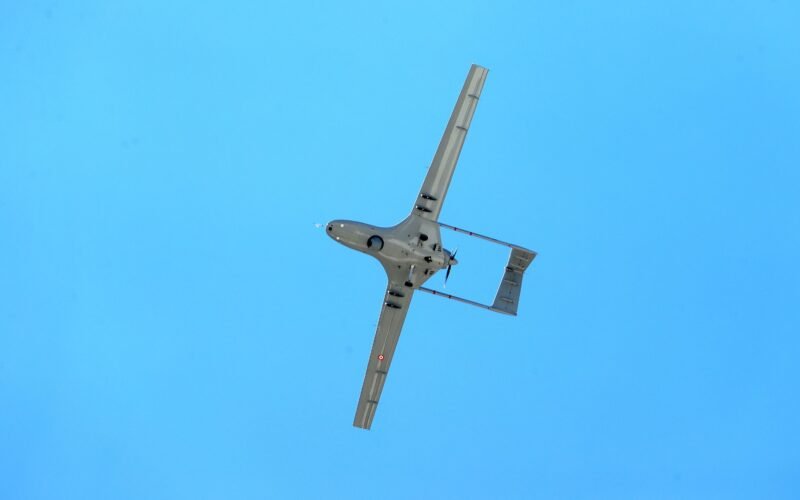
Ukrainian drones attacked industrial facilities in the Russian city of Syzran overnight on 24–25 November, and one person was killed in a Ukrainian drone strike on the regional capital Samara, local authorities said on Wednesday 25 November, according to Reuters. Monitoring channels reported that Ukrainian forces struck two Russian oil refineries in the attack, setting the sites ablaze, according to EuropeSays. The two refineries named in the reports are the Syzran Oil Refinery and the Kuibyshev Oil Refinery, both in Samara Oblast on the Volga river, about 100 kilometres apart and roughly 800 kilometres from Ukraine’s border with Russia.
One part of this story is unverified, and it matters. According to unverified reports on social media, at least two of the three major oil refineries hosted by Syzran and Samara were attacked, Reuters reported — but Reuters said it could not independently verify that. The refinery targets, the fires reported at the sites and the scale of any damage all rest on monitoring channels and social media footage, not on confirmed official statements. This article reports what the sources say, attributes every claim to its source, and marks clearly where the reporting is unverified. Nothing here should be read as confirmed fact where the sources themselves say it is not.
This is a new attack on different refineries from the strikes reported the previous night. Yesterday’s story on this site covered yesterday’s refinery strikes at Perm and Novoshakhtinsk, which took place on the night of 23–24 November. The strikes reported here happened the following night, 24–25 November, and hit Syzran and Kuibyshev in Samara Oblast — a different night and different targets. The two stories must not be confused: the dates, the refineries and the casualty figures are different in each case.
The attack also came on the same night as a large Russian drone attack on Ukraine, which this site covered separately: Russia’s 96-drone attack the night before was the previous night’s figure, and the new night brought a fresh wave. The back-and-forth of overnight drone strikes in both directions is now a nightly feature of the war, and the Samara attack is the latest Ukrainian reply in that exchange. The rest of this article sets out what happened, what the sources actually confirm, and what it means.
What Happened Overnight in Samara Oblast
Industrial facilities in the city of Syzran, in Russia’s Samara region, came under Ukrainian drone attack overnight, and one person was killed in a Ukrainian drone strike on the regional capital Samara, local authorities said on Wednesday 25 November, Reuters reported. The report was filed on 25 November and carried the Reuters byline. Syzran is a city in Samara Oblast, a region on the Volga river in western Russia, and Samara is the regional capital. The attack took place during the night of 24–25 November, the same overnight window in which Russia launched its own large drone attack on Ukraine.
Ukrainian forces struck two Russian oil refineries, setting the sites ablaze in a massive attack overnight on 25 November, monitoring channels reported, according to EuropeSays. The EuropeSays report, published at 01:40 UTC on 25 November, said the Syzran Oil Refinery was struck and a fire broke out in the plant’s vicinity, according to Ukrainian monitoring channel Exilenova Plus. The Kuibyshev Oil Refinery was also targeted, with eyewitnesses sharing video footage of air defences operating as air raid sirens sounded, and local residents later sharing footage of a large fire reportedly burning at the Kuibyshev refinery. Each of those details comes from monitoring channels and eyewitness footage, not from an official confirmation.
The two refineries are about 100 kilometres (62 miles) apart in Samara Oblast, approximately 800 kilometres (500 miles) from Ukraine’s border with Russia, according to EuropeSays. That distance is the single most important geographical fact in the story: it places the targets deep inside Russia, far from the front line, and it means the drones that reached them had to fly a long way over Russian territory. The reports do not say what type of drone was used, and this article does not guess. No drone type is attributed in either of the two sources used here.
The Samara regional governor, Vyacheslav Fedorishchev, said on social media that local air defence forces had downed 145 Ukrainian drones overnight, causing power outages, Reuters reported. That figure is the governor’s own claim, made on social media, and it is attributed to him here. It is a large number, and it sits alongside the reports of fires at the refineries — the two claims are not contradictory in the sources, because a large attack can both lose many drones to air defences and still get some through. But the 145 figure has not been independently verified, and neither has the claim that fires broke out at both refineries.
The Two Refineries: What the Reports Say — and What They Do Not


Syzran and Samara, located on the Volga river, host three major oil refineries, Reuters reported. According to unverified reports on social media, at least two of them, the Syzran and Kuibyshev oil refineries, were attacked. Reuters could not independently verify that. That sentence is the honest core of the story: the refinery targets are named in social media reports, and the world’s largest news agency, reporting the same night, said it could not confirm them independently. Any report that states the refinery strikes as confirmed fact is going further than Reuters did.
What EuropeSays reported, citing monitoring channels, is more specific. The Syzran Oil Refinery was struck, and a fire broke out in the plant’s vicinity, according to Ukrainian monitoring channel Exilenova Plus. The Kuibyshev Oil Refinery was also targeted, with eyewitnesses sharing video footage of air defences operating as air raid sirens sounded. Afterwards, local residents shared footage of a large fire reportedly burning at the Kuibyshev refinery. The words “reportedly” and “according to” do real work here: the footage exists, according to the monitoring channels, but the footage itself has not been independently authenticated in the sources used for this article, and the extent of any damage at either refinery is not stated.
What is not in the sources matters as much as what is. Neither source gives the capacity of either refinery, the extent of any damage to individual units, the type of drone used, or the route the drones took. Neither source says how many drones reached each refinery, how long any fire burned, or whether either refinery stopped operating. This article omits all of those details, because they are not in the two sources. A reader who wants the damage assessment will have to wait for satellite imagery or official statements that have not yet appeared in the sources used here.
The one casualty figure in the story is also narrowly sourced. One person was killed in a Ukrainian drone strike on the regional capital Samara, local authorities said on Wednesday, according to Reuters. The report does not name the person, say where in Samara the strike happened, or say whether anyone else was injured. That is the whole of the casualty information in the sources. It should not be expanded, and it should not be combined with casualty figures from other nights or other attacks.
Samara’s Air Defences and the Governor’s Warning
Governor Fedorishchev’s statement is the only official Russian account in the sources, and it is worth reading in full because it says two different things at once. He said on social media that local air defence forces had downed 145 Ukrainian drones overnight, causing power outages, Reuters reported. The power outages are part of his own account: the attack, in his telling, was largely defeated in the air, but still caused disruption on the ground. That combination — a claimed high interception count alongside reported fires and outages — is a pattern seen in many overnight attacks on both sides of this war, and it is a reminder that interception figures and damage reports describe different parts of the same night.
The governor also used the statement to warn residents not to share images of the aftermath. He wrote on VKontakte, Russia’s equivalent of Facebook: “There are consequences ‘on the ground’ that you yourselves can see. But let me remind you that you must not play into the enemy’s hands. Do not publish any photos or videos showing the aftermath of the attack.” That warning is itself evidence of something: the governor acknowledged consequences on the ground that residents could see for themselves, while asking them not to publish pictures of it. The quote is reported by Reuters, and it is reproduced here as Reuters reported it.
The warning also explains, in part, why the refinery strikes remain unverified. When a regional governor publicly asks residents not to publish photos or videos of the aftermath, the flow of open-source evidence slows, and the reports that do circulate come through monitoring channels and social media accounts whose material cannot always be checked. That does not mean the reports are wrong. It means the standard of evidence for this story is lower than it would be for an attack in a place where journalists and residents can freely publish what they see, and a careful reader should hold that in mind.
The air raid sirens reported by eyewitnesses at Kuibyshev add another detail. According to EuropeSays, eyewitnesses shared video footage of air defences operating as air raid sirens sounded. The sirens and the air defence fire are consistent with a large drone attack being engaged over the city, and they are consistent with the governor’s claim that 145 drones were downed overnight. But consistency is not confirmation: sirens sound when drones are detected, whether or not they are all shot down, and footage of air defences firing does not show what the defences hit.
Why Ukraine Hits Russian Refineries


Ukraine regularly strikes military targets deep within Russia and occupied territories in an effort to diminish Moscow’s ability to continue waging its war, according to EuropeSays. That sentence, from the EuropeSays report, is the stated logic of the campaign: refineries are not struck at random, but as part of a sustained effort to reduce the fuel and revenue that support Russia’s war effort. The Syzran and Kuibyshev refineries, if they were indeed hit, would fit that pattern — they are industrial facilities a long way from the front, struck by drones that flew deep into Russian airspace.
The timing also fits a pattern Reuters described. Ukrainian strikes on Russian oil refineries subsided somewhat after US President Donald Trump’s mid-October declaration of an energy ceasefire, Reuters reported. But they have picked up again sharply since the end of last month. That is a direct quote of the trend as Reuters reported it: a lull after the mid-October declaration, followed by a sharp resumption in the last few weeks. The Syzran and Kuibyshev attack is part of that resumed campaign, and it follows the previous night’s strikes at Perm and Novoshakhtinsk, which this site covered yesterday.
Russian President Vladimir Putin pledged retaliation for the Ukrainian strikes on Tuesday, Reuters reported. That pledge was made on 24 November, the day before the Syzran and Kuibyshev attack was reported, and it was made in response to the refinery strikes that were already under way. The pledge and the new attack are now part of the same cycle: Ukrainian strikes on Russian energy infrastructure, a Russian promise of retaliation, and then further Ukrainian strikes. Whether the retaliation takes the form of more drone attacks on Ukrainian cities, strikes on energy infrastructure, or something else is not stated in the sources, and this article does not speculate.
For readers of a drone site, the campaign is also a demonstration of what long-range one-way attack drones can do, and of what they cannot. The drones reached targets about 800 kilometres from the Ukrainian border, according to EuropeSays, which is a long flight over defended territory. At the same time, the Russian governor’s claim of 145 interceptions, if even partly true, shows that a large share of an attacking wave can be stopped. Both halves of that picture matter for anyone trying to understand the military drone balance: range and reach on one side, layered air defence on the other. Our guide to long-endurance military drone systems sets out the technology behind the long flights, and the overnight numbers show the contest in practice.
A Different Night From Yesterday’s Strikes
It is worth stating the distinction from yesterday’s story plainly, because the two nights will blur in memory and in search results. Yesterday’s published post covered refinery strikes at Perm and Novoshakhtinsk on the night of 23–24 November. Today’s story covers strikes at Syzran and Kuibyshev in Samara Oblast on the night of 24–25 November. Different night, different refineries, different region: Perm and Novoshakhtinsk are not in Samara Oblast, and Syzran and Kuibyshev are not the targets of the previous night. The casualty figure is different too: one person killed in Samara in this story, against whatever yesterday’s story reported for its own night.
The distinction matters for another reason. The two nights are part of the same resumed campaign, and treating them as one attack would understate the scale of what is happening. Two consecutive nights, four refineries named in reports, and a Russian president pledging retaliation in between — that is a campaign, not a single incident. Readers who follow the story night by night will see the pattern; readers who see only one of the two stories should know the other exists, which is why this article links to yesterday’s refinery strikes at Perm and Novoshakhtinsk at the top and here again.
The Russian side of the exchange is also running night by night. The night before this attack, Russia launched 96 drones at Ukraine; the night of this attack, Russia launched 112 drones, according to the Ukrainian Air Force account covered in our companion story. The numbers are rising on both sides, and the targets on both sides are increasingly energy and industrial infrastructure. That is the context in which the Samara attack should be read: not as an isolated incident, but as one night in a two-way campaign that is intensifying.
The supply side of Ukraine’s drone campaign is also expanding. The United Kingdom has agreed to help build Ukrainian strike drones, under a deal covered in our report on the UK to build Ukrainian strike drones in Britain. That deal, and others like it, is part of the reason Ukraine can sustain nightly long-range attacks at this scale. The drones that flew to Samara were not necessarily built under that deal — the sources do not say where they were built — but the industrial base behind the campaign is growing, and the attacks are becoming a nightly routine rather than an occasional event.
What This Means for Drone Pilots and the Wider War


For civilian drone pilots, this story is not a how-to and not a precedent to follow: the drones in it are military one-way attack aircraft, flown by armed forces in a war, and nothing about their operation applies to a recreational or commercial pilot. What the story does show, for anyone who flies drones, is how completely the technology has moved from the hobby world into the centre of modern warfare. The same basic ideas — long-endurance flight, autonomous navigation, a small airframe carrying a payload over a long distance — that appear in civilian long-endurance aircraft are now, in military form, striking targets 800 kilometres away. Our guide to long-endurance military drone systems explains the technology, and the Samara attack is the latest demonstration of what it can do.
For the wider war, the attack underlines two things that are both true at once. First, Ukraine can still reach deep into Russia, night after night, despite Russian air defences. The refineries are about 800 kilometres from the border, and the reports say fires broke out at both of them. Second, Russia can still claim large interception numbers — 145 drones downed over Samara Oblast overnight, according to the governor — and still suffer fires and power outages. Neither side is winning the air-defence contest outright, and the nightly exchange is grinding on with no sign of stopping.
For the energy market and for the region, the consequences are harder to pin down from the sources available. Neither source says whether either refinery stopped operating, how much capacity was affected, or how long any outage will last. Those are the questions that matter for fuel supply and for the Russian economy, and they cannot be answered from the reporting available on 25 November. Satellite imagery and company statements in the coming days may answer them; until then, the honest position is that two refineries were reported struck, fires were reported, and the damage is unknown.
For readers following the campaign, the most useful thing to watch is not any single night’s claims but the pattern across nights: how many refineries are named, how often, and whether the Russian response escalates beyond pledges of retaliation. The previous night brought Perm and Novoshakhtinsk; this night brought Syzran and Kuibyshev. If the pattern continues, more refinery names will appear in the coming nights, and the question will become how long Russia’s air defences and repair crews can keep pace. That is a question for the coming weeks, not for a single morning’s reporting.
What to watch next. First, watch for satellite imagery or company statements confirming or denying damage at the Syzran and Kuibyshev refineries — that is the missing piece of this story, and it will settle whether the reported fires caused real damage. Second, watch for the next night’s Ukrainian strike reports, and whether the resumed campaign continues at this pace. Third, watch for Russia’s retaliation, which President Putin pledged on Tuesday, and whether it takes the form of larger drone attacks on Ukrainian cities or strikes on energy infrastructure. Fourth, watch for any update to the casualty figure from Samara, which currently stands at one person killed according to local authorities. And fifth, watch for any official Ukrainian statement about the attack — so far the reporting rests on monitoring channels and social media, and an official account would change the evidentiary picture.
Frequently Asked Questions
Which refineries were reported struck on the night of 24–25 November? The Syzran Oil Refinery and the Kuibyshev Oil Refinery, both in Samara Oblast on the Volga river, about 100 kilometres apart and roughly 800 kilometres from Ukraine’s border with Russia, according to EuropeSays, citing monitoring channels. But this is important: Reuters reported that the refinery targets rest on unverified social media reports and that Reuters could not independently verify them. Treat the targets as reported, not confirmed.
Was anyone killed in the attack? One person was killed in a Ukrainian drone strike on the regional capital Samara, local authorities said on Wednesday 25 November, according to Reuters. The report does not name the person or give details of where in Samara the strike happened, and it does not report any other casualties. That is the whole of the casualty information in the sources used for this article.
How is this different from yesterday’s refinery strikes? Yesterday’s story on this site covered strikes at Perm and Novoshakhtinsk on the night of 23–24 November. This story covers different refineries — Syzran and Kuibyshev in Samara Oblast — on the following night, 24–25 November. Different night, different targets, different region. The two stories describe two consecutive nights of the same resumed Ukrainian campaign against Russian refineries, and they should not be confused with each other.
How many drones did Russia say it shot down? Samara’s regional governor, Vyacheslav Fedorishchev, said on social media that local air defence forces had downed 145 Ukrainian drones overnight, causing power outages, according to Reuters. That is the governor’s claim, not an independently verified figure. He also warned residents on VKontakte not to publish photos or videos showing the aftermath of the attack, while acknowledging that there were consequences on the ground that residents could see for themselves.
Why is Ukraine striking Russian oil refineries? Ukraine regularly strikes military targets deep within Russia and occupied territories in an effort to diminish Moscow’s ability to continue waging its war, according to EuropeSays. Reuters reported that Ukrainian strikes on Russian oil refineries subsided somewhat after US President Donald Trump’s mid-October declaration of an energy ceasefire, but have picked up again sharply since the end of last month. Russian President Vladimir Putin pledged retaliation for the Ukrainian strikes on Tuesday, Reuters reported.
Join Our Pilot Community
Connect with fellow drone enthusiasts, share your aerial shots, and get access to free PDF ebook guides.