



A Russian drone briefly violated Polish airspace late on Monday night, 23 November, during Russia’s night-time attack on targets in western Ukraine, Poland’s Armed Forces Operational Command said on X. “During the Russian Federation’s night-time attack on targets in western Ukraine, carried out using air strike assets, a Russian unmanned aerial vehicle briefly violated Polish airspace,” the command wrote, as reported by LaPresse. Poland authorised its forces to shoot the drone down — and then, after the drone changed course, decided to hold fire. The incident is the second violation of Polish airspace in four days, and it is a different event from the incident on 20 November, which our earlier report covered and which this article distinguishes from the 23 November incursion below.
The Operational Command said the situation was monitored in real time and that authorisation was given to shoot down the object. “After the unmanned aerial vehicle changed course to head east, taking into account the potential threat to civilians and the possible consequences of shooting down the object, a decision was made to refrain from using weapons due to the continuing risk of causing damage,” the command said, according to EuropeSays. The command also said it had “activated the necessary air defence forces and assets” and that the object was continuously tracked by military radar systems throughout its flight path. The drone left Polish airspace on its own, heading east, and no weapon was fired.
The incursion happened during a night of heavy Russian strikes on Ukraine. Ukraine’s air force said Russia launched 96 drones into the country overnight, of which 64 were jet-powered, and that air defenders downed or suppressed 73 drones, of which 45 were jet-powered, with impacts reported across 13 locations, EuropeSays reported. The Polish violation was part of that same wave of attacks, which were aimed at targets in western Ukraine, close to the Polish border. When strikes are launched that close to a NATO border, the margin for error is small — and on the night of 23 November, that margin was crossed.
What Poland’s Military Said Happened
Poland’s Armed Forces Operational Command reported the incident in a post to X late on Monday night, 23 November. The command’s statement was brief and factual: a Russian unmanned aerial vehicle briefly violated Polish airspace during Russia’s night-time attack on targets in western Ukraine. The command did not, in the reporting checked for this article, say how long the drone spent in Polish airspace, how far it penetrated, or what type of drone it was. Those details were not in the two source reports used for this article, and this article does not repeat them.
What the command did say is that the situation was monitored in real time, that the necessary air defence forces and assets were activated, and that authorisation was given to shoot the object down. The object was continuously tracked by military radar systems throughout its flight path, the command said. That tracking is the reason the command could make an informed decision about whether to fire: it knew where the drone was, where it was heading, and what was underneath it. The decision that followed — to hold fire — was made with that information in hand.
The command’s statement was reported by LaPresse and by EuropeSays, which carried the ABC News account of the incident. Both reports quote the same Operational Command statement, and both describe the violation as brief and as having happened during the overnight strikes on western Ukraine. Neither report attributes the incident to a Russian statement: the account of what happened comes from the Polish military, and this article attributes it to that source throughout.
The Shootdown That Did Not Happen

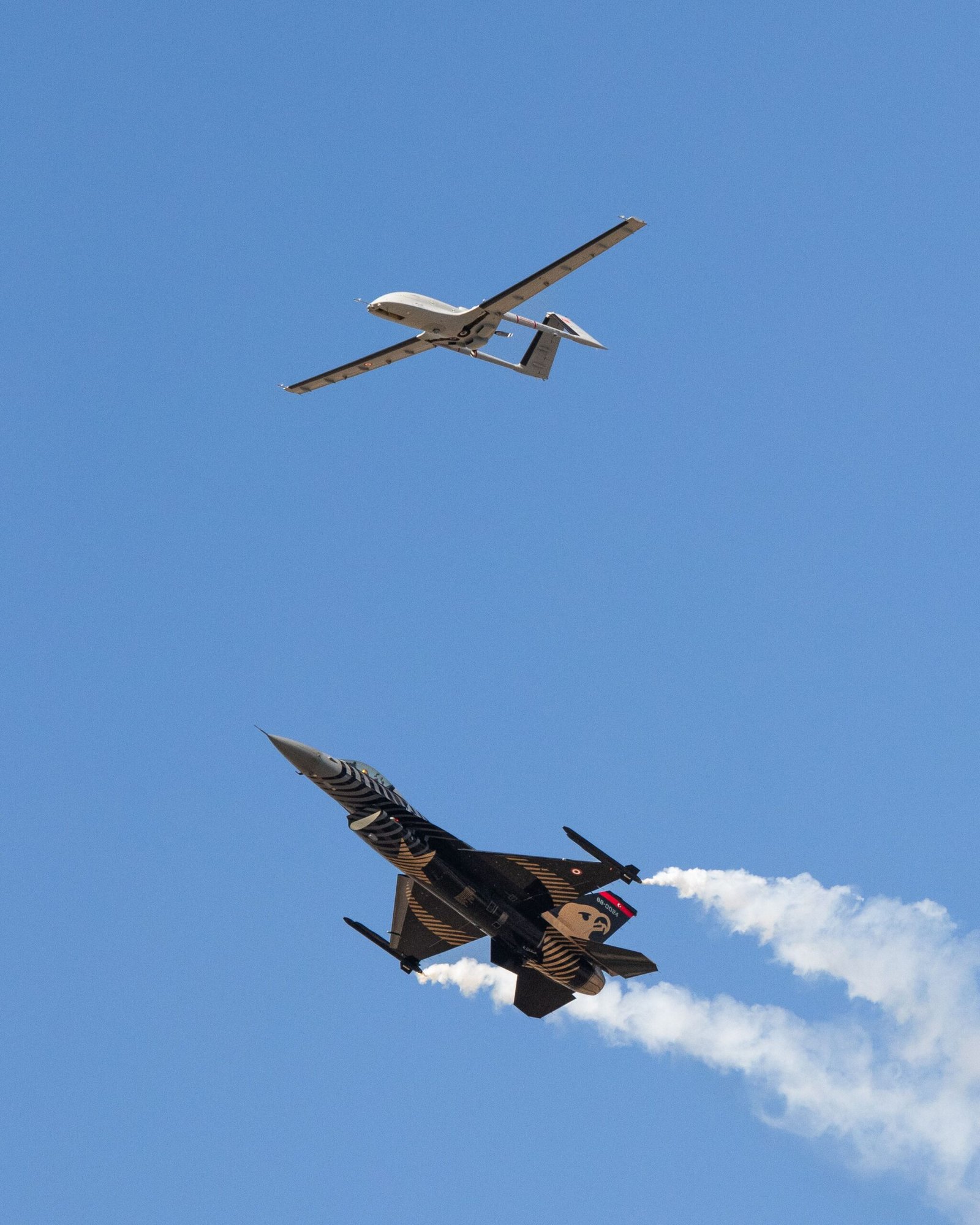
The most important decision of the night was the one not to shoot. The Operational Command gave authorisation to shoot the drone down, and then, after the drone changed course to head east, decided to refrain from using weapons. The command’s own explanation was that the decision took into account “the potential threat to civilians and the possible consequences of shooting down the object” and “the continuing risk of causing damage”. In other words, the risk of firing — debris falling on Polish territory, or a missile going astray — was judged to be greater than the risk of letting a drone that was already heading back east leave Polish airspace on its own.
That is a difficult call, and it is worth understanding why it is difficult. Shooting down a drone over your own territory is not a cost-free act. The drone itself falls, and so does whatever is fired at it. If the drone is over a populated area, the falling debris can kill the very civilians the air defences exist to protect. If the drone is already turning away, the threat it poses is falling by the minute, while the risk of firing stays the same. The Polish command’s decision was therefore a judgement about relative risk, made in real time, with radar tracking in hand — and it is a judgement that air defence commanders across NATO have had to make repeatedly since the war began.
For drone pilots, the episode is a reminder of how seriously states take unauthorised airspace incursions, and of how different the military response is from the civilian one. A civilian drone that strays into controlled airspace will be met with a warning, a fine or a prosecution. A military drone that crosses a NATO border triggers air defence activation, a shootdown authorisation, and a decision about whether to fire. The stakes are different, but the underlying principle is the same one our guide to Remote ID rules explained describes: the authorities need to know what is in their airspace, and they need to be able to act on that knowledge. On the night of 23 November, Poland knew what was in its airspace — and chose, deliberately, not to fire.
A Second Incursion in Four Days: How 23 November Differs From 20 November
Readers should not confuse the 23 November incident with the one that happened three days earlier. On 20 November, Defence Minister Wladyslaw Kosiniak-Kamysz said two Russian missiles and a jet-powered drone violated Polish airspace and fell in Poland. That incident is covered in our earlier report on how Russian missiles and a jet drone breach Poland’s airspace, and this article does not re-report its details. The 23 November incident is a separate, second incursion, days later, involving a single drone that briefly entered Polish airspace during strikes on western Ukraine and then left on its own, heading east, without being shot down and without falling in Poland.
The differences matter. The 20 November incident involved missiles as well as a drone, and the objects fell in Poland. The 23 November incident involved a drone alone, which changed course and left Polish airspace under its own power. The 20 November incident prompted an emergency meeting of NATO members on Monday, with the alliance agreeing to deploy an AWACS early-warning aircraft to Poland, according to EuropeSays. The 23 November incident happened after that decision had already been taken, and it will be read in Warsaw and at NATO headquarters as a test of whether the measures agreed after 20 November are working — and as evidence that the problem has not gone away.
The two incidents together describe a pattern, not a pair of accidents. Russian strikes on western Ukraine are launched close enough to the Polish border that drones and missiles can cross it, whether by design or by error, and the crossings are now happening repeatedly within days of each other. That is the context in which the 23 November decision to hold fire should be understood: Poland has now faced the same choice twice in four days, and twice it has had to weigh the risk of firing against the risk of letting an intruder go.
A Pattern Across NATO’s Eastern Flank


Poland is not the only NATO ally to have reported Russian drone violations. Russian missiles and drones have violated Polish airspace multiple times since the start of Moscow’s full-scale invasion of Ukraine in February 2022, according to EuropeSays. NATO allies have also reported confirmed or suspected Russian drone violations in Romania, Lithuania and Latvia, and Russian drones have been discovered in Moldova, which is not a NATO member, the same report noted. Our report on a drone’s unauthorised flight over Moldova covers one such case. Russian officials have denied responsibility for all such incursions, EuropeSays reported.
The pattern is one of repeated, low-level violations rather than a single dramatic incident. Drones cross a border, are tracked, and either leave, are shot down, or fall. Each incident is small on its own, but together they describe a persistent pressure on NATO’s eastern flank, and they have forced the alliance to respond. The most notable recent example, according to EuropeSays, saw three Russian cruise missiles land on Polish territory during attacks on Ukraine earlier in November, prompting an emergency meeting of NATO members on Monday, with the alliance agreeing to deploy an AWACS early-warning aircraft to Poland.
On Tuesday, Polish Defence Minister Wladyslaw Kosiniak-Kamysz said Polish officials were due to meet on several security issues, including “protecting Polish airspace, violations of our airspace, NATO support — early warning aircraft and a permanent U.S. military base in Poland”, according to EuropeSays. That agenda shows how the drone incursions have moved from a military problem to a political one: Poland is now discussing permanent American basing and NATO early-warning support as part of its response to violations that, a few years ago, would have been treated as a border incident.
The wider context is a war that is spilling beyond its front lines. As the war approaches its five-year anniversary, its ripples have spread far beyond southern and eastern Ukraine, where the fighting is concentrated, EuropeSays noted. This week alone, Ukraine claimed naval drone attacks on a Russian warship and a cargo vessel in the Libyan port of Benghazi, and authorities and analysts reported two drone attacks on Russian cargo ships in the Baltic Sea. The Polish incursion is part of that same widening: a war fought with drones is a war whose effects cross borders, because drones cross borders.
The Night in Ukraine That the Drone Came From
The drone that entered Polish airspace came from a wave of Russian strikes on Ukraine that was itself one of the larger overnight attacks of recent weeks. Ukraine’s air force said Russia launched 96 drones into the country overnight, of which 64 were jet-powered, and that air defenders downed or suppressed 73, of which 45 were jet-powered, with impacts at 13 locations, according to EuropeSays. The strikes were aimed at targets in western Ukraine, which is why a drone from the wave was able to cross into Poland. The previous night, Russia had launched 153 drones at Ukraine, as covered in our report on Russia’s 153-drone attack the night before — a reminder that the nightly exchanges have become routine, and that the Polish incursion happened in the middle of that routine.
The strikes on Ukraine that night also killed at least two people and injured more than 40 in Zaporizhzhia, according to Ukraine, and damaged energy infrastructure in Vinnytsia and buildings in the Zhytomyr region. Those casualties and that damage are the reason the strikes were launched, and they are the context in which the Polish incursion should be understood. The drone that crossed into Poland was not an isolated event; it was one aircraft in a wave of nearly a hundred, launched at a neighbouring country, that happened to cross a second border as well.
That is the point that matters for the future. As long as Russia launches large waves of drones at western Ukraine, the risk of further incursions into Poland will remain, because the targets are close to the border and the drones are not always precisely guided. Each wave is another roll of the dice. The 23 November drone left on its own. The next one might not, and the decision Poland’s commanders face — to fire or to hold fire — will have to be made again.
What This Means for Drone Pilots and the Industry

For civilian drone pilots, the Polish incursion is a stark illustration of why airspace rules exist and why they are enforced. The drone that crossed into Poland was a military aircraft, but the principle it violated is the same one that governs every civilian flight: you do not fly in airspace you are not authorised to fly in, and if you do, the authorities will respond. The difference is one of scale. A civilian drone in the wrong place will be met with a warning or a fine. A military drone over a NATO border triggers air defence activation and a shootdown authorisation. The Polish command’s decision to hold fire shows that even the military response is measured, and that the risk to civilians on the ground is weighed before a weapon is used.
For the drone industry, the incident underlines how the war is driving investment in airspace awareness. Poland tracked the drone continuously by military radar throughout its flight path, according to the Operational Command. That capability — knowing what is in your airspace, in real time — is the same capability that civilian airspace management needs, whether it is delivered by radar, by remote identification, or by a combination of the two. The technology that lets a military command track a single drone across a border is the same kind of technology that will, in civilian use, let air traffic controllers see the drones sharing their airspace. Our guide to Remote ID rules explained describes the civilian version of that capability, and the Polish incident shows why it matters.
For buyers and operators, the practical takeaway is narrower. The incident shows that counter-drone and airspace-monitoring systems are now a priority for NATO states, and that the market for them is growing. Poland’s discussion of a permanent US military base and NATO early-warning aircraft is part of that growth. The drone that crossed the border on 23 November was not shot down, but the next one might be — and the systems that detect, track and, if necessary, engage such drones are now at the centre of European defence planning.
What to watch next. The first thing to watch is whether Poland or NATO says anything more about the 23 November incursion — in particular, whether any further detail emerges about the drone’s type, its route, or how long it spent in Polish airspace. The second is the meeting Polish officials were due to hold on Tuesday, and whether it produces any announcement on airspace protection, NATO early-warning support, or a permanent US military base. The third is the AWACS deployment agreed after the 20 November incident: when the aircraft arrives, and whether it changes how quickly future incursions are detected. The fourth is the next wave of Russian strikes on western Ukraine, and whether it produces another incursion — the pattern of the last four days suggests it might. And the fifth is the question of attribution and response: whether Russia says anything about the incident, and whether NATO treats repeated incursions as a pattern that demands a collective answer rather than a series of national ones.
Frequently Asked Questions
What happened on the night of 23 November? A Russian unmanned aerial vehicle briefly violated Polish airspace during Russia’s night-time attack on targets in western Ukraine, Poland’s Armed Forces Operational Command said on X late on Monday night. The command said the situation was monitored in real time, air defence forces were activated, and authorisation was given to shoot the drone down — but after the drone changed course to head east, the command decided to refrain from using weapons because of the risk to civilians and of causing damage.
Why didn’t Poland shoot the drone down? Because the command judged that the risk of firing was greater than the risk of letting the drone go. After the drone changed course to head east, “taking into account the potential threat to civilians and the possible consequences of shooting down the object, a decision was made to refrain from using weapons due to the continuing risk of causing damage,” the command said. The drone was already heading back out of Polish airspace, and shooting it down would have meant debris falling on Polish territory.
Is this the same as the incident on 20 November? No. The 23 November incident is a separate, second incursion. On 20 November, Defence Minister Wladyslaw Kosiniak-Kamysz said two Russian missiles and a jet-powered drone violated Polish airspace and fell in Poland — that incident is covered in our earlier report on Russian missiles and a jet drone breaching Poland’s airspace. The 23 November incident involved a single drone that briefly entered Polish airspace and then left on its own, heading east, without being shot down and without falling in Poland.
Has this happened before? Yes, repeatedly. Russian missiles and drones have violated Polish airspace multiple times since the start of Moscow’s full-scale invasion of Ukraine in February 2022, according to EuropeSays. NATO allies have also reported confirmed or suspected Russian drone violations in Romania, Lithuania and Latvia, and Russian drones have been discovered in Moldova. Russian officials have denied responsibility for all such incursions.
What is NATO doing about it? After the 20 November incident, NATO members held an emergency meeting and agreed to deploy an AWACS early-warning aircraft to Poland, according to EuropeSays. On Tuesday, Polish Defence Minister Wladyslaw Kosiniak-Kamysz said Polish officials were due to meet on protecting Polish airspace, violations of the airspace, NATO support — including early-warning aircraft — and a permanent US military base in Poland.
Join Our Pilot Community
Connect with fellow drone enthusiasts, share your aerial shots, and get access to free PDF ebook guides.




