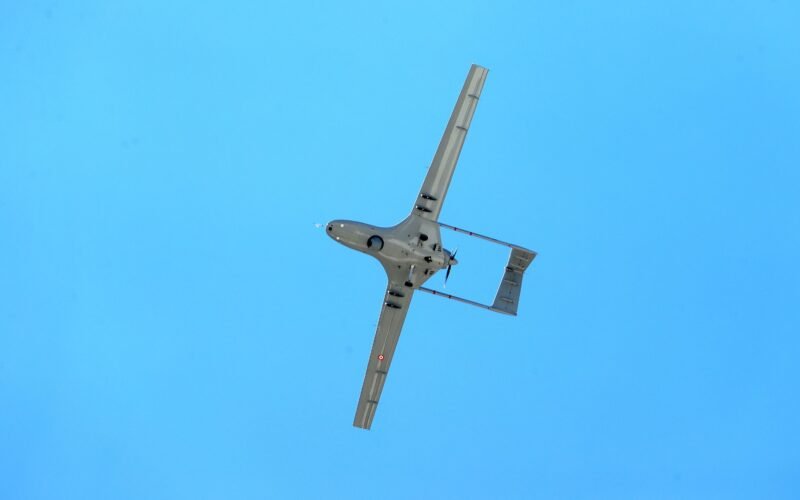
Ukrainian drones attacked the industrial zone of Nevinnomyssk in Russia’s Stavropol region overnight on 26 November, striking the Nevinnomyssk district thermal power plant, and a fire was reported at the plant, according to Polityk. The same night, a drone attack hit the Subkhankulovo pumping station in Bashkortostan, where a fire also broke out. Stavropol Krai Governor Vladimir Vladimirov said drone debris fell on production and energy facilities, causing infrastructure damage, and that 2 people were hurt. Russia’s Defence Ministry said 343 drones were intercepted or destroyed across 16 regions and the Black and Azov seas overnight on 26 November, without reporting any hits on the attacked sites — a Russian claim that has not been independently verified.
Two parts of this story are unverified, and both must be flagged clearly at the start. First, the Russian outlet ASTRA identified the Nevinnomyssk power station as a target from footage, and that identification is UNVERIFIED — it rests on footage analysis by one outlet, not on an official statement, and this article reports it as an unverified identification, not as a confirmed fact. Second, Russia’s claim that 343 drones were intercepted or destroyed overnight is a Russian claim, NOT independently verified, and this article reports it as a claim, not as a confirmed total. Ukraine had not commented on the Nevinnomyssk and Subkhankulovo strikes when the reports were published, so there is no Ukrainian account of the attacks in the sources used here.
This is a NEW attack on DIFFERENT targets from yesterday’s published story on this site. Yesterday’s story covered Ukrainian drones striking the Syzran and Kuibyshev refineries in Samara Oblast on the night of 24–25 November. This story covers different targets — a power plant in Stavropol region and a pumping station in Bashkortostan — on the following night, 25–26 November. Different night, different targets, different regions: the Syzran and Kuibyshev refineries are not the targets of this attack, and Nevinnomyssk and Subkhankulovo are not the targets of yesterday’s. The two stories must not be confused, and the rest of this article sets out what happened, what the sources actually confirm, and what remains unverified.
What Happened Overnight in Stavropol and Bashkortostan
Ukrainian drones attacked the industrial zone of Nevinnomyssk in Russia’s Stavropol region overnight on 26 November, striking the Nevinnomyssk district thermal power plant, and a fire was reported at the plant, according to Polityk. The same night, a drone attack hit the Subkhankulovo pumping station in Bashkortostan, where a fire also broke out. Two targets, in two regions, on the same night, both with fires reported: a thermal power plant in Stavropol Krai, in southern Russia, and a pumping station in Bashkortostan, in the Urals. The distance between them is not given in the sources, and this article does not estimate it, but the two regions are far apart, which means the attack was not a single local incident but a coordinated overnight operation against targets in different parts of Russia.
The governor of Stavropol Krai, Vladimir Vladimirov, gave the only official Russian account of the Nevinnomyssk attack in the sources. He said drone debris fell on production and energy facilities, causing infrastructure damage. He said drones targeted the Nevinnomyssk industrial zone, that debris damaged production and energy facilities, a school and a university branch, and that 2 people were hurt. He named no plant. That last detail is important: the governor confirmed that drones targeted the industrial zone and that debris damaged production and energy facilities, but he did not name the Nevinnomyssk district thermal power plant, and he did not confirm that the plant itself was hit. The identification of the plant as a target comes from monitoring channels and from ASTRA’s footage analysis, not from the governor, and the gap between the governor’s account and the monitoring channels’ account is the gap this article has to keep visible.
At Subkhankulovo, the official account is thinner but more direct on one point. The head of the local administration, Bulat Musin, confirmed a fire occurred in the industrial zone due to falling drone debris. That is a confirmation of a fire in the industrial zone, attributed to falling drone debris, by the local administrator. The Subkhankulovo linear production and dispatch station in Bashkortostan is owned by Transneft-Ural, and ASTRA identified the site as Transneft’s Subkhankulovo pumping station. The facility was previously targeted by Ukrainian forces in July 2024, which means this is not the first time the site has been attacked — it was hit before, more than two years ago, and it has been hit again on the night of 25–26 November.
The two fires — one reported at the Nevinnomyssk power plant, one confirmed in the industrial zone at Subkhankulovo — are the most concrete facts in the story, and they are also the facts that raise the most questions. The sources do not say how long either fire burned, how much damage either fire caused, whether the power plant stopped generating, or whether the pumping station stopped pumping. They do not say what type of drone was used at either target, how many drones were involved at either target, or what route the drones took. This article omits all of those details, because they are not in the sources, and a reader who wants a damage assessment will have to wait for satellite imagery, company statements, or official updates that have not yet appeared in the reporting used here.
The Nevinnomyssk Power Plant: What Is Confirmed and What Is Not

The confirmed core of the Nevinnomyssk story is narrow, and it is worth stating precisely. Ukrainian drones attacked the industrial zone of Nevinnomyssk overnight on 26 November. Governor Vladimirov said drone debris fell on production and energy facilities, causing infrastructure damage, and that debris damaged production and energy facilities, a school and a university branch, with 2 people hurt. A fire was reported at the Nevinnomyssk district thermal power plant. Those are the facts the sources confirm: an attack on an industrial zone, debris damage to production and energy facilities and to educational buildings, two people hurt, and a fire reported at the power plant. Everything beyond that — which unit was hit, how badly it was damaged, whether generation stopped — is not in the sources.
According to monitoring channels, the target was the Nevinnomyssk GRES, specifically a 410 MW combined-cycle power unit that supplies energy to key chemical plants in the region. That is a specific claim: a named station, a named unit type, a capacity figure of 410 MW, and a stated function — supplying energy to key chemical plants. Each element of that claim comes from monitoring channels, not from an official statement, and each element should be read as a monitoring-channel report rather than a confirmed fact. The capacity figure and the chemical-plant connection are the parts of the claim that give the attack its strategic meaning: if the unit that supplies energy to chemical plants was hit, the attack was aimed at the industrial base of the region, not only at the power grid. But the “if” is doing real work in that sentence, and the sources do not remove it.
The Russian outlet ASTRA identified the Nevinnomyssk power station as a target from footage, and this identification is UNVERIFIED. That sentence has to be stated plainly, because it is the easiest part of the story to overstate. ASTRA looked at footage and identified the power station as a target. That is a media outlet’s analysis of video material, not an official confirmation, not a satellite image, and not a statement from the plant’s operator. Footage can be misread, footage can show a different building, and footage of a fire does not prove which unit is burning. This article reports ASTRA’s identification as what it is — an unverified identification from footage — and does not treat it as proof that the power station was the target, or that any particular unit was hit.
The governor’s statement and the monitoring channels’ reporting sit side by side, and they do not quite agree — not because they contradict each other, but because they describe the night at different levels of specificity. The governor says debris damaged production and energy facilities, a school and a university branch, and names no plant. The monitoring channels name the Nevinnomyssk GRES and a 410 MW combined-cycle unit. The governor’s account is official and vague; the monitoring channels’ account is specific and unofficial. A careful reader should hold both in mind at once: the official account confirms an attack on the industrial zone with real damage and two people hurt, and the unofficial account names a specific target that has not been officially confirmed. Neither should be discarded, and neither should be treated as the whole story.
Subkhankulovo: A Transneft Pumping Station Hit Again
The Subkhankulovo linear production and dispatch station in Bashkortostan is owned by Transneft-Ural, and a drone attack hit it on the same night as the Nevinnomyssk attack, with a fire breaking out at the site. The head of the local administration, Bulat Musin, confirmed a fire occurred in the industrial zone due to falling drone debris. That confirmation is the firmest fact about Subkhankulovo: a fire, in the industrial zone, caused by falling drone debris, confirmed by the local administrator. The identification of the site as Transneft’s Subkhankulovo pumping station comes from ASTRA, which identified the site in its reporting, and the ownership — Transneft-Ural — is stated in the sources as a fact about the station.
The facility was previously targeted by Ukrainian forces in July 2024. That is a significant piece of context, because it means Subkhankulovo is not a new target discovered on this night, but a known target that has been attacked before. A pumping station that was hit in July 2024 and hit again in November 2026 is a target that Ukraine has returned to, which suggests that the site matters enough to strike twice, and that the damage from the first attack — whatever it was — did not remove the site from Ukraine’s target list. The sources do not say what damage the July 2024 attack caused, or what damage this attack caused, so this article does not compare the two attacks on damage; it notes only that the site has now been targeted twice, more than two years apart.
A linear production and dispatch station is part of the oil pipeline system: it moves oil along the pipeline, and a fire there can disrupt the flow. The sources do not say whether the flow was disrupted, whether the station stopped operating, or how long any interruption lasted, and this article does not estimate. What the sources do say is that a fire broke out at the site, and that the local administrator attributed the fire to falling drone debris. The phrase “falling drone debris” is the language of the official Russian account — it attributes the fire to debris from a drone that was intercepted or shot down, rather than to a direct hit by a drone carrying a warhead. That distinction matters for how the attack is described, and this article preserves it: the fire is attributed to falling drone debris, as the local administrator said, not to a direct strike, which no source confirms for this site.
The Subkhankulovo attack also shows the geographical spread of the night’s operations. Bashkortostan is in the Urals, far from the front line and far from Stavropol Krai, where the Nevinnomyssk attack took place. An attack that hits a pumping station in Bashkortostan and a power plant in Stavropol on the same night is an attack that reaches deep into Russia in two directions at once, and it requires drones that can fly long distances over defended territory. The sources do not say what type of drone was used, and this article does not guess. But the geography is itself evidence of range: whatever flew to Subkhankulovo and to Nevinnomyssk flew a long way to get there, and the Russian claim of 343 interceptions, discussed below, has to be read against that geography.
Russia’s 343-Drone Claim — and Why It Is Unverified


Russia’s Defence Ministry said 343 drones were intercepted or destroyed across 16 regions and the Black and Azov seas overnight on 26 November, without reporting any hits on the attacked sites, according to Voennoedelo. This is a Russian claim, NOT independently verified, and this article reports it as a claim. The number is very large — 343 drones in a single night — and the ministry’s statement does not report any hits on the attacked sites, which means the official Russian account of the night is that the attack was defeated in the air, with no successful strikes. That account sits alongside the reports of fires at Nevinnomyssk and Subkhankulovo, and the two cannot both be complete: either the fires were caused by falling debris, as the local accounts say, or the ministry’s statement omits the damage. The sources do not resolve that tension, and this article does not resolve it either.
The interceptions were reported over a long list of regions: the Bryansk, Belgorod, Kursk, Oryol, Voronezh, Tula, Saratov, Samara, Rostov and Ulyanovsk regions, as well as the Moscow region, Krasnodar and Stavropol territories, Tatarstan, Bashkortostan and Crimea. That list covers much of western and southern Russia, from the border regions near Ukraine to Moscow, to the Black Sea coast, to the Urals. The breadth of the list is itself a claim about the scale of the attack: drones were reported intercepted over 16 regions and two seas, which would mean the attack was not a narrow strike on two targets but a wide operation across the country. But the list is the ministry’s, and the number is the ministry’s, and neither has been independently verified. A reader should treat the 343 figure as the Russian government’s account of its own air defences’ performance, not as an established fact about how many drones were launched or destroyed.
The 343 figure also invites comparison with earlier Russian claims, and one such comparison is available in this site’s own reporting. This site has previously covered Russia claiming it shot down 699 Ukrainian drones overnight, an earlier night on which the Russian claim was even larger. The 699 figure and the 343 figure are both Russian claims, both unverified, and both far larger than the numbers of drones Ukraine is reported to have launched on those nights. The pattern is consistent: Russia reports very large interception counts, Ukraine reports fires and damage at specific sites, and the truth of any given night lies somewhere between the two accounts, in a place that cannot be fixed from the reporting available on the day. That pattern is the reason this article flags the 343 figure as unverified in the lead, in this section, and in the questions below.
There is one more reason to treat the 343 figure with caution: the ministry said 343 drones were intercepted or destroyed “without reporting any hits on the attacked sites”. A statement that reports interceptions but not hits is a statement that has selected what to report, and the selection is the point. The fires at Nevinnomyssk and Subkhankulovo are reported by local officials and by monitoring channels, and the ministry’s statement does not address them. It does not deny them, and it does not confirm them — it simply does not mention them. A reader who takes the ministry’s statement on its own would conclude that nothing was hit; a reader who takes the local reports on their own would conclude that two sites burned. The honest position is to report both, attribute both, and say that the 343 figure is unverified.
A Different Night From Yesterday’s Refinery Strikes
It is worth stating the distinction from yesterday’s story plainly, because the two nights will blur in memory and in search results. Yesterday’s published post covered refinery strikes at Syzran and Kuibyshev in Samara Oblast on the night of 24–25 November. Today’s story covers a power plant at Nevinnomyssk in Stavropol Krai and a pumping station at Subkhankulovo in Bashkortostan on the night of 25–26 November. Different night, different targets, different regions: Syzran and Kuibyshev are oil refineries in Samara Oblast, and Nevinnomyssk is a thermal power plant in Stavropol Krai while Subkhankulovo is a Transneft pumping station in Bashkortostan. The targets are different in kind as well as in place — refineries yesterday, a power plant and a pumping station today — and the nights are consecutive, not the same.
The distinction matters for another reason. The two nights are part of the same resumed campaign, and treating them as one attack would understate the scale of what is happening. Two consecutive nights, four targets named in reports — two refineries, a power plant and a pumping station — and a Russian interception claim that jumps from the previous night’s figures to 343 on this night: that is a campaign, not a single incident. Readers who follow the story night by night will see the pattern; readers who see only one of the two stories should know the other exists, which is why this article links to yesterday’s story at the top and here again. The night before yesterday’s story brought strikes at Perm and Novoshakhtinsk, covered in our report on Ukrainian drones striking the Perm and Novoshakhtinsk refineries, which means the campaign now stretches across three consecutive nights and at least six named targets.
The casualty figures also differ between the nights, and they should not be mixed. Yesterday’s Syzran and Kuibyshev story reported one person killed in Samara. This night’s reporting gives a different and still-clarifying picture: one person killed and several injured, according to Integri and Voennoedelo reporting; four people injured in the Slavyansk district of Krasnodar region; and six injured in Kuban and Stavropol, according to Voennoedelo. Those figures are presented here as reported and attributed, and the article notes that they are still being clarified. They may overlap — the same injured people may be counted in more than one of those reports — and they should not be added together into a single total. The governor of Stavropol Krai separately said 2 people were hurt at Nevinnomyssk, which is a further figure that may or may not overlap with the others. The honest position is to report each figure with its source and to say that the casualty picture is still being clarified.
Also the same night, the Slavyansk ECO refinery operator in Krasnodar region said drones seriously damaged a crude distillation unit and pierced storage tanks, and the regional headquarters reported 4 injured, 2 in hospital, according to Project Leaflet citing Euromaidan Press. That is a further target on the same night — a refinery in Krasnodar region, with a specific unit damaged and storage tanks pierced — and it is mentioned here once, attributed to Project Leaflet citing Euromaidan Press. It widens the night’s target list still further: a power plant, a pumping station, and a refinery unit, across three regions, on one night. The 4 injured and 2 in hospital at Slavyansk are part of the same still-clarifying casualty picture, and they too should not be added to the other figures without knowing whether they overlap.
What This Means for Drone Pilots and the Wider War

For civilian drone pilots, this story is not a how-to and not a precedent to follow: the drones in it are military one-way attack aircraft, flown by armed forces in a war, and nothing about their operation applies to a recreational or commercial pilot. What the story does show, for anyone who flies drones, is how completely the technology has moved from the hobby world into the centre of modern warfare. The drones that reached Nevinnomyssk and Subkhankulovo flew deep into Russia, to targets in Stavropol Krai and in Bashkortostan, and the Russian claim of 343 interceptions shows how much effort is now spent trying to stop them. The same basic ideas — long-endurance flight, autonomous navigation, a small airframe carrying a payload over a long distance — that appear in civilian long-endurance aircraft are now, in military form, striking power plants and pumping stations hundreds of kilometres from the front.
For the wider war, the shift in targets is the development to watch. Yesterday’s targets were oil refineries; today’s are a thermal power plant and an oil pumping station. The campaign is moving across the energy system — from refining to generation to transport — and each kind of target matters differently. A refinery produces fuel; a power plant produces electricity for chemical plants, according to the monitoring channels’ account of the Nevinnomyssk unit; a pumping station moves oil along a pipeline. Hitting all three kinds of target on consecutive nights is a systematic attack on the energy infrastructure that supports Russia’s war effort, and it is a campaign that requires the industrial base to sustain it. The United Kingdom has agreed to help build Ukrainian strike drones, under a deal covered in our report on the UK to build Ukrainian strike drones in Britain, and that deal, and others like it, is part of the reason Ukraine can sustain nightly long-range attacks at this scale.
For the air-defence contest, the night offers the same two-sided picture as every recent night. On one side, Russia claims 343 drones intercepted or destroyed across 16 regions and two seas, a very large number that, if true, would mean a large share of the attacking wave was stopped. On the other side, fires were reported at a power plant and a pumping station, a refinery unit was seriously damaged and storage tanks pierced at Slavyansk, and debris damaged production and energy facilities, a school and a university branch at Nevinnomyssk, with people hurt. Neither side’s account is complete on its own, and the truth of the night is not yet established. That is the honest position, and it is the position this article takes throughout: report what each source says, attribute it, and mark what is unverified.
For readers following the campaign, the most useful thing to watch is not any single night’s claims but the pattern across nights: how many targets are named, how often, in which regions, and whether the Russian response escalates beyond interception claims. Three consecutive nights have now brought Perm and Novoshakhtinsk, then Syzran and Kuibyshev, then Nevinnomyssk, Subkhankulovo and Slavyansk. If the pattern continues, more energy targets will appear in the coming nights, and the question will become how long Russia’s air defences and repair crews can keep pace with a campaign that is striking refineries, power plants and pumping stations in turn. That is a question for the coming weeks, not for a single morning’s reporting, and it will be answered by satellite imagery, company statements and official updates that have not yet appeared.
What to watch next. First, watch for satellite imagery or company statements confirming or denying damage at the Nevinnomyssk power plant and the Subkhankulovo pumping station — that is the missing piece of this story, and it will settle whether the reported fires caused real damage. Second, watch for any official Ukrainian statement about the attacks, since Ukraine had not commented when the reports were published. Third, watch for clarification of the casualty figures, which are reported differently by different sources and are still being clarified. Fourth, watch for the next night’s Ukrainian strike reports, and whether the campaign continues to move across refineries, power plants and pumping stations. And fifth, watch for any independent assessment of Russia’s 343-drone interception claim, which remains unverified.
Frequently Asked Questions
What was hit on the night of 25–26 November? Ukrainian drones attacked the industrial zone of Nevinnomyssk in Russia’s Stavropol region, striking the Nevinnomyssk district thermal power plant, where a fire was reported, and a drone attack hit the Subkhankulovo pumping station in Bashkortostan, where a fire also broke out, according to Polityk. The Slavyansk ECO refinery operator in Krasnodar region also said drones seriously damaged a crude distillation unit and pierced storage tanks on the same night. Ukraine had not commented on the strikes when the reports were published.
Is the Nevinnomyssk power station identification confirmed? No. The Russian outlet ASTRA identified the Nevinnomyssk power station as a target from footage, and that identification is UNVERIFIED. Governor Vladimir Vladimirov said drone debris fell on production and energy facilities, causing infrastructure damage, and that debris damaged production and energy facilities, a school and a university branch, with 2 people hurt — but he named no plant. According to monitoring channels, the target was the Nevinnomyssk GRES, specifically a 410 MW combined-cycle power unit that supplies energy to key chemical plants, but that too is a monitoring-channel report, not an official confirmation.
Did Russia really shoot down 343 drones? Russia’s Defence Ministry said 343 drones were intercepted or destroyed across 16 regions and the Black and Azov seas overnight on 26 November, without reporting any hits on the attacked sites. This is a Russian claim, NOT independently verified, and this article reports it as a claim, not as a confirmed total. Fires were reported at Nevinnomyssk and Subkhankulovo, and the ministry’s statement does not address them. Treat the 343 figure as the Russian government’s account of its own air defences’ performance.
How is this different from yesterday’s Syzran and Kuibyshev strikes? Yesterday’s published story covered refinery strikes at Syzran and Kuibyshev in Samara Oblast on the night of 24–25 November. This story covers different targets — a power plant at Nevinnomyssk in Stavropol Krai and a pumping station at Subkhankulovo in Bashkortostan — on the following night, 25–26 November. Different night, different targets, different regions, and different kinds of target: refineries yesterday, a power plant and a pumping station today.
Who was hurt in the attacks? The casualty figures are still being clarified and come from different sources. One person was killed and several injured, according to Integri and Voennoedelo reporting; four people were injured in the Slavyansk district of Krasnodar region; and six were injured in Kuban and Stavropol, according to Voennoedelo. The regional headquarters at Slavyansk reported 4 injured, 2 in hospital. These figures may overlap and should not be added together. Governor Vladimirov separately said 2 people were hurt at Nevinnomyssk.
Join Our Pilot Community
Connect with fellow drone enthusiasts, share your aerial shots, and get access to free PDF ebook guides.