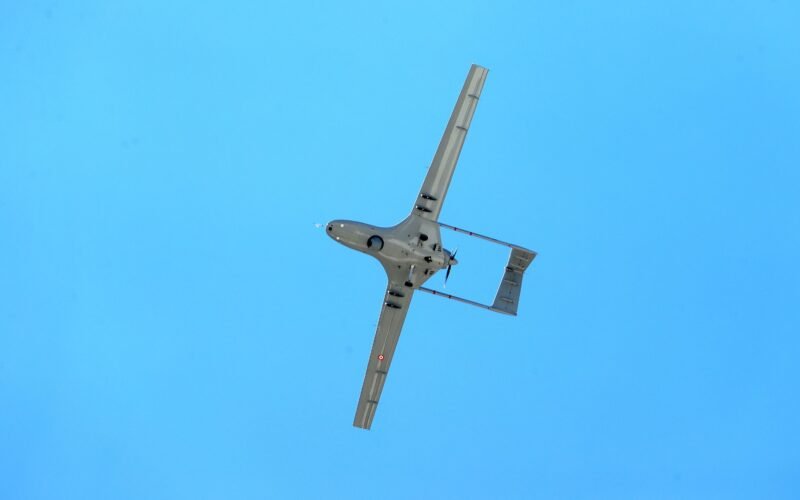
Russia launched 113 Shahed-type attack drones, 76 of them jet-powered, plus Gerbera drones and Parodiya-type decoys, at Ukraine from 18:00 on Wednesday 25 November, along with Iskander-M, Zircon and S-400 ballistic missiles fired from Russia’s Bryansk and Kursk regions, according to Project Leaflet, The Naga Report 049, reporting the Ukrainian Air Force’s account. As of 08:00 Kyiv on 26 November the Ukrainian Air Force counted 87 drones downed or suppressed, 52 of them jet-powered, with hits at 20 locations and debris at 6. It gave no missile count and no missile interception figure. A ballistic missile strike on the Desnianskyi district of Kyiv late on 25 November injured 7 people, Mayor Vitali Klitschko said, two of them in serious condition, and a drone hit a multi-storey residential building in Kharkiv and killed 2, Mayor Ihor Terekhov said.
This is the NEXT night after yesterday’s published story on this site, and the two nights must never be confused. Yesterday’s story covered Russia’s 112-drone attack on Ukraine the night before, the night of 24–25 November, when the Air Force reported 112 drones and 88 downed or suppressed, with hits at 18 locations. This story covers the following night, 25–26 November: 113 drones, 87 downed or suppressed, hits at 20 locations, and — the decisive difference — ballistic missiles added, which the night before did not have. The drone counts are close, the downed counts are close, and the dates are one day apart, which is exactly why the distinction has to be stated prominently here and repeated throughout: 112 drones and no ballistic missiles on the night of 24–25 November; 113 drones plus Iskander-M, Zircon and S-400 ballistic missiles on the night of 25–26 November.
The Ukrainian Air Force said drones were still in Ukrainian airspace at 08:00 on 26 November, so the final tally may change. That caveat applies to every number in this story: the figures given here are the Air Force’s count as of 08:00 Kyiv, taken while the attack was still under way in the air. The rest of this article sets out what happened overnight, how this night differs from the night before, what it cost in Kyiv and Kharkiv, what the wider toll looks like, and what the targets beyond the cities tell us about where this campaign is heading.
The Night in Numbers: 113 Drones and Ballistic Missiles
Russia launched 113 Shahed-type attack drones at Ukraine from 18:00 on Wednesday 25 November, according to Project Leaflet, reporting the Ukrainian Air Force’s account. Of those 113, 76 were jet-powered, and the attack also included Gerbera drones and Parodiya-type decoys. The jet-powered share is the detail that matters most for anyone following the drone war: 76 of 113 means more than two-thirds of the Shahed-type drones in this wave were the faster jet-powered variant, and the Air Force’s interception count reflects that — of the 87 drones it counted downed or suppressed, 52 were jet-powered. The decoys, the Gerbera drones and the Parodiya-type decoys, are there to complicate the defence: they are not all carrying warheads, but they all have to be tracked, assessed and engaged, and every interceptor spent on a decoy is one not available for a real attack drone.
Alongside the drones came ballistic missiles: Iskander-M, Zircon and S-400 ballistic missiles fired from Russia’s Bryansk and Kursk regions. Three missile types are named in the Air Force’s account, and two launch regions. The Air Force gave no missile count and no missile interception figure, and this article gives none either, because none is in the sources. That gap is itself significant: for the drones, the Air Force published a precise count of launches and interceptions; for the missiles, it published the types and the launch regions but not the numbers. A reader who wants to know how many ballistic missiles were fired, and how many were intercepted, will not find the answer in the reporting available on 26 November.
As of 08:00 Kyiv on 26 November the Ukrainian Air Force counted 87 drones downed or suppressed, 52 of them jet-powered, with hits at 20 locations and debris at 6. The phrase “downed or suppressed” covers both drones destroyed in the air and drones brought down or diverted by electronic warfare, and the Air Force does not break the 87 down further in the reporting used here. The 20 hit locations and 6 debris locations are the other side of the same count: 26 places where drones either struck their target or came down. The proportion is worth stating plainly — 87 of 113 downed or suppressed means roughly three in four of the Shahed-type drones did not reach their targets, and yet 20 locations were still hit, which shows that even a high interception rate leaves a large attack with real consequences on the ground.
The timing of the count matters as much as the count itself. The attack began at 18:00 on 25 November, and the Air Force’s figures are as of 08:00 on 26 November — a 14-hour window, overnight, with drones still in Ukrainian airspace at 08:00, according to the Air Force. The final tally may therefore change, and any later update could revise the 113, the 87, the 20 hit locations or the 6 debris locations. This article reports the 08:00 figures as the Air Force’s count at that time, not as a final total, and readers should treat them that way.
How This Night Differs From the Night Before


The night before, the Air Force reported 112 drones and 88 downed or suppressed, with hits at 18 locations, according to the same reporting. This night, the Air Force reported 113 drones and 87 downed or suppressed, with hits at 20 locations. The numbers are so close that a careless reader could treat the two nights as one attack, or swap the figures between them, and that is exactly the confusion this article is written to prevent. The drone count rose by one, from 112 to 113. The downed count fell by one, from 88 to 87. The hit locations rose from 18 to 20. Those are small changes in the drone figures, and on their own they would make this night look like a near-repeat of the night before.
What makes this night different is not the drone count but the missiles. This night added ballistic missiles — Iskander-M, Zircon and S-400 types fired from Bryansk and Kursk regions — which the night before did not have. That addition changes the character of the attack: a drone wave is a slow, hours-long assault that air defences can engage over time, while ballistic missiles arrive in minutes and are far harder to intercept. The Kyiv injury toll in this story — 7 injured, two in serious condition, from a ballistic missile strike on the Desnianskyi district late on 25 November — is the human consequence of that addition, and it is a consequence the previous night’s drone-only attack did not produce in the same form.
The two nights also sit in a longer sequence that this site has been following night by night. Before the 112-drone night came Russia’s 96-drone attack the night before that, and before that came Russia firing 153 drones at Ukraine overnight. The sequence — 153, then 96, then 112, then 113 — shows a campaign that varies in size from night to night but does not stop. The 113-drone night is not the largest in the sequence; the 153-drone night was bigger. But the 113-drone night is the one that added ballistic missiles to the drone wave, and that escalation, rather than the raw drone count, is the development to watch.
The Ukrainian side of the exchange was also active on the same night, and it should not be left out of the picture. The previous night’s Ukrainian reply was the attack on Ukrainian drones striking the Syzran and Kuibyshev refineries, and Ukrainian drones were active again this night, striking the Nevinnomyssk power plant and the Subkhankulovo pumping station in a separate attack covered in our companion story. The two-way exchange of drone and missile strikes in both directions is the subject of AnewZ‘s reporting on the night, and it is now a nightly feature: Russian drones and missiles against Ukrainian cities and infrastructure, Ukrainian drones against Russian energy and industrial targets, each night producing its own set of claims, counts and casualty figures, and each night needing to be reported on its own terms rather than blurred into the night before.
Kyiv and Kharkiv: The Human Cost
In Kyiv, a ballistic missile strike on the Desnianskyi district late on 25 November injured 7 people, Mayor Vitali Klitschko said, and two of them were in serious condition. Buildings in an industrial zone and a shopping centre were hit. That is the whole of the Kyiv casualty information in the sources: a district named, a time described as late on 25 November, a toll of 7 injured with 2 serious, and two kinds of building hit — industrial and commercial. The sources do not name the injured, do not say which industrial buildings were hit, and do not say how badly the shopping centre was damaged. The missile that caused these injuries was a ballistic missile, not a drone, and that is why the Kyiv toll belongs in the missile part of this story rather than the drone part.
In Kharkiv, a drone hit a multi-storey residential building and killed 2, Mayor Ihor Terekhov said, and the State Emergency Service gave the same toll. The city figure is 2 killed, and it is confirmed by two sources — the mayor and the State Emergency Service — which makes it the most solidly sourced casualty figure in this story. But there is also a regional figure: the regional toll was 4 killed and 3 injured across Kharkiv region, according to the Kyiv Independent. The city figure of 2 killed is the lead figure in this article, and the regional figure of 4 killed and 3 injured is mentioned here once, attributed to the Kyiv Independent, because the regional toll covers a wider area than the city and may include deaths outside the city itself. The two figures are not contradictory; they describe different geographies, and they should not be added together or confused with each other.
The distinction between a residential building hit by a drone and an industrial zone and shopping centre hit by a ballistic missile is also worth drawing out. In Kharkiv, the weapon was a drone and the target it hit was a place where people live — a multi-storey residential building. In Kyiv, the weapon was a ballistic missile and the buildings hit were in an industrial zone and a shopping centre — places of work and commerce. Both are civilian harm, but they are different kinds of civilian harm, and they show that the attack’s effects spread across the full range of urban life: homes in Kharkiv, workplaces and shops in Kyiv, with injuries and deaths in both cities.
Across Ukraine, the Kyiv Independent counted 10 killed and 58 injured over the past day, including 3 children, from regional authorities, in reporting published at 13:16 Kyiv on 26 November. That count is drawn from regional authorities across the country, and it covers the past day rather than a single city or a single night. It includes the Kyiv and Kharkiv figures, and it adds deaths and injuries from other regions that are not named individually in the sources used here. The inclusion of 3 children among the 58 injured is stated in the Kyiv Independent’s count, and it is stated here because it is part of that count — not as a separate claim, and not expanded beyond what the source says.
The Wider Toll and the Front Line


The casualty figures in this story come from different bodies, at different times, covering different areas, and they need to be held apart. The Kyiv figure — 7 injured, 2 serious — comes from Mayor Klitschko and covers a ballistic missile strike on one district late on 25 November. The Kharkiv city figure — 2 killed — comes from Mayor Terekhov and the State Emergency Service and covers a drone hitting one residential building. The Kharkiv regional figure — 4 killed and 3 injured — comes from the Kyiv Independent and covers the whole region. The national figure — 10 killed and 58 injured over the past day, including 3 children — comes from the Kyiv Independent, drawn from regional authorities, and was published at 13:16 Kyiv on 26 November. Each figure is attributed to its source, each covers its own area and time, and none of them should be combined into a single invented total.
The front line was also busy on 25 November, and the General Staff’s figures give a measure of that. The General Staff counted 167 clashes on 25 November, down from 203 the day before, with 228 guided bombs and 6,016 kamikaze drones, and Pokrovsk (21), Lyman (11) and Huliaipole (8) were the busiest axes. The clash count fell from 203 to 167, which is a drop of 36 in a single day, but 167 clashes is still a very high number for one day, and the 6,016 kamikaze drones counted by the General Staff show that the drone war at the front is operating at a scale far larger than the overnight strategic attacks on cities. The 113 drones in this story are the ones flown at Ukraine’s cities and infrastructure overnight; the 6,016 kamikaze drones are the ones counted at the front on the same day, and the two figures describe two different parts of the same war.
Pokrovsk, with 21 clashes, was the busiest axis, followed by Lyman with 11 and Huliaipole with 8. Those three axes together account for 40 of the 167 clashes, which means the fighting is concentrated as well as intense — not spread evenly along the front, but focused on a small number of places where both sides are pressing hardest. The guided bomb count, 228, adds another dimension: the front is being hit by air-delivered weapons as well as by drones, and the overnight drone and missile attack on the cities is happening alongside, not instead of, a heavy day of fighting on the ground.
The picture that emerges from the General Staff’s figures is of a war being fought on two levels at once. At the front, 167 clashes, 228 guided bombs and 6,016 kamikaze drones on a single day. Behind the front, 113 drones and ballistic missiles fired at cities and infrastructure overnight, with 20 locations hit. The two levels are connected: the same drone technology, the same air defences, and the same industrial base feed both, and the pressure on Ukraine’s air defences comes from both directions at once — from the kamikaze drones at the front and from the Shahed-type waves and ballistic missiles over the cities at night.
Grain Ships, Water and Power: The Targets Beyond the Cities
Late items in the reporting widen the story beyond Kyiv and Kharkiv. Prime Minister Serhii Koretskyi said Russia attacked two foreign civilian ships carrying more than 100,000 tonnes of grain near Odesa, and that water facilities in Dnipropetrovsk region were hit. The grain ships are a new kind of target in this story: foreign civilian vessels, carrying food, attacked near a port city, with more than 100,000 tonnes of grain on board between them. The Prime Minister’s statement does not say whether the ships were sunk, damaged, or attacked and missed, and it does not name the ships or their flags, so this article reports the attack as stated — two foreign civilian ships, more than 100,000 tonnes of grain, near Odesa — and no more.
The targets named by Koretskyi form a list that shows the breadth of the attack: water utilities in Dnipropetrovsk region, heating networks in Zaporizhzhia, and shopping centres in Kryvyi Rih and Pavlohrad. Water, heating and shopping centres — the infrastructure of daily life, hit in four different places. In Kryvyi Rih, municipal electric transport stopped after a strike on central infrastructure, which means the attack did not just damage a building but stopped a city’s trams or trolleybuses from running. Ukrenergo said hourly outages would apply in some regions through 26 November, which means the power grid was under enough strain that rolling cuts were needed. Each of those details comes from the reporting of 26 November, and each is attributed to the body that stated it.
President Zelensky said Russia is completing preparations for a new massive strike, citing intelligence. That statement, reported on 26 November, is a warning about the future rather than a report of the past: the President is saying, on the basis of intelligence, that the attack described in this article is not the end of the campaign but a step towards a larger one. The statement does not say when the new strike will come, what it will target, or how large it will be, and this article does not guess. What it does say is that the Ukrainian leadership expects more, and expects it soon, which is the context in which the 113-drone night should be read — not as an isolated event, but as part of a campaign that the President says is building towards something bigger.
The water facilities in Dnipropetrovsk region deserve a final note, because water is the least visible of the targets named and often the slowest to repair. Koretskyi said water facilities in Dnipropetrovsk region were hit, and he also named water utilities in Dnipropetrovsk region among the targets. A strike on water infrastructure does not produce the immediate imagery of a burning building, but it affects every household that depends on the supply, and it takes time and parts to restore. The sources do not say how many people lost water, or for how long, and this article does not estimate. The fact that water was among the targets, alongside heating, shopping centres, grain ships and electric transport, is the point: the attack of 25–26 November was aimed at the systems that keep cities running, not only at the cities themselves.
What This Means for Drone Pilots and the Wider War


For civilian drone pilots, this story is not a how-to and not a precedent to follow: the drones in it are military one-way attack aircraft, flown by armed forces in a war, and nothing about their operation applies to a recreational or commercial pilot. What the story does show, for anyone who flies drones, is how completely the technology has moved from the hobby world into the centre of modern warfare. The 113 Shahed-type drones in this attack, 76 of them jet-powered, are the military end of a spectrum that starts with the small aircraft civilians fly, and the 6,016 kamikaze drones counted at the front on the same day show how far that spectrum now extends. The same basic ideas — a small airframe, autonomous navigation, a payload carried over a long distance — that appear in civilian aircraft are now, in military form, striking cities night after night.
For the wider war, the addition of ballistic missiles to the drone wave is the development that matters most. A drone-only attack gives air defences hours to work, and the Air Force’s count of 87 downed or suppressed out of 113 shows that the defences can handle a large share of a drone wave. Ballistic missiles — Iskander-M, Zircon and S-400 types, fired from Bryansk and Kursk — arrive in minutes, and the Air Force gave no missile count and no missile interception figure for this night. That gap in the reporting is itself a signal: the missile part of the attack is harder to count, harder to intercept, and harder to report on, and the 7 injured in Kyiv, two in serious condition, are the human cost of the part of the attack that the drone defences could not stop.
For the air-defence contest, the numbers tell a two-sided story. On one side, 87 of 113 drones downed or suppressed, 52 of them jet-powered, is a high interception rate against a wave that included the faster jet-powered variant. On the other side, 20 locations were hit and debris fell at 6 more, which means the attack still reached its targets in 20 places despite that interception rate. Neither side is winning outright: Ukraine’s defences stop most of the drones, and Russia’s attacks still get through in enough places, night after night, to kill and injure civilians and to damage water, heating, power and transport. That is the grinding reality of the campaign, and the 113-drone night is a representative example of it.
For readers following the nightly sequence, the most useful thing to watch is not any single night’s drone count but the pattern across nights: the counts have run 153, then 96, then 112, then 113, and the escalation in this latest night is not in the number but in the addition of ballistic missiles. If the President’s warning is right — that Russia is completing preparations for a new massive strike — then the next nights may be larger, or may add new weapon types, or may concentrate on the water, heating and power targets named in this story. The reporting of 26 November gives the baseline: 113 drones, 87 downed, 20 locations hit, ballistic missiles added, 10 killed and 58 injured across the country over the past day. The next nights will show whether that baseline holds, rises, or breaks.
What to watch next. First, watch for the Air Force’s updated tally, because drones were still in Ukrainian airspace at 08:00 on 26 November and the final figures for launches, interceptions and hit locations may change. Second, watch for any missile count or missile interception figure, which the Air Force did not give for this night. Third, watch for updates to the casualty figures from Kyiv and Kharkiv, and for the next Kyiv Independent national count. Fourth, watch whether the new massive strike President Zelensky warned about materialises, and what form it takes. And fifth, watch the power and water situation in the affected regions, and whether Ukrenergo’s hourly outages extend beyond 26 November.
Frequently Asked Questions
How many drones did Russia launch on the night of 25–26 November? Russia launched 113 Shahed-type attack drones, 76 of them jet-powered, plus Gerbera drones and Parodiya-type decoys, from 18:00 on Wednesday 25 November, according to Project Leaflet, reporting the Ukrainian Air Force’s account. As of 08:00 Kyiv on 26 November the Air Force counted 87 drones downed or suppressed, 52 of them jet-powered, with hits at 20 locations and debris at 6. The Air Force also reported Iskander-M, Zircon and S-400 ballistic missiles fired from Bryansk and Kursk regions, but gave no missile count and no missile interception figure.
How is this different from the night before? The night before, 24–25 November, the Air Force reported 112 drones and 88 downed or suppressed, with hits at 18 locations — and no ballistic missiles. This night, 25–26 November, brought 113 drones, 87 downed or suppressed, hits at 20 locations, and ballistic missiles added. The drone counts are almost identical, which is why the two nights must not be confused: the dates, the figures and the addition of missiles are different in each case.
Who was killed and injured? In Kyiv, a ballistic missile strike on the Desnianskyi district late on 25 November injured 7 people, Mayor Vitali Klitschko said, two in serious condition. In Kharkiv, a drone hit a multi-storey residential building and killed 2, Mayor Ihor Terekhov said, and the State Emergency Service gave the same toll. The regional toll across Kharkiv region was 4 killed and 3 injured, according to the Kyiv Independent. Across Ukraine, the Kyiv Independent counted 10 killed and 58 injured over the past day, including 3 children, from regional authorities, published at 13:16 Kyiv on 26 November.
What else was hit besides Kyiv and Kharkiv? Prime Minister Serhii Koretskyi said Russia attacked two foreign civilian ships carrying more than 100,000 tonnes of grain near Odesa, and that water facilities in Dnipropetrovsk region were hit. He named water utilities in Dnipropetrovsk region, heating networks in Zaporizhzhia, and shopping centres in Kryvyi Rih and Pavlohrad as targets. In Kryvyi Rih, municipal electric transport stopped after a strike on central infrastructure, and Ukrenergo said hourly outages would apply in some regions through 26 November.
Is a bigger attack coming? President Zelensky said Russia is completing preparations for a new massive strike, citing intelligence. The statement does not say when it will come, what it will target, or how large it will be, and this article does not guess. The Ukrainian Air Force also said drones were still in Ukrainian airspace at 08:00 on 26 November, so the final tally for this night may change. Watch for the updated Air Force figures and for any missile count, which was not given for this night.
Join Our Pilot Community
Connect with fellow drone enthusiasts, share your aerial shots, and get access to free PDF ebook guides.