A beach looks like the perfect place to fly a drone: open sky, open water, and nothing to hit. And often it is — but a beach is also four sets of rules layered on top of each other, and any one of them can say no. Federal rules apply everywhere. Airspace rules apply near coastal airports. Land rules apply on the sand itself, and they change with who manages the beach. And the crowd rule — do not fly over people — ends most beach flights before they start. This guide works through the four layers in order, and ends with the checklist for a beach day that actually happens.
The Short Answer: Yes, Unless the Beach Says No

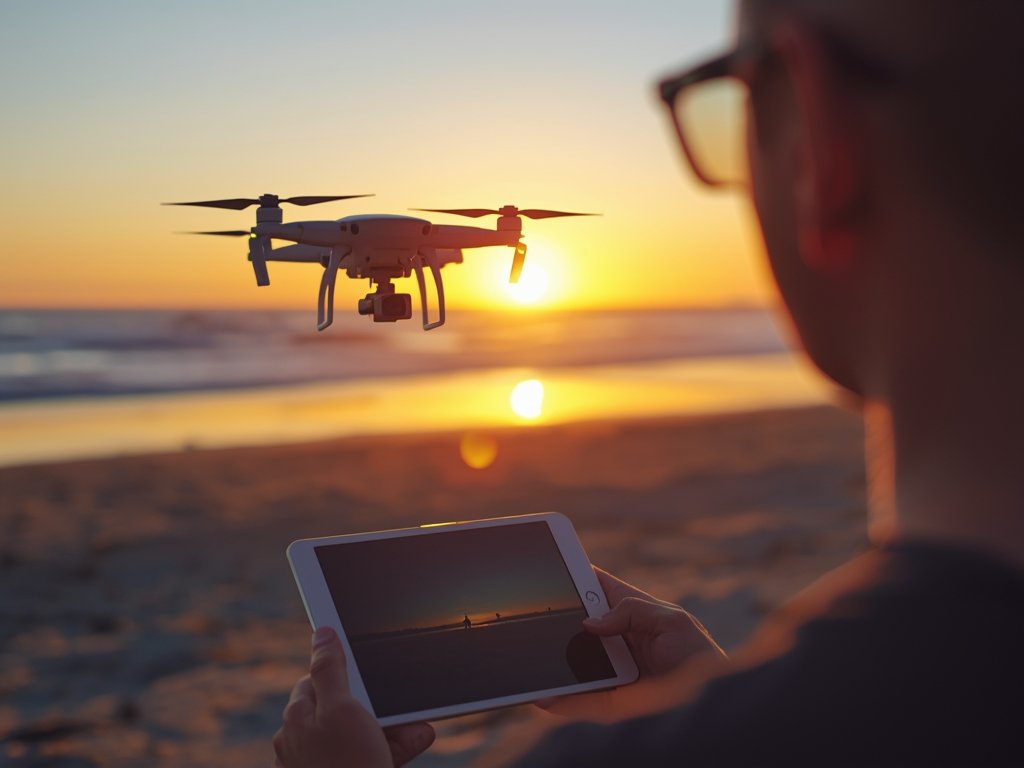
Flying a drone at the beach is legal in many locations, but rarely without conditions. The short answer is yes, unless the beach is inside a national park, a state park, or a city park that bans launching and landing — or unless it sits in controlled airspace near a coastal airport, or unless it is crowded with people. Any one of those can make the answer no, and the only way to know is to check all four layers before you go, not when you arrive with the drone already unpacked.
The second thing to know is that the rules are about where you launch and land as much as where you fly. A city cannot regulate the airspace above its beach — airspace is exclusively federal — but it can prohibit launching or landing a drone on land it manages, and that is usually enough to stop the flight. The check that matters is therefore the land check: who manages the sand you are standing on, and what do they say about launching a drone from it.
The Federal Layer
Every drone flight in the United States falls under FAA authority, and the federal rules apply at the beach exactly as they apply everywhere else. Before the first flight, every recreational pilot must pass the Recreational UAS Safety Test, known as TRUST — it is free, it covers basic safety and airspace rules, and you must carry proof of completion whenever you fly. If the drone weighs 250 grams or more, it must be registered through the FAA’s DroneZone portal, and since September 2023 every drone that requires registration must also broadcast Remote ID, which works like a digital licence plate.
During the flight, the recreational rules are: keep the drone within visual line of sight at all times, stay at or below 400 feet above ground level in uncontrolled airspace, yield to all manned aircraft, and never fly over people or moving vehicles. Those rules apply only when the flight is purely for fun or personal enjoyment: the moment the flight serves any other purpose — a paid shoot, a real-estate listing, a commercial inspection — you need a Part 107 Remote Pilot Certificate instead. Our guide to the TRUST certificate covers the test, and the FAA’s recreational flyers page is the authoritative list of the rules themselves.
The Airspace Layer

Many popular beaches sit in controlled airspace around coastal airports, and that is the layer that surprises most pilots. If planes descend over the ocean toward a coastal runway, the beach below is almost certainly in controlled airspace, and you cannot simply take off without authorisation. Federal law requires recreational flyers to obtain prior approval from the FAA before operating in Class B, C, D, or surface-area Class E airspace, and the fastest way to get it is through LAANC — the Low Altitude Authorization and Notification Capability — which is free and usually approved in seconds through an FAA-approved app.
The check is simple: before you go, open a LAANC app or the FAA’s B4UFLY service and look at the beach. If it shows controlled airspace, get the LAANC authorisation first — it takes seconds and it is the difference between a legal flight and a violation. If it shows uncontrolled Class G airspace, the 400-foot limit and the visual-line-of-sight rule are the binding limits. And if the beach is near a military installation, a port, or a power station, check for additional restrictions: some coastal facilities have their own no-fly rules that do not show up in the standard airspace apps. Our LAANC authorisation guide walks through the process, and it is worth reading before the beach trip, not during it.
The Land Layer

The land layer is where most beach flights are actually stopped, and it is the layer with the most variation. If the beach falls inside a national park, a national seashore or a national recreation area, drone use is almost certainly prohibited: the National Park Service issued a policy directive in 2014 instructing all park superintendents to ban launching, landing and operating drones on NPS-administered lands and waters, and that ban covers the beach, the water and the air above them. The National Park Service’s own page on uncrewed aircraft states the position plainly, and there is no permit process for recreational flying inside a park.
State parks are nearly as strict: most states prohibit drones in state park properties unless you have specific permission from the state park authority, and a filming permit is a separate process that takes days, not minutes. City and county beaches vary: some have no drone ordinance at all, and the FAA rules are the only ones that apply; others prohibit launching and landing on the land they manage, even though they cannot regulate the airspace above it. The check is the managing authority’s own rules — the city, the county, or the park system — and the answer is usually on their website under park rules. Our guides to flying in a state park and a national park cover the same land rules in more detail, and the beach version is the same logic applied to sand.
Flying Over People: The Rule That Ends Most Beach Flights

Even when the federal, airspace and land layers all say yes, the crowd rule can still say no — and on a summer beach, it usually does. Under Part 107, flying over people who are not directly involved in the operation is restricted, and flying over open-air gatherings is flatly prohibited for the most common drone categories. Recreational flyers are not subject to Part 107’s specific category system, but they must follow the safety guidelines of an FAA-recognised community-based organisation, and those guidelines universally prohibit flying over non-participants.
The practical result is that on a crowded beach there is almost no way to fly legally over the sand where people are sunbathing, swimming or playing. The flight has to stay over the water, or over an empty stretch of sand, and away from the crowd — which is possible at dawn, on a weekday, or on a quiet beach, and nearly impossible at noon on a summer Saturday. The same rule applies to boats, swimmers and beachgoers in the water: they are people, and the drone should not be over them. If the beach is busy, the right decision is to fly early, fly from the empty end of the beach, or pick another day — not to fly over the crowd and hope nobody notices.
The Beach Itself: Sand, Salt, Wind and Gulls
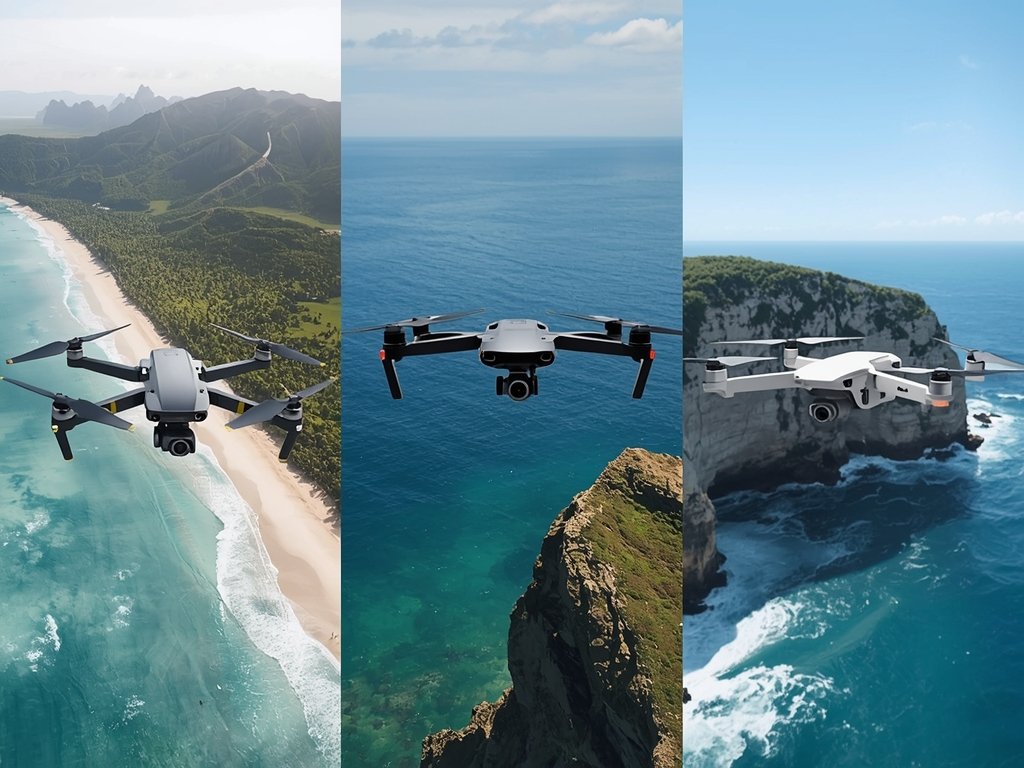
The rules are only half the beach problem; the beach itself is the other half. Sand is the enemy of everything that moves: a single grain in a gimbal motor or a propeller bearing can end a flight, and taking off from dry sand throws it straight into the aircraft. Launch from a landing pad, a towel, or a flat rock — never directly from the sand — and keep the drone in its case until the moment of takeoff. Salt is the slower enemy: salt spray corrodes motors and contacts, and a drone flown regularly at the beach needs its motors and contacts cleaned and dried after every session, not just when it looks dirty.
Wind is the third beach factor, and it is stronger at the coast than inland: the wind at 100 feet over the water can be twice the wind you feel on the sand, and a drone that flies out easily can struggle to come back against it. Check the wind at altitude before you fly out, and keep enough battery to fight it home — our guide to drone weather checks covers the wind, visibility and Kp-index checks that matter. And watch for gulls: they are territorial, they are fast, and they will attack a drone that comes near a nest. If gulls start circling, bring the drone back — a gull strike is a crash, and a crash over water is a lost drone. After the flight, dry the aircraft properly: wipe the body and the gimbal, blow out the motors with a blower rather than compressed air, and leave the battery and the drone out of their cases until both are fully dry, because salt trapped in a closed case keeps corroding long after the beach is behind you.
The Pre-Flight Checklist for a Beach Day
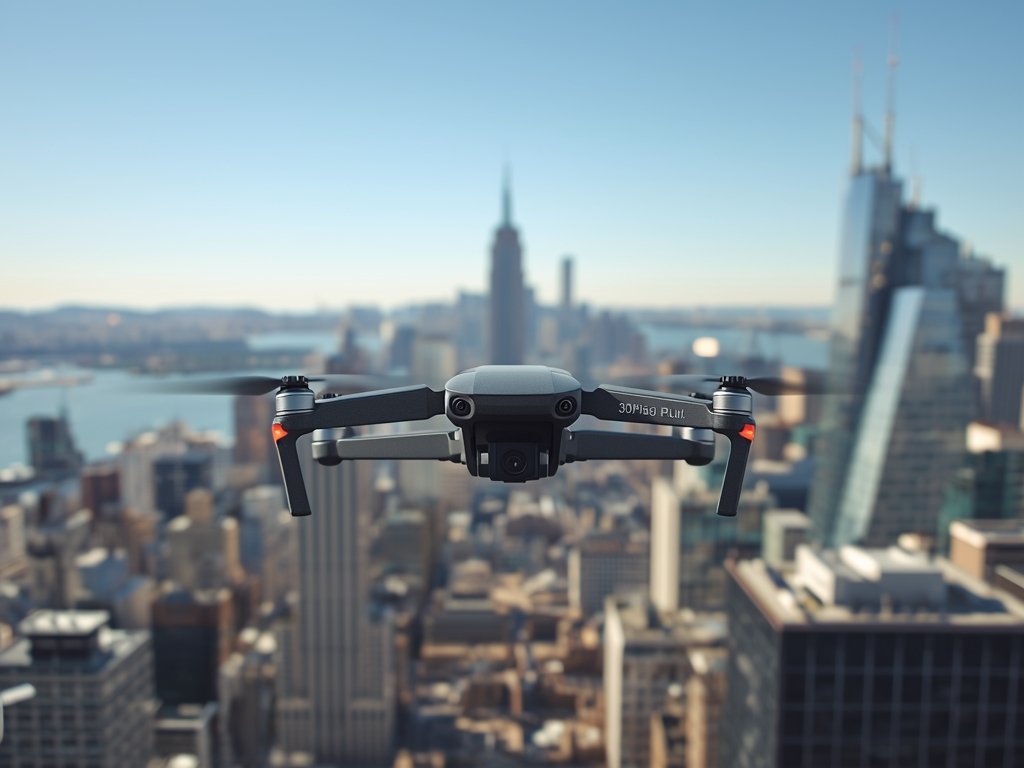
Put it together and the beach checklist is: TRUST certificate and registration on your phone; LAANC authorisation if the beach is in controlled airspace; the managing authority’s rules checked — national park, state park, city or county; a launch point that is empty of people and clear of the crowd; a landing pad to keep the sand out; the wind checked at altitude, not just at ground level; and enough battery to fly out and back against that wind. Fly early or on a quiet day, stay over the water or the empty sand, and keep the drone where you can see it — the sea horizon is a long way away, and a white drone against a bright sky disappears faster than you expect. Take a spare battery and a microfiber cloth, too: the spare covers the windier-than-expected return, and the cloth is for the lens, which will pick up salt spray even on a calm day.
And one last check that pilots forget: the return flight. A beach flight is usually flown out over the water, and the return is into the wind, over the water, with a battery that is lower than it was. Plan the return before you fly out: know the battery percentage at which you turn around, know the landing point, and know what you will do if the wind rises while you are out. The flight is not over when you get the shot — it is over when the drone is back on the pad, dry, and in its case.
Frequently Asked Questions
Can I fly my drone on any public beach? No. Federal rules apply everywhere, but the beach itself may be inside a national or state park that bans drones, or in controlled airspace near a coastal airport, or managed by a city that prohibits launching and landing. Check the airspace with a LAANC app and the land rules with the managing authority before you go.
Do I need LAANC to fly at the beach? Only if the beach is in controlled airspace — Class B, C, D, or surface-area Class E. Many coastal beaches are, because coastal airports are common. Check with a LAANC app: if it shows controlled airspace, get the authorisation first — it is free and usually approved in seconds. If it shows uncontrolled Class G airspace, the 400-foot limit applies instead.
Can I fly over people on the beach? No — not over sunbathers, swimmers or anyone who is not part of your operation. Recreational guidelines prohibit flying over non-participants, and Part 107 restricts it for commercial flights. On a crowded beach, fly over the water or an empty stretch of sand, or fly early when the beach is quiet.
Will sand damage my drone? Yes, if it gets in. Sand in a gimbal motor or a propeller bearing can end a flight, and salt spray corrodes motors and contacts over time. Launch from a pad, never from the sand, and clean and dry the aircraft after every beach session.
Join Our Pilot Community
Connect with fellow drone enthusiasts, share your aerial shots, and get access to free PDF ebook guides.