Remote ID is the rule that makes your drone identifiable in flight — a radio broadcast of who it is, where it is, and where its pilot is, sent from takeoff to shutdown. It has been required for every registered drone in the United States since 16 September 2023, and the FAA has fully enforced it since 16 March 2024. In 2026 the rule got sharper teeth: flying without Remote ID is now on the list of violations the FAA says it will pursue with legal action, and a new enforcement track and a new lookup tool for police have arrived with it. This guide explains the rule as it stands in November 2026, the three ways to comply, and how to check your own aircraft.
What Remote ID Is: A Digital Licence Plate

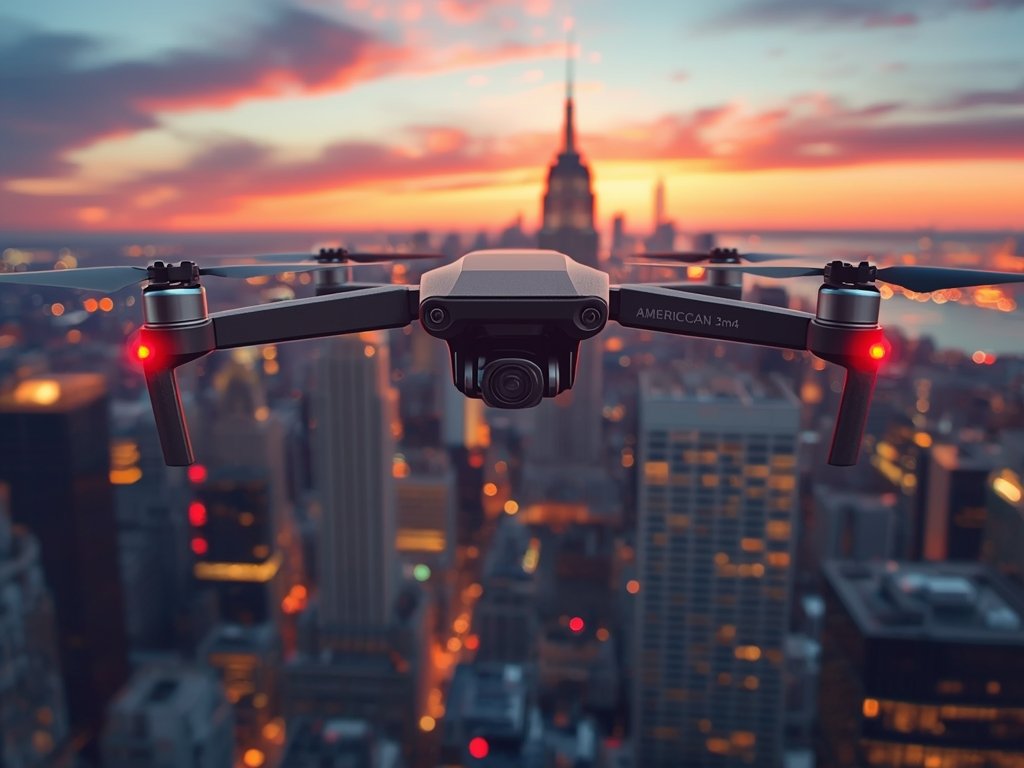
Remote ID is often called a digital licence plate, and the comparison is close enough to be useful. A car carries a plate so that anyone who sees it can identify the vehicle and its registered owner; a drone carrying Remote ID broadcasts its identity and position so that law enforcement, the FAA and other airspace users can do the same. The broadcast is a radio signal, not a data connection: it goes out over Bluetooth or Wi-Fi to any receiver in range, and it needs no mobile signal, no subscription and no internet connection to work. The rule itself is 14 CFR Part 89, published as a final rule in January 2021 after more than 53,000 public comments.
The reason for the rule is straightforward. Drones share low-altitude airspace with manned aircraft, and before Remote ID there was no way for anyone on the ground to tell a legal drone from an illegal one, or to find the pilot of a drone doing something dangerous. Remote ID closes that gap without grounding anyone: it does not track your flight on a map, it does not record your video, and it does not give the FAA a live feed of where you fly. It broadcasts a short set of facts to receivers nearby, and that is all. The full text of the rule is on the eCFR page for 14 CFR Part 89, and the FAA’s plain-English summary is on its Remote ID page.
Who Has to Comply

Remote ID applies to anyone operating a drone that is registered, or required to be registered, with the FAA. That covers every drone flown under Part 107, whatever it weighs — a sub-250 g drone flown commercially must be registered, and so must comply — and every recreational drone over 250 g (0.55 lb). A recreational drone of 250 g or less, flown purely for fun, does not need registration and does not need Remote ID. The line is the registration line, not the weight line on its own: the same Mini 5 Pro that flies free of Remote ID on a recreational flight needs it the moment the flight is commercial, because Part 107 requires registration of every aircraft it covers.
Registration itself is cheap and quick: $5, valid for three years, done on FAADroneZone in about five minutes. Recreational registration covers every drone you own under one number; Part 107 registration is $5 per drone, with each aircraft registered separately. Foreign civil drones flown in the United States must also comply, and need a Confirmation of Identification from the FAA kept at the control station before they fly. One thing Remote ID does not do: it cannot be met with ADS-B Out, the system manned aircraft use — the rule specifically forbids it, because ADS-B was never designed for low-altitude drone traffic and would flood the frequencies manned aircraft rely on.
The Three Ways to Comply

There are three ways to meet the rule, and most pilots will only ever use the first. A standard Remote ID drone has the broadcast built in by the manufacturer: the aircraft sends its serial number, its position, altitude and speed, and the position of the control station, from takeoff to shutdown. Most current DJI drones are standard Remote ID drones, and if you bought a new drone in the last two years, this is almost certainly the path you are already on. The serial number must be on the FAA’s list of accepted declarations of compliance — the manufacturer’s filing showing the model meets the rule — and that serial number must be on your registration.
The second path is a broadcast module: a small add-on device fitted to an older drone that was built without Remote ID. The module sends its own serial number, the drone’s position, altitude and speed, and the takeoff location instead of the pilot’s live position. Broadcast modules cost roughly $130 to $300 — the AeroPing and BlueMark DB120 are the names pilots meet most — and if you use one, you list the module’s serial number on the drone’s registration, not the drone’s. The catch is that the module path and the third path both require the person at the controls to be able to see the drone at all times. The third path is a FRIA, an FAA-recognised identification area: a site, usually a model-aircraft club field or a school, where drones without Remote ID can fly, as long as both pilot and drone stay inside the boundary and the drone stays in sight. Only community organisations and educational institutions can apply for a FRIA, and approval lasts 48 months.
What the Broadcast Actually Sends

The broadcast is deliberately short. A standard Remote ID drone sends its serial number (or a session ID, once the FAA supports that), its latitude, longitude, altitude and speed, and the latitude, longitude and altitude of the control station. A broadcast module sends the module’s serial number instead of the drone’s, and the takeoff location instead of the pilot’s live position. That is the whole message: no video, no flight plan, no pilot name. The broadcast cannot be switched off in flight, and it runs from takeoff to shutdown.
What has changed in 2026 is who can read the other half of the story. In March 2026 the FAA launched DiSCVR, a tool that lets law enforcement query a Remote ID serial or registration number and see the registered owner’s name, address and phone number. The broadcast itself still carries no name — DiSCVR is a lookup on the FAA’s side, not part of the signal — but the practical effect is that a drone spotted doing something dangerous can now be traced to its owner in minutes rather than days. The session ID is the other change on the horizon: in future, standard Remote ID drones may broadcast a session ID instead of a serial number, so the aircraft is identifiable to the FAA without its permanent serial being readable by anyone with a receiver. The FAA is still formulating the plan for assigning session IDs, and no date has been set.
How to Check Your Drone and Register It

Checking compliance takes five minutes and has three steps. First, check whether your drone is a standard Remote ID drone: look up the model on the FAA’s declaration-of-compliance list, or check the manufacturer’s specifications — DJI lists Remote ID compliance on the spec page of every current model. Second, check the registration: log into FAADroneZone, confirm the aircraft is registered, and confirm the Remote ID serial number on the registration matches the aircraft or the module. For a Part 107 drone, that means the drone’s own serial number, or the module’s serial number if you fly with a module; for a recreational drone, the registration number covers all your aircraft, but the Remote ID serial still has to be entered.
Third, verify the broadcast before you fly for real. The simplest check is a phone app that listens for Remote ID broadcasts — several free apps show nearby drones and their serial numbers — and a short hover in an open area will confirm your aircraft is transmitting. If it is not, the causes are usually mundane: the drone’s firmware is out of date, the module is not powered, or the serial number on the registration does not match the aircraft. Do not fly a registered drone that is not broadcasting and hope nobody notices: the broadcast is the compliance, and a drone that should be transmitting and is not is the same violation as a drone with no Remote ID at all. The renewal rules that keep the certificate behind the registration current are in our guide to Part 107 licence renewal.
Enforcement in 2026: What Changed

Remote ID has been required since September 2023, so most pilots think of it as old news. In 2026 it is worth a second look, because the FAA changed how it enforces the rule. FAA Order 2150.3C, Change 13, effective 21 January 2026, added a bulletin following the June 2025 executive order on drone airspace, and it lists flying without remote identification in violation of 14 CFR §89.105 among the violations where the FAA will pursue legal enforcement action. Before that change, a missing Remote ID was a violation like any other; now it is one the FAA has said on paper it will take to court.
The second 2026 change is DETER, the Drone Expedited and Targeted Enforcement Response, launched in April 2026. DETER is a faster resolution track for less serious violations by eligible first-time operators who accept liability and give up their appeal — a quicker, cheaper way to close a minor case, in exchange for not fighting it. The third change is DiSCVR, the law-enforcement lookup tool launched in March 2026, described above. The penalties behind all three have not changed: the FAA can fine up to $75,000 per violation and suspend or revoke certificates, and it has been able to since the enforcement grace period ended on 16 March 2024. What changed in 2026 is the speed and certainty of being caught, and the FAA’s stated willingness to use the full penalty. The FAA Remote ID page lists the three compliance paths as they stand today.
FRIAs, Privacy and the Myths

Three myths about Remote ID keep circulating, and all three are wrong. The first is that Remote ID lets the FAA track everywhere you fly. It does not: the broadcast only reaches receivers nearby, and the FAA does not receive a live feed of your flights. The second is that Remote ID broadcasts your name and address. It does not: the signal carries a serial number and positions only, and the name comes from the FAA’s registration records, which law enforcement can now query through DiSCVR — the same way a car plate leads to a registered owner, not the other way round. The third is that flying inside a FRIA means you never need Remote ID. It does not: a FRIA is a place where a drone without Remote ID can fly, but a drone that has Remote ID still has to broadcast inside one, and the pilot and the drone must stay inside the boundary and in sight.
The honest privacy concern is narrower than the myths: anyone with a cheap receiver can see a drone’s serial number and position while it flies, and the serial number is a stable identifier for that aircraft. The session ID, when it arrives, is the fix for that concern, and it is worth watching for. Until then, the practical advice is simple: comply, keep the registration details current, and remember that the rule applies to the aircraft, not the pilot — a borrowed drone is compliant if the drone is, and a compliant drone flown by someone else is still compliant. The airspace rules that sit alongside Remote ID are in our guides to drone no-fly zones and how high a drone can legally fly, and the future rules that may change the picture are in our guide to the FAA Part 108 BVLOS shift — which is still a proposal, not a final rule, and its Remote ID details must not be presented as settled.
Frequently Asked Questions
Do I need Remote ID for a DJI Mini 5 Pro? It depends on the flight, not the drone. The Mini 5 Pro is a standard Remote ID drone, so the broadcast is built in. Recreationally, under 250 g, you do not need to register it and Remote ID does not apply. Commercially, under Part 107, you must register it and the broadcast must be on, with the serial number on the registration.
How do I know if my drone has Remote ID? Check the FAA’s declaration-of-compliance list for your model, or the manufacturer’s spec page. Most DJI drones made since 2022 have it built in. A phone app that listens for Remote ID broadcasts will confirm the aircraft is actually transmitting.
Can I fly an old drone without Remote ID? Yes, in two ways: fit a broadcast module, which costs roughly $130 to $300, or fly inside a FRIA. Both require you to keep the drone in sight at all times. Flying a registered drone with no Remote ID anywhere else is a violation.
Does Remote ID work without a mobile signal? Yes. The broadcast goes out over Bluetooth or Wi-Fi directly from the drone or module to nearby receivers. It needs no mobile signal, no subscription and no internet connection.
What is the fine for flying without Remote ID? The FAA can fine up to $75,000 per violation and suspend or revoke your certificate. Since January 2026, flying without Remote ID is listed in FAA Order 2150.3C Change 13 among the violations the FAA says it will pursue with legal enforcement action. Our autonomous drone guide covers the smart-tracking aircraft most affected by the rule in commercial work.
Join Our Pilot Community
Connect with fellow drone enthusiasts, share your aerial shots, and get access to free PDF ebook guides.