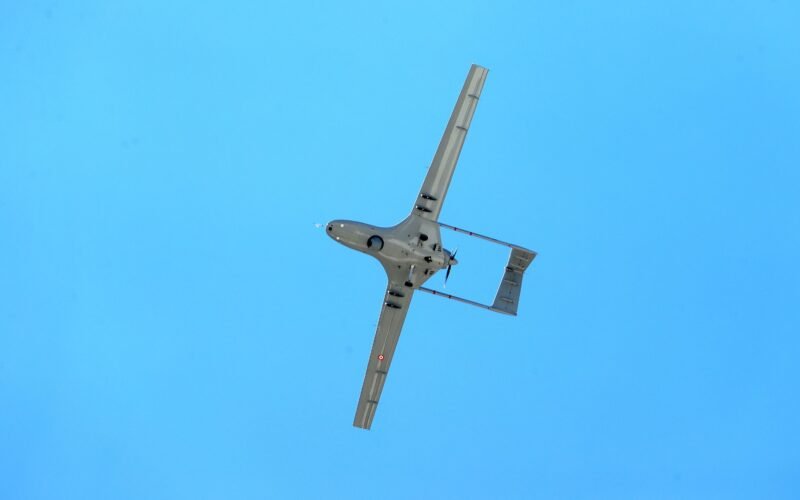
The Barrie Police Service in Ontario has launched a Drone as First Responder trial, in which a remotely piloted drone, docked on the roof of Barrie City Hall, can launch within 25 seconds and give officers live aerial information before they arrive at a scene. The service announced the trial at a press conference on Friday 20 November, and the program is already credited with a real result: during a test flight on 18 November, the drone located a person in crisis and guided officers to them. The trial will run as two consecutive 60-day evaluations, it has been approved by Transport Canada, and the police service says it is about getting information to officers sooner — not about general surveillance. The announcement was made in a media release published on 20 November, and the trial was also noted in the KR DroneWorks weekly roundup of drone news for the week ending 21 November.
The Barrie trial is part of a wave. Police departments across North America are adopting Drone as First Responder programs, in which a drone launches from a dock and arrives at the scene before officers, and the week of the Barrie launch saw the same model start in Knoxville, Tennessee, approved in Pinehurst, North Carolina, and reported in detail from New Castle County, Delaware, where police drones were first on scene at 756 of 844 calls over six months. Barrie is the Canadian entry in that wave, and it is a modest one by design: a single drone, a single dock, two 60-day trials, and a public dashboard to come. This article sets out how the trial works, what it has already done, the privacy rules around it, and what it means for the towns that follow.
A Drone on the Roof of City Hall

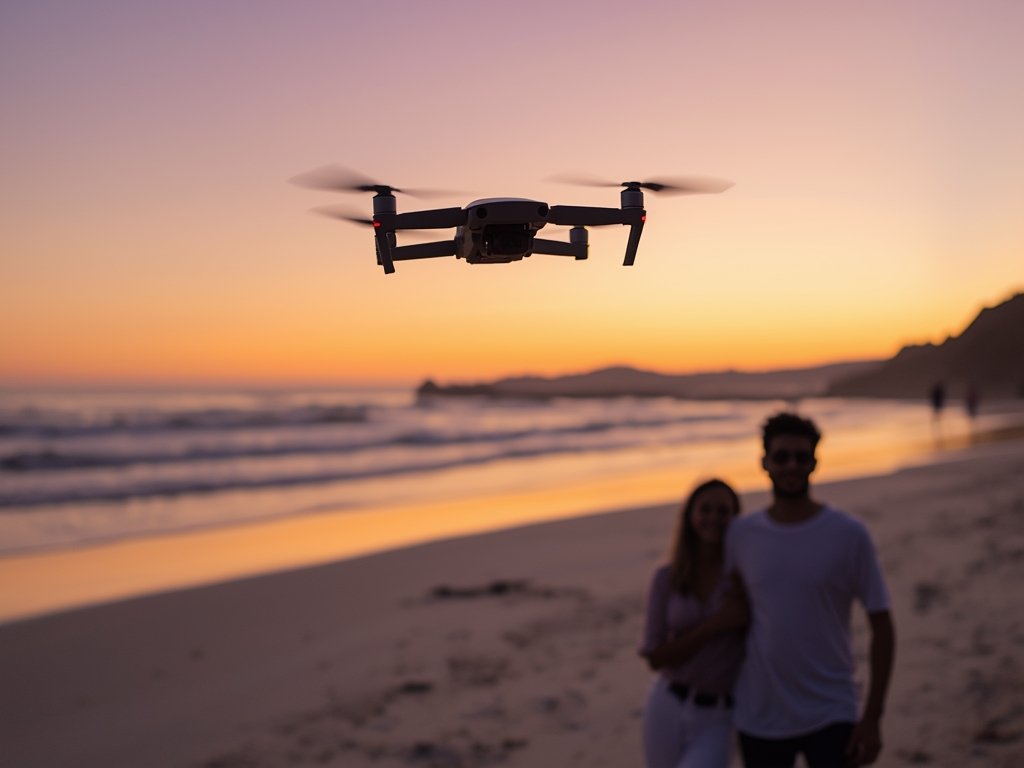
The drone will be deployed as needed from the roof of the Barrie City Hall Rotunda, by a qualified Barrie Police operator stationed at police headquarters. It can launch within 25 seconds, has a battery life of up to 40 minutes in ideal conditions, and can span two nautical miles — a 3.7-kilometre radius — from its docking station. It flies at 72 kilometres per hour, according to the KR DroneWorks roundup, and it must operate no lower than 100 feet from the ground under Transport Canada regulations. It is equipped with emergency lights, similar to a police cruiser, and must always have its navigation lights activated. The pilot project will be conducted during daylight hours, to correspond with the service’s highest call volume, although the drone also has the capability to operate at night if required. All flights will be conducted by appropriately certified and trained personnel stationed at headquarters, and all DFR pilots have obtained Advanced Operations Pilot Certificates issued by Transport Canada.
The program is being run in partnership with Simon Fraser University, according to the KR DroneWorks roundup, which adds an academic dimension to the trial: the university’s involvement suggests the two 60-day evaluations will be studied, not just operated, and that the results may be published as research as well as reported as police data. That matters, because the evidence base for Drone as First Responder programs is still thin. Departments publish their own dashboards, but independent evaluation is rare, and a university partner is the kind of arrangement that can produce the rigorous assessment the model still needs.
“This is about getting important information to our officers sooner,” said Chief Rich Johnston. “The sooner our officers understand what they’re responding to, the better equipped they are to assess potential safety concerns, determine the resources needed, and make informed decisions. The drone doesn’t replace the work our officers do. It gives them another tool to support that work.” The framing is deliberate: the drone is presented as an information tool, not a replacement for officers, and the trial is presented as an evaluation, not a permanent deployment. The two 60-day trials will allow the service to evaluate the technology, its operational benefits, and its potential role in supporting future police operations, and additional information about the program, including an automated dashboard showing its usage, will be available on the Barrie Police Service website.
The Save That Came Before the Launch

The potential benefits of the technology have already been demonstrated during preliminary testing. During a test flight on 18 November, a call for service came in involving a person in crisis. The team was able to use the drone to establish the individual’s location, monitor their movements, and relay information to responding officers, helping them locate the individual quickly. The individual was ultimately okay. It is a small story — one person, one flight, two days before the formal launch — but it is the kind of story that makes the case for the program better than any statistic: a drone that can find a person in crisis faster than officers on foot, and guide them to the right place.
The save also illustrates the specific advantage of a docked, remotely piloted drone over a conventional police drone. A conventional police drone has to be driven to the scene, unpacked, launched and flown by an officer on the ground — a process that takes minutes at best, and that requires an officer to be present. A docked Drone as First Responder launches in 25 seconds from a rooftop, flown by an operator at headquarters, and it is overhead while officers are still en route. The difference is not just speed; it is the difference between a drone that arrives after the officers and a drone that arrives before them, and that changes what the officers know when they get there. Our report on the DJI thermal drone that found a missing boy in Garland, Texas covers a similar story from the other side of the border — a drone finding a person who could not be found from the ground — and the pattern is the same: the aerial view finds what the ground search misses.
Privacy: What the Drone Cannot Do
The Barrie Police Service has been explicit about the limits of the trial, and the limits are the most important part of the announcement for residents. The drone is not equipped with facial recognition abilities or automatic licence plate readers. It will not be used for ongoing monitoring or regular patrolling. It has the ability to record, but it is not always in record mode — the operator determines whether recorded footage is required. “This is not about general monitoring or surveillance of our community. It is about using technology for a specific public safety purpose when it can make a difference,” Chief Johnston said. “We want to be transparent about how and why we use this technology, and to ensure it is used responsibly.”
The Dashboard Question
Those rules are stricter, in some respects, than the rules in other departments. The New Castle County drone policy in Delaware, for example, requires recording from launch to landing, and gives no retention period; Barrie’s approach — record only when the operator decides footage is required — is more restrained, but it also raises its own question: who decides, and on what basis, and is the decision recorded? The automated dashboard the service promises will show usage, but it is not yet clear whether it will show, flight by flight, what the drone did, where it flew, and whether it recorded. The promise of transparency is there; the detail is still to come.
What It Means for Civilian Pilots
For civilian drone pilots, the Barrie trial is a reminder that the airspace over Canadian towns is increasingly shared with police drones, and that the rules for flying near them are the same rules that govern flying near any aircraft. The DFR must operate no lower than 100 feet, it carries emergency and navigation lights, and it is flown by certified pilots under Transport Canada regulations — which means it is an aircraft in the full legal sense, and the rules that protect it are the rules that protect every aircraft. Our guide to drone Remote ID explained covers the identification rules that apply to civilian drones, and our guide to how to become a drone pilot covers the certification path that the Barrie operators themselves have followed.
A Wider Canadian Wave
Barrie is not the only Canadian department moving toward Drone as First Responder. Vancouver police are tripling their drone fleet to 24 aircraft, according to reporting in the week of the Barrie launch, and the model is spreading across the country as departments watch the American results and the Canadian trials. The attraction is the same everywhere: a drone that arrives first, sees more, and frees officers for the work that only officers can do. The risk is also the same everywhere: a surveillance capability that, once installed, can be expanded, and a public that has to trust the police to use it only for the purposes stated.
The Florida comparison shows how fast the demand is growing. Our report on the Florida police drone fund claimed in 15 days covers a state program that was exhausted almost as soon as it opened, because departments across Florida wanted drones faster than the funding allowed. The Canadian wave is smaller and slower, but it is moving in the same direction, and Barrie’s two 60-day trials are the kind of careful, evaluated step that other departments will watch. If the trials show that the drone gets information to officers sooner, that it helps in real incidents, and that the privacy rules hold, other Canadian towns will follow. If they show the opposite, the model will stall.
The university partnership is, in that sense, the most interesting part of the Barrie announcement. A trial that is evaluated by an academic partner produces evidence that other departments can rely on, and that critics can test. A trial that is evaluated only by the department that runs it produces a dashboard, which is better than nothing, but which is not the same thing. The Barrie trial’s credibility will depend, in the end, on whether the evaluation is published, and whether it is honest about the flights that did not help as well as the one that did.
What to watch next. The first thing to watch is the dashboard, when it appears on the Barrie Police Service website: whether it shows flights individually, with times, locations and outcomes, or only as a summary. The second is the results of the two 60-day trials, and whether the service publishes them in full. The third is the Simon Fraser University evaluation, and whether it is made public. The fourth is whether other Ontario departments follow Barrie’s lead, and whether the model spreads to larger Canadian cities. And the fifth is the privacy record: whether the rules — no facial recognition, no plate readers, no routine patrolling, record only when required — hold in practice, and whether any complaint or incident tests them.
Frequently Asked Questions
What is the Barrie Police Drone as First Responder trial? A trial in which a remotely piloted drone, docked on the roof of Barrie City Hall Rotunda, launches within 25 seconds to give officers live aerial information before they arrive at a scene. It runs as two consecutive 60-day trials, approved by Transport Canada, and was launched on 20 November 2026.
How fast and how far can the drone fly? It launches within 25 seconds, flies at 72 kilometres per hour, has a battery life of up to 40 minutes in ideal conditions, and can cover a 3.7-kilometre radius from its dock. It must operate no lower than 100 feet from the ground.
Has the drone already helped anyone? Yes. During a test flight on 18 November, a call came in about a person in crisis. The drone established the person’s location, monitored their movements and relayed information to responding officers, helping them locate the individual quickly. The individual was ultimately okay.
Does the drone have facial recognition or licence plate readers? No. The drone is not equipped with facial recognition or automatic licence plate readers, and it will not be used for ongoing monitoring or regular patrolling. It can record, but it is not always in record mode — the operator decides whether footage is required.
Who flies the drone? Qualified Barrie Police operators stationed at police headquarters, all of whom hold Advanced Operations Pilot Certificates issued by Transport Canada. The trial is run in partnership with Simon Fraser University.
Join Our Pilot Community
Connect with fellow drone enthusiasts, share your aerial shots, and get access to free PDF ebook guides.