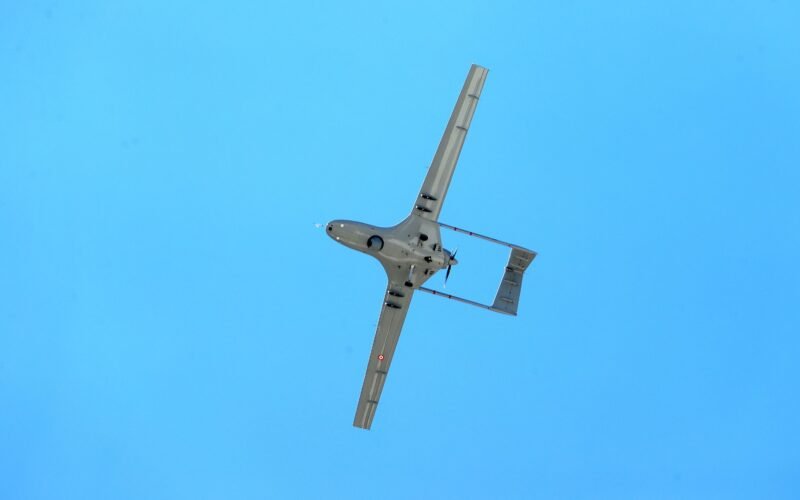
A 14-year-old boy with autism wandered from his home in Garland, Texas, just after 8:30 a.m. on 29 October 2026, and walked into dense tree cover near his house. According to DroneXL, which reported the story on 19 November, a Garland police drone pilot picked up the boy’s heat signature under the trees and talked officers on foot to his position. The boy was returned to his family. The department told the story itself in a Facebook post, releasing a 21-second thermal video of the search on 17 November, and CBS News Texas reported on the unit the following day, 18 November. It is a short story with a happy ending — and it is also a snapshot of how thermal drones have moved from specialist kit to everyday police equipment, and of the political argument still running underneath them in Texas.
What Happened on 29 October in Garland

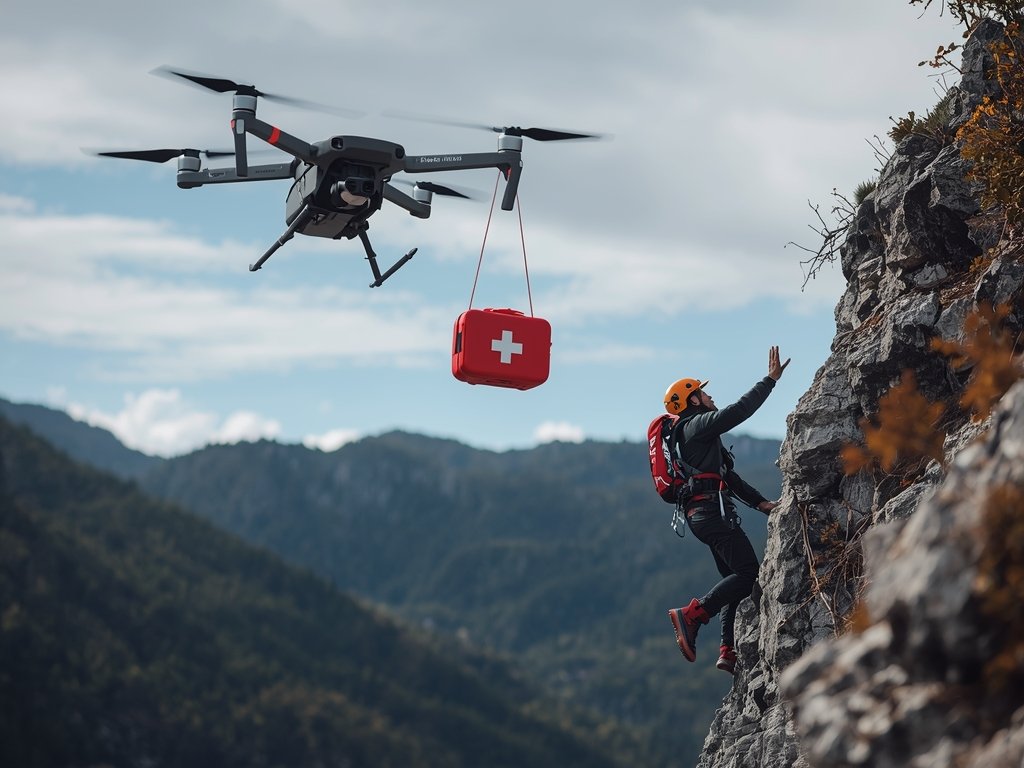
The boy left home in the 4800 block of North Garland Avenue in Garland, Texas, just after 8:30 a.m. on 29 October 2026, according to DroneXL’s report of the incident. He has autism, and his family asked police for help finding him after he wandered away. The woods near his home were too thick to search effectively from the ground, the Garland Police Department said, and a regular camera looking down from the air did no better — the tree canopy hid whatever was underneath it. That is the problem thermal imaging exists to solve: a standard camera records reflected light, so a person under dense leaves is invisible to it, while a thermal camera records heat, and a warm body stands out against cooler ground and vegetation even when it cannot be seen directly.
DroneXL reports that the police drone pilot spotted a small heat signature moving under the trees and guided officers on foot to it. The boy was found and returned to his family. The department’s Facebook post, which carried the thermal video, does not give the child’s age or the pilot’s name — those details come from the CBS News Texas report, which identified the boy as 14 and the pilot as Officer Michael Crick. What the record does not include is how long the search lasted from the call to the find, or how far into the woods the boy had gone, and this article does not guess at either. What is established is the sequence: a call for help on a Thursday morning, a drone launched over ground that officers could not search quickly on foot, a heat signature found under tree cover, and a child brought home.
The timing of the public telling matters too. The search happened on 29 October, but the story only reached a wide audience weeks later: the department released its thermal video on Tuesday 17 November, CBS News Texas ran its report on the unit on Wednesday 18 November, and DroneXL published its account on 19 November. That gap is normal for a department telling a good-news story on its own schedule rather than in the heat of an incident, but it is worth noting because the aircraft identification in the story — the part that has drawn the most attention — comes from the television footage filmed weeks after the search, not from the search itself.
How the Thermal Camera Found Him Under the Trees
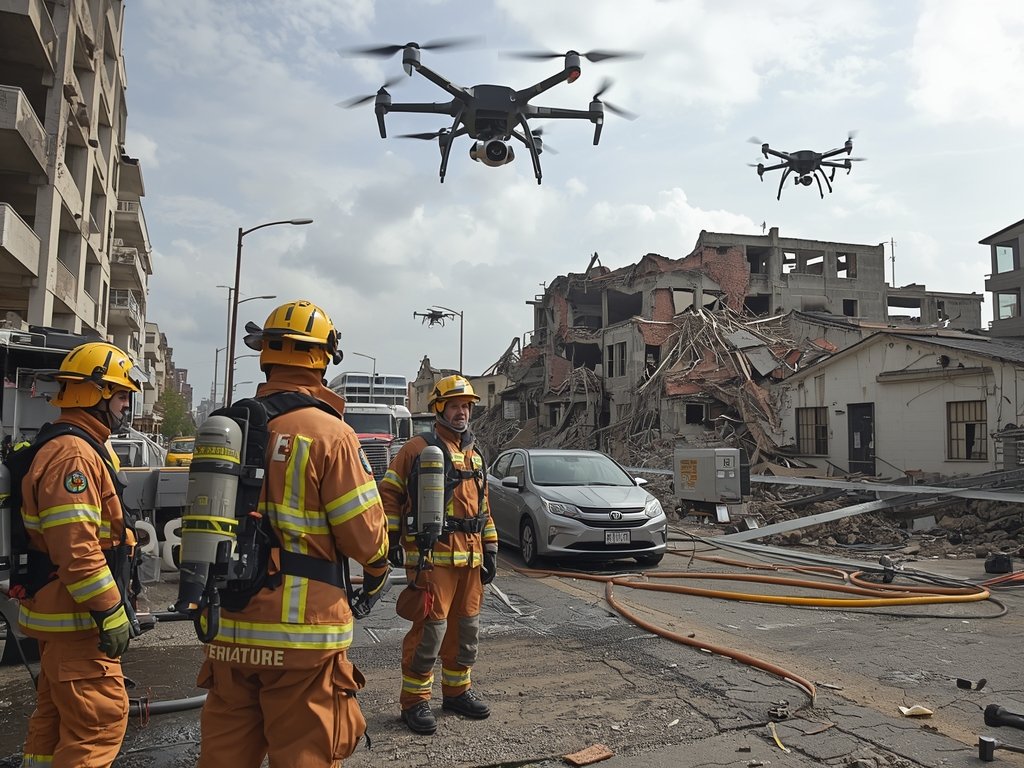
The reason this rescue worked is the difference between a normal camera and a thermal camera, and it is worth understanding because it explains both the success and the limits of the technology. A normal camera needs light bouncing off a subject; under a dense canopy, in shade, or at night, there is little light to bounce. A thermal camera instead detects infrared radiation — heat — emitted by objects. A person’s body is warmer than the surrounding trees, soil and leaf litter, so it shows up as a bright shape against a darker background. That is why the Garland pilot could see a moving heat signature where a regular camera, and officers on the ground, saw only trees.
That advantage comes with limits that matter for anyone considering thermal drones for search and rescue. Thermal cameras cannot see through solid objects: a thick roof, a wall, or deep water will block the heat signature just as surely as it blocks a normal view, and heavy rain can degrade the image. The picture is also low in detail compared with a normal camera — a thermal image shows a warm shape, not a face, so identifying who the shape is still needs officers on the ground or a second camera. In Garland, the drone did the finding and the officers did the confirming and the recovery, and that division of labour is the point. Our guide to thermal vs regular cameras on security drones explains the trade-offs in more detail, including when a thermal payload is worth the extra cost and weight and when a normal camera with a good zoom does the job better.
The other lesson from Garland is speed. A drone can be over a search area in minutes, covering ground that would take a line of officers far longer to walk, and it can do so without putting searchers into hazardous terrain. CBS News Texas reported that Officer Crick told the station the drone found the teenager faster than officers could have reached him on foot. That claim is the officer’s own assessment, and it matches the basic geometry of the situation: one aircraft looking down over acres of woods against a ground team pushing through undergrowth. For a missing child, and especially for a child with autism who may not respond to calls or stay in one place, that time saving is the whole argument for the technology.
Officer Michael Crick and the Garland Drone Unit

The pilot who flew the search is Officer Michael Crick, according to CBS News Texas, which reported that he is a 30-year patrol veteran. That detail is more than colour: it underlines that the Garland drone unit is staffed by experienced officers who have added drone flying to a long policing career, rather than by drone specialists with no street experience. A pilot who has spent three decades on patrol knows how a search works, how officers on the ground need directions, and how to talk a team onto a target — and in this case, talking officers to a heat signature under trees was exactly the skill that mattered.
The Garland Police Department has flown drones since 2019, according to DroneXL, and CBS News Texas reported that the department now has eight drones. The unit’s aircraft are department-issued, and the department says only that the pilot flew his department-issued drone on 29 October — it has not said which of the eight it was. That matters because the most-discussed detail of the story, the aircraft model, comes not from the department but from television footage shot later, as the next section explains. What the department has said, in its Facebook post and in its public materials, is that drones are used for searching for missing or endangered people, and that the woods near the boy’s home were too thick to search from the ground.
The unit’s work sits in a wider pattern that our own coverage has followed all year. Police and rescue drones now routinely find missing people in terrain where ground search is slow or dangerous, and the Garland case joins a long list of them — see our roundup of search and rescue drones for more examples from 2026. The Garland story is not unusual in its outcome; what makes it notable is the clarity of the evidence — a released thermal video showing the find — and the fact that the aircraft involved became a political talking point in Texas within days of the story breaking.
A DJI Matrice 30 Series Drone — and What Is Still Unconfirmed
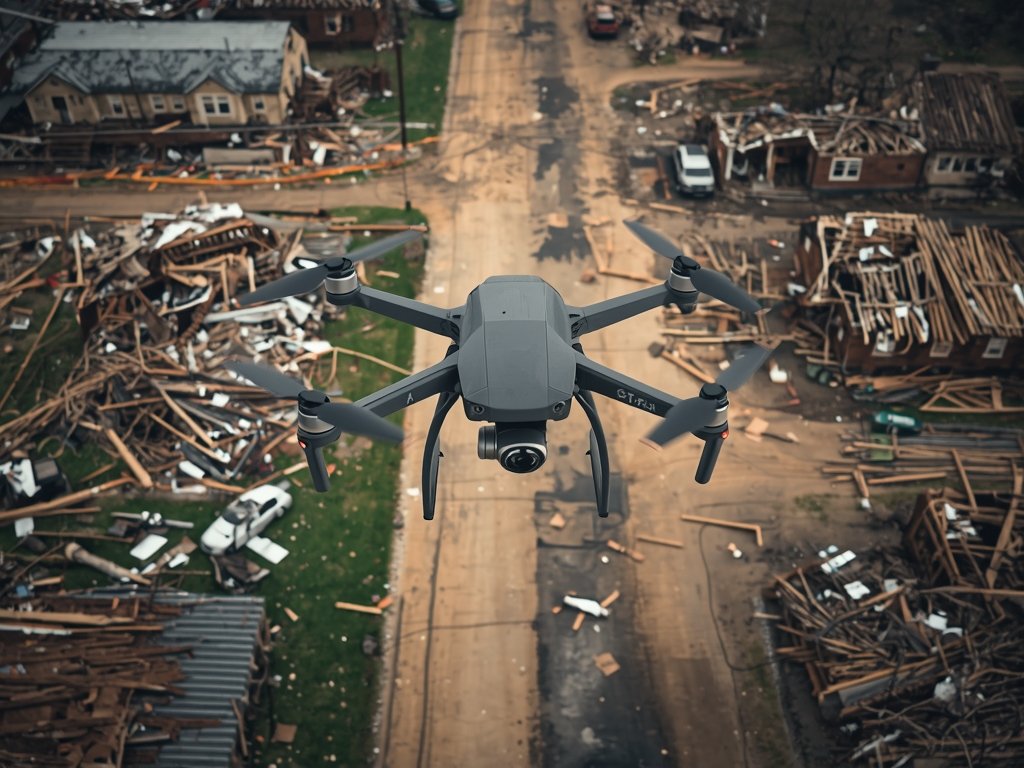
Here is where the story needs care, because the detail everyone wants — which drone found the boy — is not confirmed. CBS News Texas filmed a DJI Matrice 30 series drone flying outside a Garland police building in its 18 November report, and DroneXL identified the aircraft in the footage as a Matrice 30 series machine. But neither the station’s written report nor the department’s Facebook post says which of the department’s eight drones flew the 29 October search, and Garland has not confirmed that the aircraft in the CBS footage is the aircraft that found the boy. This article therefore says only that CBS footage shows a DJI Matrice 30 series drone at Garland Police Department, and that the exact variant that flew the search is unconfirmed.
The variant question matters because the Matrice 30 comes in two versions, and only one of them carries a thermal camera. DJI launched the Matrice 30 in March 2022 in two versions, according to DroneXL, and the M30T is the one with a 640×512 thermal camera. A thermal camera found the boy, so if the drone in the CBS footage is the drone that flew the search, it would be an M30T. That is DroneXL’s inference from the thermal camera, not a confirmed fact, and this article does not present it as one. The department says only that the pilot flew his department-issued drone. Until Garland says which aircraft it was, the M30T identification remains an inference — a reasonable one, but an inference all the same.
Why does the model matter enough to argue about? Because the aircraft is a DJI, and DJI is the centre of an American political fight over Chinese-made drones in government hands. A rescue carried out by a DJI drone is, for supporters of the aircraft, proof that the hardware works and that banning it would cost lives; for critics, it is a reminder of how deeply embedded Chinese-made drones are in American public safety. The Garland story landed in that argument within hours of publication, which is why getting the identification right — and saying plainly what is not confirmed — matters more than it would for an ordinary rescue story. For readers weighing the aircraft itself, our guide to the best drone for security and surveillance covers the current options, including thermal-equipped models and their non-Chinese alternatives.
The Texas Bill That Would Have Grounded Police DJI Drones
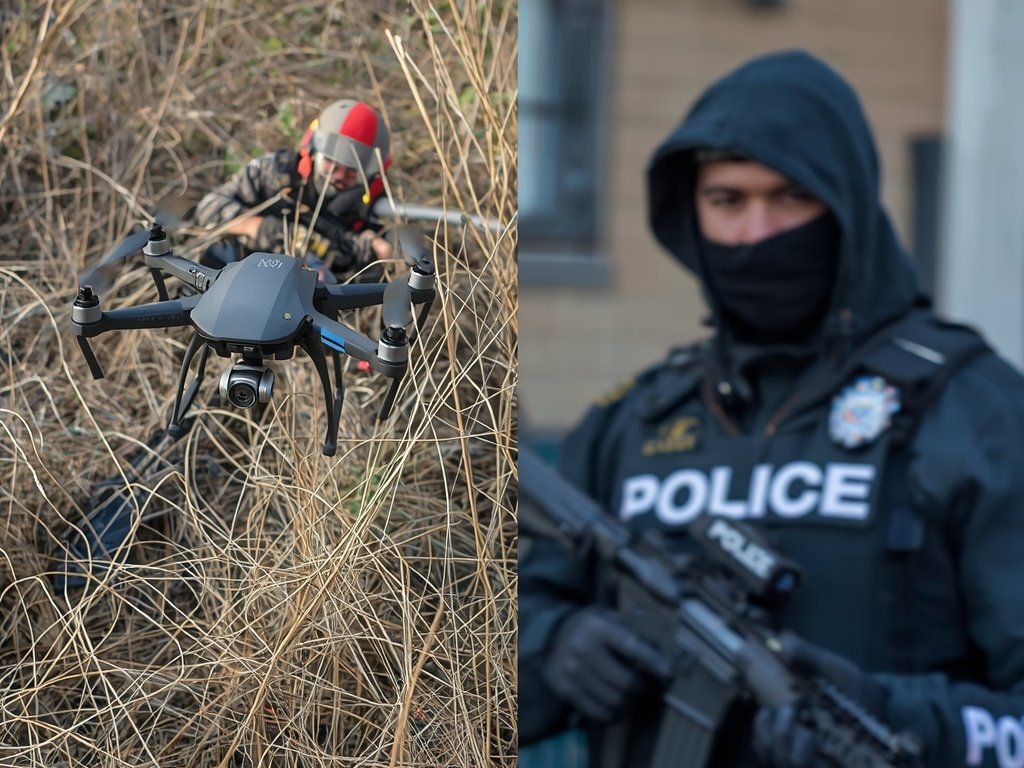
The political context for the Garland rescue is Texas HB 41, a bill from the 2025 legislative session that would have phased out police DJI drones by 2031. According to DroneXL, citing Texas Legislature Online, the bill never became law: it died at the House calendars stage on 9 May 2025. That means Garland’s drone unit, and every other Texas police department flying DJI aircraft, continues to operate them legally — and the Garland rescue happened with equipment that, had the bill passed, would have been on a path to retirement.
The bill’s failure does not mean the argument is over. Texas is one of several states where lawmakers have pushed to restrict government use of Chinese-made drones on security grounds, and Florida’s government-drone security rule — which grounded Chinese-made aircraft for state agencies — shows that such restrictions can and do take effect elsewhere. The Garland case will be cited by both sides: by opponents of restrictions, as evidence that DJI drones save lives in American towns; and by supporters, as evidence of how dependent American police have become on a foreign manufacturer. Neither side’s argument is settled by one rescue, and this article does not take a side. What the record shows is narrower: a bill that would have phased out police DJI drones by 2031 died in May 2025, and eighteen months later a Texas police drone — a DJI, according to the footage — helped bring a missing boy home.
For police departments watching this debate, the practical question is what to buy next. A department replacing aircraft today has to weigh capability against the risk that a future law restricts what it can fly, and that calculation differs by state. Our guide to the best thermal camera drone options covers thermal-equipped aircraft across manufacturers, which is the relevant comparison for any agency that wants the Garland capability without betting its fleet on a single supplier’s political future.
Why Thermal Drones Are Becoming a Search-and-Rescue Standard
Step back from the politics and the Garland rescue illustrates a straightforward trend: thermal drones are becoming standard equipment for search and rescue, because they solve the specific problem that defeats both ground teams and normal cameras — finding a warm body hidden by vegetation, darkness or distance. The technology that once belonged to military and specialist rescue units is now carried by police departments of Garland’s size, flying aircraft that cost a fraction of a helicopter and can be launched from a car park. The Garland pilot found a child under trees that officers could not search effectively on foot, and did it with a department-issued aircraft rather than a called-in specialist team.
That trend brings its own questions, and they deserve a hearing alongside the good news. Thermal drones make police surveillance more capable as well as rescue more effective, and the same aircraft that finds a missing child can watch a neighbourhood. Garland’s department, like others, says its drones are used for legitimate public safety purposes, and public trust in that claim depends on transparency — publishing policies, logging flights, and releasing video like the 21-second clip Garland shared. The department’s decision to release the thermal video is itself part of the story: it lets the public see what the drone saw, and it is the reason the rescue could be reported in detail at all.
For now, the Garland story stands as a clean example of the technology working as intended. A boy wandered into woods too thick to search on foot. A drone with a thermal camera found his heat signature. Officers on the ground, guided by the pilot, brought him home. The aircraft’s exact variant is unconfirmed, the political argument about its manufacturer is unresolved, and neither of those caveats changes the outcome. But they are part of the story too, and any honest account of the Garland rescue has to carry them alongside the good news.
Frequently Asked Questions
What happened in Garland, Texas? A 14-year-old boy with autism wandered from home in Garland just after 8:30 a.m. on 29 October 2026. According to DroneXL, a police drone pilot picked up his heat signature under dense tree cover and guided officers to him, and he was returned to his family. The department released thermal video of the search on 17 November.
Which drone found the boy? That is not confirmed. CBS News Texas footage shows a DJI Matrice 30 series drone at Garland Police Department, but neither the station nor the department has said which of the department’s eight drones flew the 29 October search. The M30T variant — the one with a thermal camera — is DroneXL’s inference, not a confirmed fact.
Who was the pilot? Officer Michael Crick, a 30-year patrol veteran, according to CBS News Texas. The department’s own Facebook post does not name the pilot.
Would Texas HB 41 have stopped this rescue? Not directly, and the bill never became law — it died at the House calendars stage on 9 May 2025. Had it passed, it would have phased out police DJI drones by 2031, which would have affected future operations rather than the 2026 search itself.
Why is a thermal camera better than a normal camera for finding a missing person? A normal camera records reflected light, so a person under dense tree cover is hidden from it. A thermal camera records heat, so a warm body stands out against cooler ground and vegetation even when it cannot be seen directly. Thermal cameras cannot see through solid objects, and they show shapes rather than detail, so officers on the ground are still needed to confirm and recover the person.
Join Our Pilot Community
Connect with fellow drone enthusiasts, share your aerial shots, and get access to free PDF ebook guides.