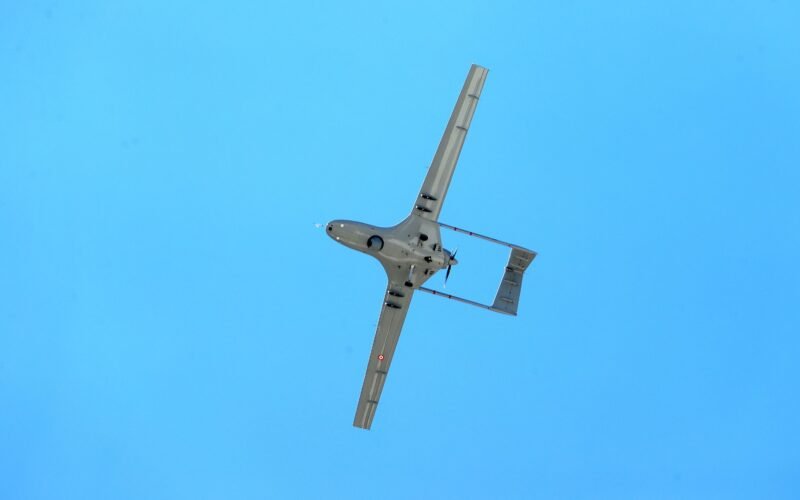
Ottawa defence startup Dominion Dynamics has unveiled twelve partnerships with established defence players in Canada for developing its Scout drone, an AI-driven uncrewed “loyal wingman” designed to fly alongside crewed fighter jets in Arctic conditions. The company announced the partnerships on Friday 20 November, and its founder, Eliot Pence, told The Canadian Press that the ambition is to build “the most ambitious air platform since the Avro in Canada” — a reference to the CF-105 Arrow, the highly regarded but short-lived interceptor jet built by Avro Canada after the Second World War. Dominion has committed $50 million to the project, according to company announcements reported in the trade press, and it is pitching Scout as Canada’s first Autonomous Collaborative Platform, built by Canadian engineers for Canada’s specific defence problem: long distances, extreme cold and thin infrastructure in the Arctic.
The announcement came in the same week that the federal government awarded Dominion a $17 million contract to build a remotely controlled marine drone that can survey the ocean floor to detect, locate and identify underwater mines for the Royal Canadian Navy. The two announcements together mark the emergence of a new Canadian defence company — founded in 2025, barely 18 months old — as a serious player in uncrewed systems, at a moment when the Canadian government is focused on acquiring sovereign capabilities and building up domestic industries. This article sets out who the partners are, what Scout is meant to do, the timeline the company has set, and what is still unproven — because the timeline, the budget and the customer are all, for now, the company’s own claims.
The Twelve Partners

Dominion’s early development partners include Pratt & Whitney Canada, which plans to supply PW300-type engines for the drones; Telesat, the Canadian satellite operator; Thales Canada; Top Aces, the Québec flight-training company; and North Aircraft Industries, PV Labs, SRC Can and Altitude Aerospace. The full list of twelve, given in the company’s announcement carried by PR Newswire, is Pratt & Whitney Canada, Telesat, Thales Canada, Top Aces, ITPS Canada, PV Labs, SRC Can, Altitude Aerospace, Groupe DCM, HSB Solutions, North Aircraft Industries and RAMPF Composite Solutions. The group runs from engines and satellite links to composites, landing gear, flight testing and training, and Dominion says companies from other NATO countries will also join the project to fill the remaining gaps.
The structure of the partnership is deliberate. Dominion would build the drone and its systems for handling data communication, sensors and intelligence, and turn to the partner companies for expertise in areas such as operator training, avionics and landing gear. Benoit Breault, Dominion’s senior vice-president of aerospace engineering, said in a statement that Scout is being developed by Canadian engineers experienced in building, testing and maintaining aircraft, and that domestic capability is central to its design and supply chain. Pence, the founder, is assembling plans for a supply chain that would be mostly domestic — a pitch that lands well with a government that has made sovereign capability a priority, and that is reviewing its plan to buy 88 F-35 stealth fighters from Lockheed Martin.
The engine choice is the most concrete technical detail in the announcement. Scout is being designed around an off-the-shelf, Canadian-built PW300 engine, which the two companies present as a way to deliver faster than a clean-sheet design would allow. The engine release, issued jointly with Pratt & Whitney Canada on 17 November, is the one partner statement that has been published jointly rather than announced by Dominion alone. The other partners’ own statements have not been published, and the announcement rests, for now, on Dominion’s own releases of 17 and 20 November — a point worth noting, because the twelve names are the substance of the story, and they have not yet been independently confirmed by the partners themselves.
Built for the Arctic
Scout is being designed for long distances, extreme cold and limited infrastructure in the Arctic, and the aircraft is intended to operate alongside crewed fighter jets and receive tasking from airborne or ground-based command systems. That combination — range, cold, and thin infrastructure — is the specific problem Dominion says nobody else is building for. “We are building for the specific Arctic problem set and nobody else is doing that,” Pence told The Canadian Press. “There are very specific problems we’re seeking to solve for the RCAF — range, Arctic ruggedization, gravel runway takeoff, short runways.” The Royal Canadian Air Force is the intended customer: Dominion wants Scout to become Canada’s first Autonomous Collaborative Platform, and to sell it to the RCAF.
The loyal wingman concept — an uncrewed aircraft that flies alongside a crewed fighter, carrying sensors or weapons into high-risk airspace so the human pilot does not have to go there — is being pursued by every major air force, and Dominion is a late entrant to a crowded field. The United States, Australia, the United Kingdom and several European countries all have collaborative combat aircraft programs under way, and the large legacy defence firms are developing similar drones to sell alongside their crewed platforms. Pence’s argument is that all of these companies are at the same starting line, because the technology is so new — and that offering a Canadian-made drone designed for the Arctic gives his company an edge that the larger firms, building for temperate theatres, do not have.
The Arctic focus is also a communications story. Dominion announced a stand-alone partnership with Telesat this week to make antennas designed for Arctic use, which would connect uncrewed military hardware to Lightspeed, Telesat’s planned low-Earth-orbit satellite network. The project, worth $2.2 million and backed in part by the National Research Council, will develop rugged, portable satellite antennas for use at high latitudes. The pairing of Arctic communications with an Arctic drone is the point: a loyal wingman that cannot stay connected to its crewed partner in the far north is useless, and the antennas are as much a part of the system as the airframe. Dominion has also deployed its AuraNet platform with the Canadian Armed Forces in the High Arctic, according to the company’s announcement, which gives it an existing operational footprint in the environment Scout is being built for.
The Timeline — and What Is Still Unproven
Dominion’s schedule, as reported by The Globe and Mail, is to finalise Scout’s design by March 2027, build demonstration aircraft by late 2028, conduct its first flight in 2029, and begin production near the end of 2030. Pence told The Canadian Press that he expects the government to launch a procurement competition for autonomous platforms in 2028 or 2029, and that he intends to have the Dominion Scout flying in late 2028 — a date that differs by a year from the first-flight date in the Globe and Mail account, and which should be read as a company target rather than a firm commitment. The releases give no timeline, budget, contract or customer for Scout, and neither release names a Royal Canadian Air Force requirement or a funding figure for the aircraft itself. The $50 million is Dominion’s own committed investment, not a government contract.
That caution matters, because the history of ambitious aircraft programs is a history of timelines that slipped and budgets that grew. The Avro Arrow, which Pence invokes, was itself cancelled before it entered service — a cautionary tale as much as an inspiration. The difference is that Dominion is not building a manned interceptor in the 1950s; it is building an uncrewed aircraft in a field where the technology is moving fast, the competition is well funded, and the customer — the Canadian government — has not yet run the procurement that would decide whether Scout is bought. The company’s bet is that by the time the competition is launched in 2028 or 2029, Scout will be far enough along, and Canadian enough, to win it.
The Money Behind Scout
The company’s financing, as reported in the startup press, is substantial for a firm of its age: Dominion has raised C$169 million, including a C$139 million Series A round. That is the kind of backing that lets a startup hire engineers, build prototypes and sustain a multi-year development program without a government contract — and it is also the kind of backing that creates expectations. The $17 million minehunter contract, by contrast, is a real government commitment: a 24-month contract to build a remotely controlled marine drone for the navy, which will allow the Royal Canadian Navy to conduct minehunting missions by providing near real-time transmission of data while keeping personnel and crewed vessels outside of threat areas. It is a smaller program than Scout, but it is a funded one, and it gives Dominion a revenue stream and a government relationship while Scout is developed.
The Canadian Context: F-35s, Gripens and Sovereignty
Dominion’s pitch lands in a specific political moment. Canada’s current CF-18 Hornet fighter jets are expected to reach the end of their service lives by 2032, and Ottawa has started acquiring F-35 stealth fighters made by Lockheed Martin, although the jets are not yet based in Canada. Shortly after taking office in early 2025, Prime Minister Mark Carney’s government launched a review of Ottawa’s plan to purchase a fleet of 88 F-35s. Saab, the Swedish defence manufacturer that was a runner-up in Canada’s fighter jet competition, has said it could set up a manufacturing hub in Canada for its Gripen fighter jets if Ottawa chooses to put in a bulk order. Pence said Dominion’s drones would work with either the F-35 or the Gripen, and with other platforms like the early warning and control aircraft Canada wants to acquire — a deliberate piece of positioning that makes Scout compatible with whichever fighter Canada ends up buying.
The sovereignty argument is the thread that runs through the announcement. Carney’s government is focused on acquiring sovereign capabilities and building up domestic industries, and a Canadian-made loyal wingman, built by Canadian engineers with a mostly domestic supply chain, fits that agenda precisely. The same logic drives the Telesat partnership, the minehunter contract, and the company’s work on uncrewed ground vehicles for the Ukrainian front lines: a Canadian defence industry that can build its own systems, rather than buying them from the United States. Whether that logic survives contact with the procurement process — which will weigh cost, capability and delivery date alongside sovereignty — is the question the next three years will answer.
The Global Race for Wingmen
The wider context is the global race for collaborative combat aircraft. Our guide to long-endurance military drone systems explains how autonomy is changing what uncrewed aircraft can do, and our report on Sweden’s K200 interceptor covers a European system being built for the same kind of mission — finding and killing drones, rather than flying alongside fighters, but part of the same shift toward uncrewed systems doing the work that once required a pilot. The UK’s pledge of 1,000 long-range drones to Ukraine, covered in our report on the UK’s 1,000-drone package, is another piece of the same picture: a war and a procurement landscape in which drones are no longer an adjunct to air power, but its centre.
What to watch next. The first milestone is the design freeze in March 2027, which will show whether Dominion can move from announcement to engineering on the schedule it has set. The second is the procurement competition the company expects in 2028 or 2029, and whether the Canadian government writes the requirement in a way that a Canadian-built loyal wingman can win. The third is the first flight — late 2028 on Pence’s account, 2029 on the Globe and Mail‘s — and whether the demonstration aircraft fly on time. The fourth is the Telesat Lightspeed network, on which the Arctic communications link depends, and whether it reaches commercial service at high latitudes on schedule. And the fifth is the partners: whether Pratt & Whitney Canada, Telesat, Thales Canada and the others confirm their roles publicly, and whether the NATO-country specialists Dominion says will fill the remaining gaps are named.
Frequently Asked Questions
What is Dominion Scout? An AI-driven uncrewed combat aircraft — a “loyal wingman” or Autonomous Collaborative Platform — being developed by Ottawa startup Dominion Dynamics to fly alongside crewed fighter jets such as the F-35 or Gripen, carrying out surveillance, electronic warfare or strike missions in high-risk airspace, with a specific design focus on Arctic conditions.
Who are the twelve partners? Pratt & Whitney Canada (PW300-type engines), Telesat, Thales Canada, Top Aces, ITPS Canada, PV Labs, SRC Can, Altitude Aerospace, Groupe DCM, HSB Solutions, North Aircraft Industries and RAMPF Composite Solutions. Dominion says companies from other NATO countries will also join.
When will Scout fly? The company targets a design freeze in March 2027, demonstration aircraft by late 2028, a first flight in 2029, and production near the end of 2030, according to The Globe and Mail. The founder has also said he intends to have Scout flying in late 2028. These are company targets, not firm commitments, and no government contract for Scout has been announced.
What else is Dominion Dynamics doing? The company has a $17 million federal contract to build a remotely controlled marine drone minehunter for the Royal Canadian Navy, a $2.2 million Telesat partnership for Arctic satellite antennas, and work on uncrewed ground vehicles for the Ukrainian front lines. It has raised C$169 million, including a C$139 million Series A round, according to startup-press reports.
Why “most ambitious since the Avro”? Founder Eliot Pence’s phrase invokes the Avro Canada CF-105 Arrow, a highly regarded but short-lived interceptor jet built in Canada after the Second World War and cancelled before entering service. The comparison is about ambition and Canadian aerospace heritage — and, implicitly, about the risk that an ambitious Canadian aircraft program can fail.
Join Our Pilot Community
Connect with fellow drone enthusiasts, share your aerial shots, and get access to free PDF ebook guides.