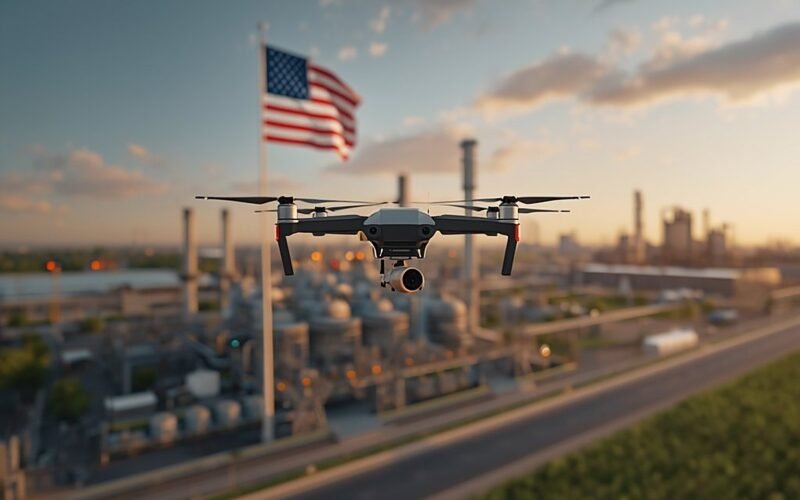
A million dollars of drone liability insurance costs less than most pilots expect — about $275 to $350 a year for a liability-only policy — and the policy that actually protects a working pilot costs more, but not by much. The spread is wide because the price depends on three things: how much liability cover you buy, how much your aircraft is worth, and what you fly it for. A hobbyist flying a Mini on weekends and a spray operator flying a $40,000 Agras are buying different products, and this guide prices both, with the published broker figures, the on-demand hourly rates, and the exclusions that decide whether a policy pays out at all.
Liability vs Hull vs Payload: The Three Covers


Drone insurance is three different products sold under one name, and the first step is knowing which one you are buying. Liability covers damage your drone causes to other people or their property — a crash through a roof, an injury to a bystander, a car windscreen. It pays the other party, not you, and it is the cover clients ask for: a $1 million limit is the most commonly requested floor across real estate, wedding and general inspection work. Hull covers your own aircraft — crash, flyaway, theft — and pays to repair or replace it. Payload covers what the drone carries: a camera, a LiDAR sensor, a spray tank’s contents are sometimes separate.
The mistake most pilots make is buying liability, feeling covered, and stopping there. Liability only pays for damage you cause to someone else. If your own $15,000 mapping drone goes down in a lake, a liability-only policy pays you nothing. The second mistake is the opposite: assuming hull cover includes liability. It does not, and neither does the manufacturer’s protection plan — DJI Care Refresh covers accidental damage to your own aircraft, but it is not liability insurance and no client will accept it as proof of cover. The three covers are separate because they pay different people for different losses, and a working pilot usually needs at least the first two. Our guide to filing a drone insurance claim walks through what happens when you actually need to use them.
The Price Table: What Pilots Actually Pay
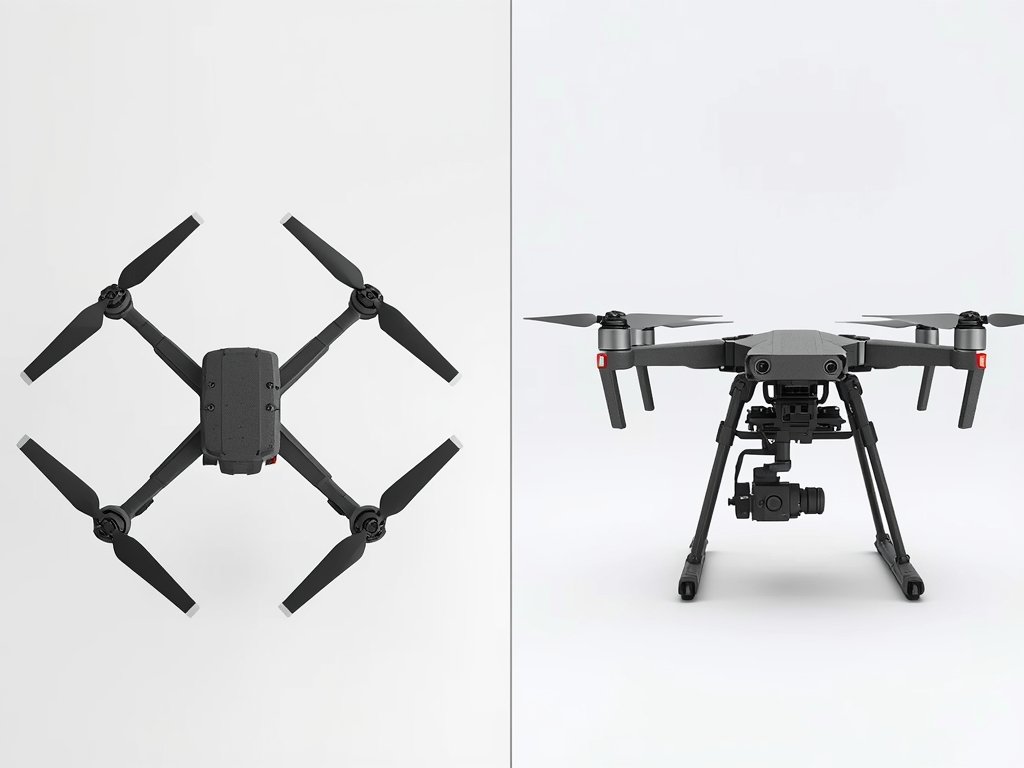
The figures below are published broker benchmarks from BWI Aviation Insurance, the specialist aviation broker, checked in November 2026. Treat them as a directional guide, not a quote — your price will move with your aircraft value, your claims history and where you fly — but they are real prices from a real book of business, not roundups of each other.
For a Part 107 pilot, a $1 million liability-only policy typically runs $275 to $350 a year. Add $2,500 of hull cover and the same policy runs $600 to $800 a year. Add $10,000 of hull and payload cover and it runs $1,000 to $1,400 a year. Real estate operators pay roughly the same shape: most pay between $500 and $1,500 a year depending on drone value and liability limits, with basic liability-only from around $300 and full cover with hull averaging $1,000 to $2,000. Commercial pilots more broadly pay $600 to $2,500 a year for $1 million liability, with comprehensive packages including hull and payload averaging $1,500 to $3,000 a year. A small operation running three to five drones and two to three pilots often lands in the $3,000 to $7,000 annual range, and a larger enterprise fleet with high-value payloads can push past $10,000. The pattern is consistent: liability is cheap, hull is where the money goes, and the total is a small fraction of the aircraft it protects.
On-Demand vs Annual: Which Is Cheaper for You
If you fly rarely, an annual policy is the wrong product. On-demand insurance, sold by the hour through an app, covers a single flight or a single day, and it is the right answer for the pilot who flies a handful of paid jobs a year. SkyWatch sells hourly liability policies from about $5 an hour through its app, and the going range for hourly cover is roughly $7 to $20 per hour of coverage. A pilot who flies ten paid jobs a year at two hours each pays roughly $140 to $400 for the year on demand — less than the cheapest annual policy — and only pays for the hours flown.
The crossover point is roughly twenty to thirty flying hours a year. Above that, the annual policy wins, and it wins for a second reason that has nothing to do with price: an annual policy covers you for every flight, including the unplanned ones, while an on-demand policy only covers the flights you remembered to buy cover for. The pilot who forgets to open the app before a quick job is uninsured for that job, and the pilot who buys an annual policy never has to think about it. The other difference is hull: on-demand policies are usually liability-only, so a pilot who wants the aircraft itself covered needs the annual policy anyway. The rule is simple: under twenty hours a year, buy on demand; over twenty, buy annual; and if the drone is worth more than a few thousand dollars, buy the annual policy for the hull cover alone. Our wedding drone videography pricing guide shows the day rates that make the annual policy pay for itself in a single booking.
What Actually Moves Your Premium

Hull premiums are priced as a percentage of the drone’s replacement value, and the going range is roughly 5 to 12 percent of the aircraft’s value per year. A $30,000 industrial mapping drone runs roughly $1,500 to $3,600 a year in hull cover alone; a $40,000 spray drone runs roughly $4,000 to $6,000 a year for hull at the same percentage, and a full spray package with liability and chemical drift cover came to about $10,457 a year in BWI’s published worked example. The percentage moves with pilot experience and claims history — a clean year and an FAA training certificate can cut a renewal by a fifth, as in BWI’s published example of a survey company whose premium fell from $2,450 to $1,970 after a clean year.
Liability limits move the price less than pilots expect. Raising a policy from $500,000 to $1 million of liability typically adds a few hundred dollars a year; raising it to $5 million can take the premium to $1,200 to $1,800 for the liability alone, and $2,000 to $10,000 or more for high-risk operations. What moves the price most is the operation itself: spraying, cell towers, transmission lines and major infrastructure cost more than real estate photography, because the losses are bigger when something goes wrong. Fleet size matters too, but less than the value of the most expensive aircraft in it. And one factor pilots forget: where you fly. Operations in states with stricter financial-responsibility rules, or over dense urban areas, price higher than the same flights over farmland. The aircraft values behind these numbers are in our guides to the best drone for agriculture and the best drone for construction monitoring.
The Exclusions That Bite

The exclusions are where cheap policies earn their price, and the three that bite most are worth reading before you bind. The first is the tank-contents exclusion: standard drone liability and farm liability policies exclude liability from what the drone sprays, so a spray operator whose drift damages a neighbour’s crop has no cover at all without a separate chemical and drift liability policy, which runs about $3,500 a year at $100,000 per occurrence. The second is the intentional-acts and illegal-flight exclusion: a policy does not pay for a flight that broke the rules — flying in controlled airspace without authorisation, flying beyond visual line of sight, flying without the required certificate — and an insurer that discovers the flight was illegal can deny the claim outright.
The third is the wear-and-tear and gradual-damage exclusion: insurance covers sudden accidents, not a battery that died of old age, a motor that wore out, or a propeller that failed because it was never inspected. A claim for a crash caused by a visibly damaged propeller that the pilot kept flying on is likely to be denied, which is why the pre-flight inspection is not just a safety habit but a condition of cover. The other exclusions to check are the geographical limits — some policies exclude flights outside the United States — and the pilot warranty, which names who may fly the insured aircraft: if anyone else flies it, the policy may not respond. Read the exclusions before the price, because the cheapest policy is usually the one with the most of them. Our surveying guide covers the high-value payloads that make the hull decision hardest.
How to Buy: Quotes, Brokers and Proof of Insurance
The buying route matters as much as the policy. Specialist aviation brokers — BWI Aviation Insurance is the best-known, with SkyWatch, AutoPylot and Avion Insurance as the other names pilots meet most — write drone policies every day, understand the difference between a Mini and a Matrice, and can usually quote from the aircraft model and the liability limit alone. General insurers and comparison sites can be cheaper on paper but slower to pay, and a policy written by someone who does not understand drones is the policy most likely to carry an exclusion that bites. AutoPylot’s annual policies start at about $450, and Avion’s annual plans with liability and hull run around $500 a year, according to their published figures — both competitive with BWI’s $275-to-$350 liability-only entry point.
The buying steps are the same whichever broker you use. Get the aircraft’s replacement value right, including the payload, because hull cover is priced on it and under-insuring saves a little premium and loses a lot at claim time. Choose the liability limit your clients actually require — $1 million is the standard ask — and check whether any client needs to be named as an additional insured, which most brokers do free. Ask for the certificate of insurance, the one-page document that proves cover, before the job, because clients ask for it and a broker can take a day to issue one. And keep the policy documents with the flight logs: at claim time, the insurer will want the flight record, the maintenance record and the pre-flight check, and the pilots who have them get paid faster. The BWI annual insurance guide lists the same typical rates used in this article, and the BWI Part 107 guide breaks down the cover types for certified pilots.
Do You Even Need It? The Honest Test
Not every pilot needs insurance, and the honest test is three questions. First, do you fly for money or for a business purpose? If yes, you need it — clients require it, and a single claim without it can end a business. Second, could your drone hurt someone or damage something expensive? A sub-250 g Mini over an empty field is a different risk from a 900 g Air 3S over a wedding, and the answer changes with the aircraft and the place. Third, could you afford to replace the drone tomorrow out of pocket? If the answer is no, hull cover is worth the premium even for a hobbyist.
For a recreational pilot flying a cheap drone over open ground, the honest answer is often that liability cover is nice to have and hull cover is not worth it — the aircraft is cheap enough to replace, and the risk to others is small. For a commercial pilot, the answer is always yes, and the only question is how much. The annual policy that costs $275 to $350 for a million dollars of liability is the cheapest professional expense in the whole business — cheaper than a single battery, cheaper than a day’s hire, and the one expense that decides whether a bad day ends the business or just ruins the afternoon. Buy it before the first paid job, not after the first claim.
Frequently Asked Questions
How much is drone insurance per month? Annual policies are usually sold by the year, but the monthly equivalent of a $275-to-$350 liability-only policy is roughly $23 to $29 a month, and a $1,000-to-$1,400 liability-plus-hull policy is roughly $83 to $117 a month. On-demand hourly cover runs about $7 to $20 per hour.
Does DJI Care Refresh count as drone insurance? No. DJI Care Refresh is a manufacturer service plan that covers accidental damage to your own aircraft. It is not liability insurance, it does not cover damage you cause to other people or property, and no client will accept it as proof of insurance.
What does $1M drone liability insurance cover? Third-party bodily injury and property damage caused by your drone, up to $1 million per occurrence. It does not cover damage to your own drone — that needs hull cover — and it does not cover what the drone sprays without a separate chemical liability policy.
Is drone insurance required by law? Not for most recreational and commercial flying in the United States — there is no federal requirement to insure a drone. But clients, venues and local authorities commonly require it, and some states require financial responsibility for spray operations. Check the contract before the flight, not after.
How much is hull insurance for a $10,000 drone? Hull premiums run roughly 5 to 12 percent of the aircraft’s value per year, so a $10,000 drone costs roughly $500 to $1,200 a year for hull cover alone. BWI’s published benchmark for a $1 million liability policy plus $10,000 of hull and payload is $1,000 to $1,400 a year in total.
Join Our Pilot Community
Connect with fellow drone enthusiasts, share your aerial shots, and get access to free PDF ebook guides.