



Ukrainian-designed strike drones will be built in Britain with UK funding under new agreements signed in Kyiv on Saturday 21 November, in a deal that moves Ukrainian drone production onto British soil for the first time. UK Defence Secretary Wes Streeting and Ukrainian Defence Minister Evgeniy Khmara signed the project arrangements during Streeting’s visit to Kyiv, and Ukraine’s Ministry of Defence said the projects cover middle-strike and deep-strike drones that have already demonstrated their effectiveness. The arrangements allow Ukraine to establish production facilities in the UK, adding manufacturing capacity and strengthening supply chains, according to Defence Industry Europe.
The deal is the production follow-on to a pledge made two days earlier — not the pledge itself. On 19 November, the Prime Minister announced a £260 million package of more than 1,000 long-range strike drones for Ukraine, covered in our earlier report on the UK’s 1,000-drone pledge to Ukraine. The 21 November signing is the next step: instead of only buying Ukrainian drones, Britain will now help build them, on British soil, in facilities Ukraine will be able to set up in the UK. That is a different and bigger commitment, and it should not be confused with the supply pledge that preceded it.
What the deal does not say is almost as important as what it does. The Ministry of Defence release names no firms, no sites, no sums and no start date. There is no factory address, no production target and no timeline. That is normal for an announcement of this kind — project arrangements are the framework, and the details follow — but it means the story, for now, is the commitment itself: Britain has agreed to host Ukrainian drone production, and Ukraine has agreed to bring its designs and its battlefield experience to British factories.
The Kyiv Signing

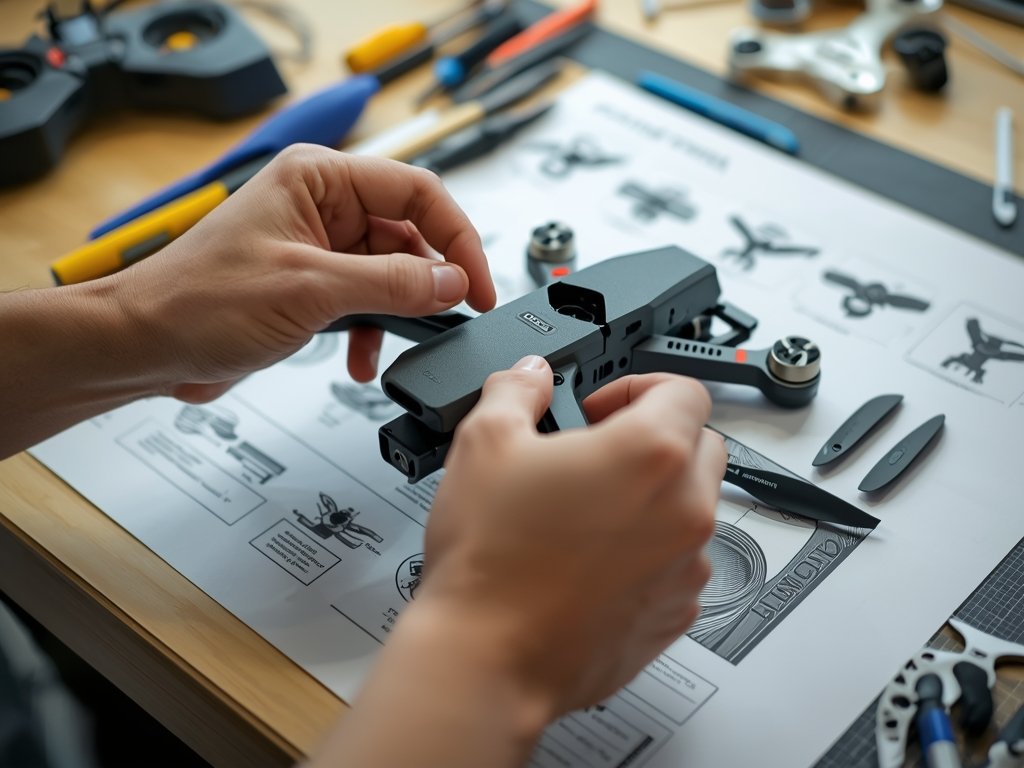
UK Defence Secretary Wes Streeting and Ukrainian Defence Minister Evgeniy Khmara signed the project arrangements for the joint production of Ukrainian middle-strike and deep-strike drones, Ukraine’s Ministry of Defence said on 21 November. Ukrainian drones that have already proven their effectiveness will be produced with UK funding, and the jointly produced drones will be supplied to meet the needs of Ukrainian warriors, according to the Ukraine MoD release carried by GlobalSecurity.
Khmara’s statement at the signing framed the deal as a partnership of complementary strengths. “We are launching projects that strengthen the capabilities of both our countries and accelerate the development of our defence industries. Ukraine has effective defence solutions and invaluable experience in fighting the enemy,” he said. “We are combining them with the United Kingdom’s production capabilities to scale up proven assets for our Defence Forces more quickly. The resilience of our partnership, its quality, and its ability to deliver results in the long term are important to us.”
Streeting met President Volodymyr Zelenskyy during the visit, his second trip to Ukraine as Defence Secretary. “We are very proud that we have such strong relations between our countries, especially your visit during such massive attacks. It’s a huge signal of your support, and of the support of the United Kingdom, for the people of Ukraine,” Zelenskyy said. The British Ministry of Defence said its support would help Ukraine withstand Russian attacks, including attempts to cut civilian heating and water supplies as winter approaches. “Ukraine’s front line is our front line for freedom and democracy. I’m here to make sure that we lead by example, to discuss what more we can do to help Ukraine through this winter,” Streeting said. Before travelling to Kyiv, Streeting had joined his French and Polish counterparts at Exercise Koalicja in Poland, the first major exercise of the Multinational Force for Ukraine, led by Britain and France, which tests how the force would move, protect and sustain itself to help rebuild Ukraine’s Armed Forces once fighting ends.
What Britain Is Paying For
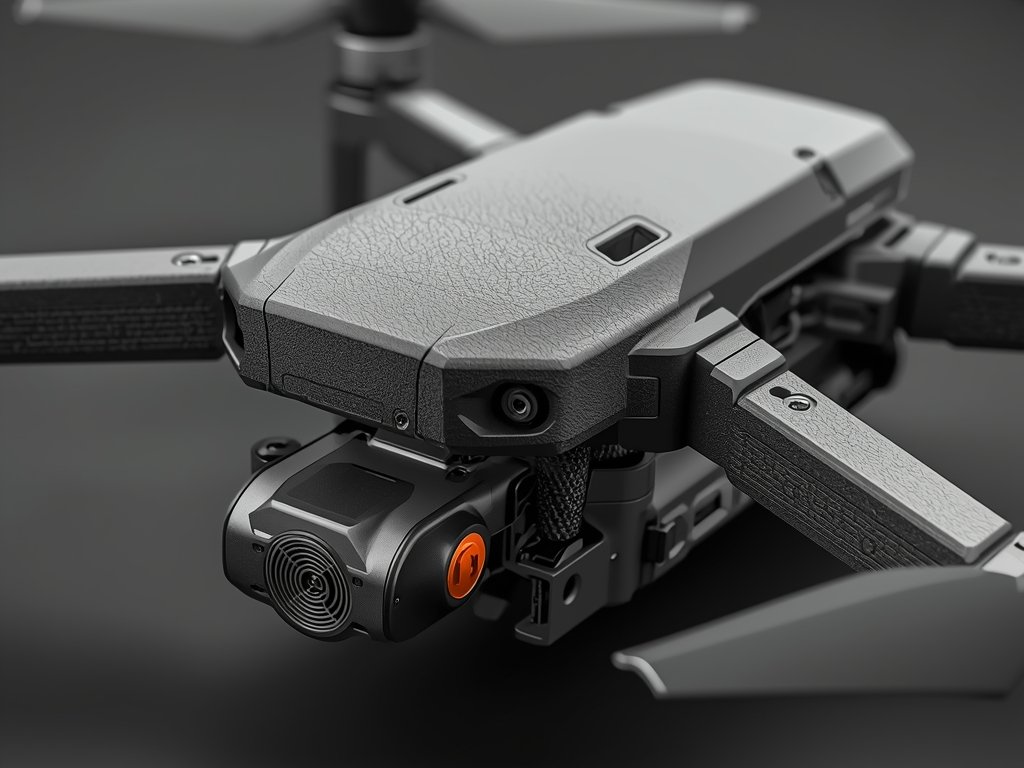
The production deal sits inside a larger £500 million winter package of military assistance, previously set out at the Budget. That support includes £260 million for drones and associated systems and £240 million for air defence and related equipment. The £260 million package will supply more than 1,000 long-range strike drones, together with maritime, logistics and surveillance drones. Communications and electronic-warfare capabilities are also included, with more than 80 per cent of the package expected to be spent with UK companies, including small and medium-sized businesses.
The £240 million air-defence allocation provides more than 1,000 air-defence missiles and accompanying launchers, along with more than a dozen radars, responding to Ukrainian requests for protection against Russian long-range strikes. Streeting announced the £240 million allocation while co-chairing a Ukraine Defence Contact Group meeting involving more than 50 nations in Brussels on 17 November. The UK prime minister outlined the £260 million drone package while co-chairing the Coalition of the Willing leaders’ meeting on Thursday 19 November. Britain has separately committed £3 billion a year in military support for Ukraine for as long as required.
The money matters, but so does where it is spent. More than 80 per cent of the £260 million drone package is expected to be spent with UK companies, including small and medium-sized businesses. That is the domestic side of the deal: British firms, including smaller ones, will build the drones, the communications gear and the electronic-warfare equipment. The production arrangements signed on 21 November extend that logic further, by bringing Ukrainian designs — and potentially Ukrainian production facilities — into the same British industrial base. For the UK drone industry, which has been watching the war reshape military demand for three years, this is the most concrete opportunity yet to build at scale for a customer that is actually at war.
Middle-Strike and Deep-Strike: What the Words Mean
The deal covers two categories of drone: middle-strike and deep-strike. The Ministry of Defence release does not define the ranges, and it does not name the models. According to an explainer of the deal, “middle-strike” means roughly 35 kilometres behind the front line to around 300 kilometres for deep-strike range — the distance at which Ukrainian long-range drones regularly strike deep inside Russia. That is the practical meaning of the two words: middle-strike drones hit targets behind the front line, deep-strike drones hit targets far behind it, including inside Russia itself.
The distinction matters because the two categories do different jobs. Middle-strike drones attack the logistics, artillery and command posts that support the fighting at the front. Deep-strike drones attack the airfields, depots, refineries and factories that sustain the war from further back. Ukraine has used long-range strike drones to hit targets deep inside Russia throughout the war, and the British-funded production deal is, in effect, an agreement to build more of both — in Britain, where they are further from Russian missiles, and with British money.
It is worth noting what the deal does not cover. It is about strike drones, not about the full range of Ukrainian drone production, and it does not mention surveillance drones, first-person-view drones or the small tactical drones that dominate the front line. Those are produced in Ukraine in large numbers already. The British deal is aimed at the longer-range systems that are harder to build and more valuable per unit — the aircraft that need proper factories, not workshops.
The Production Follow-On, Not the First Pledge
Readers who followed the 19 November announcement could be forgiven for thinking this is the same story twice. It is not, and the difference is worth spelling out. On 19 November, the Prime Minister announced a £260 million package to supply more than 1,000 long-range strike drones to Ukraine, plus maritime, logistics and surveillance drones, communications and electronic-warfare equipment. That was a supply pledge: Britain would buy drones and send them to Ukraine.
On 21 November, Streeting and Khmara signed project arrangements for joint production. That is a manufacturing pledge: Britain will host the production of Ukrainian-designed strike drones, with UK funding, in facilities Ukraine will be able to set up in the UK. The first is about sending drones. The second is about building them. The second is also, in the long term, the more significant of the two, because a factory keeps producing after a one-off delivery is spent — and because it embeds Ukrainian drone expertise in the British industrial base.
The pattern is not unique to Britain. Germany is doing something similar: Auterion and SkyFall’s German drone factory is building Ukrainian-linked drones in Germany, and Quantum Systems’ €10m Ukraine drone support package is another example of European industry tying itself to Ukraine’s drone effort. The British deal fits that pattern, but it is the first to involve Ukrainian-designed strike drones being built on British soil with UK funding. The Nordic countries are moving in the same direction on the defensive side, as our report on Sweden’s K200 drone interceptor for Ukraine shows.
Air Defence and the LMM Missile Push
The Kyiv talks were not only about drone production. The ministers’ talks included accelerating deliveries of Lightweight Multirole Missiles (LMM) from existing stocks. Khmara thanked Britain for its air-defence assistance and described the missiles as critically important for countering jet-powered Shahed drones — the fast new variant that is now a regular part of Russia’s nightly attacks on Ukraine.
According to Ukraine’s Ministry of Defence, Britain was among the first countries to transfer LMM missiles promptly from its own inventory in exchange for future deliveries. The parties focused on next steps to strengthen Ukraine’s air defence, particularly accelerating deliveries of LMM missiles from existing stocks. They also discussed modernising Ukrainian-made missiles and strengthening Ukraine’s long-range capabilities, and Khmara took part in the British delegation’s meeting with President Zelenskyy, which covered further support for Ukraine and the development of the Ukrainian-British defence partnership.
The LMM discussion connects directly to the drone production deal. The jet-powered Shahed is harder to intercept than the propeller version — 56 of 72 were downed or suppressed on the night of 21–22 November, about 78%, against about 87% overall — and Ukraine needs more interceptors, including missiles like the LMM, to cope with it. The £240 million air-defence package, with its 1,000-plus missiles and dozen-plus radars, is the other half of the same answer: more interceptors for the threat that is already here, and more production capacity for the threat that is coming.
What This Means for the Drone War

For Ukraine, the deal means production capacity that Russia cannot easily bomb. Ukrainian drone factories are targets, and they have been hit. A factory in Britain is beyond the reach of Russian missiles, and it can run without air-raid sirens. That is the strategic logic of moving production abroad, and it is the same logic that has driven the German and Nordic deals. The drones will still go to Ukraine’s Armed Forces — the deal is explicit on that — but they will be built where they are safe.

For Britain, the deal means access to the most battle-tested drone designs in the world. Ukraine has more experience of drone warfare than any other country, and its designs have been proven in combat in a way that no peacetime development programme can match. Building those designs in Britain, with British money and British workers, transfers that experience into the British industrial base. It also creates jobs — the £260 million package alone is expected to spend more than 80 per cent of its money with UK companies — and it gives British firms a production line that will keep running as long as the war does, and beyond it.
For the drone industry more broadly, the deal is another sign that the centre of gravity has shifted. Three years ago, the military drone market was dominated by a handful of large American and Israeli manufacturers. Today, the most important drone designs in the world are Ukrainian, the most important production partnerships are European, and the deals are being signed in Kyiv, not in Washington. The British agreement is the latest example of that shift, and it is unlikely to be the last.
What to watch next. The first thing to watch is the detail: which firms, which sites, what sums and what start date. The MoD release named none of them, and the first concrete announcement — a factory location, a production target, a first delivery — will tell us how real the deal is. The second is the first aircraft: when the first British-built Ukrainian strike drone rolls off the line, and where it goes. The third is whether other countries follow with their own production deals. And the fourth is the LMM deliveries: whether the acceleration the ministers discussed turns into missiles in Ukraine fast enough to matter against the jet Shaheds.
Frequently Asked Questions
What did Britain and Ukraine agree on 21 November? UK Defence Secretary Wes Streeting and Ukrainian Defence Minister Evgeniy Khmara signed project arrangements for the joint production of Ukrainian middle-strike and deep-strike drones in Britain, with UK funding, for Ukraine’s Armed Forces. Ukraine will be able to set up production facilities in the UK. The MoD release names no firms, sites, sums or start date.
Is this the same as the £260 million drone package? No. The £260 million package, announced on 19 November, is a supply pledge: more than 1,000 long-range strike drones plus maritime, logistics and surveillance drones, communications and electronic-warfare equipment, with over 80 per cent expected to be spent with UK companies. The 21 November signing is a separate manufacturing pledge: building Ukrainian-designed strike drones on British soil. The production deal is the follow-on to the supply pledge, not the same thing.
What are middle-strike and deep-strike drones? They are categories of long-range strike drone. According to an explainer of the deal, middle-strike means roughly 35 kilometres behind the front line, and deep-strike reaches around 300 kilometres — the distance at which Ukrainian long-range drones regularly strike deep inside Russia. The MoD release itself does not define the ranges or name the models.
What else is in the £500 million winter package? The package includes £240 million for air defence — more than 1,000 short-range air-defence missiles with launchers and more than a dozen radars — and £260 million for drones and associated systems. Britain has separately committed £3 billion a year in military support for Ukraine for as long as required.
What are LMM missiles, and why were they discussed? Lightweight Multirole Missiles are air-defence missiles Britain has transferred to Ukraine from its own stocks. The Kyiv talks covered accelerating LMM deliveries from existing stocks, because the missiles are critically important for countering jet-powered Shahed drones, the fast new variant in Russia’s nightly attacks. Britain was among the first countries to transfer LMMs promptly from its own inventory in exchange for future deliveries.
Join Our Pilot Community
Connect with fellow drone enthusiasts, share your aerial shots, and get access to free PDF ebook guides.




