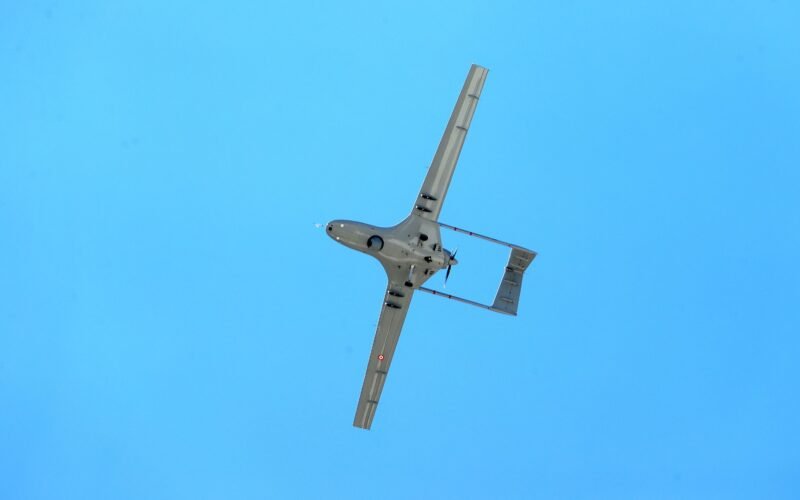
Russia launched 186 drones at Ukraine overnight on 21–22 November, 72 of them jet-powered, in one of the heaviest single-night drone attacks of the war. Ukraine’s Air Force said 161 of the drones were shot down or electronically suppressed by 08:00 on 22 November, including 56 of the jets — but drones still struck 18 locations, and a strike on a five-storey apartment block north of Kyiv destroyed a whole section of the building, killing three people and leaving others trapped in the rubble. The figures are preliminary, and the Air Force said several enemy drones were still in the air when it reported, according to MyUkraineis, reporting the Air Force’s figures.
This was a different night from the one before. The previous night, 20–21 November, Russia launched 148 drones at Ukraine — the attack covered in our earlier report on Russia’s 148-drone attack the night before. The 186-drone attack that followed was bigger, faster and more destructive, with a much larger share of jet-powered aircraft, and it hit homes, businesses and the power grid across the country. The two nights should not be confused: the numbers in this article are for the night of 21–22 November only.
The attack also underlined how the drone war has changed. The jet-powered Shahed is a newer variant, and it flies faster than the older propeller-driven models, which leaves less time to intercept it. In this raid, 56 of 72 jets were downed or suppressed — about 78% — against about 87% overall. Sixteen jet drones got through. That gap is the story of the night: a defence that works well against the old threat, and is still catching up with the new one.
The Night of 21–22 November


Russia sent 186 drones against Ukraine between 18:00 on 21 November and the morning of 22 November, according to the Ukrainian Air Force. The wave was made up of Shahed-type strike drones — 72 of them jet-powered — plus Gerbera drones and “Parodiya” decoys. The General Staff published identical figures. By 08:00 Kyiv time, air defence had shot down or electronically suppressed 161 of them, including 56 of the 72 jet-powered Shaheds. By simple subtraction, about 25 drones were not intercepted, including 16 jet-powered ones. The Air Force recorded strikes by enemy aerial weapons at 18 locations, and falling debris from downed drones at 6 more.
The launch areas, according to the Air Force, were Oryol, Kursk, Millerovo, Shatalovo and Primorsko-Akhtarsk in Russia, plus occupied Donetsk and, in occupied Crimea, Hvardiiske and Chauda. The defence mix was the full one: aircraft, anti-aircraft missile units, electronic-warfare units, unmanned-systems crews and mobile fire groups all took part. Ukraine counts “suppressed” drones alongside those shot down — drones whose guidance was jammed by electronic warfare, so they crashed or veered off course without being physically destroyed.
Mass drone raids have become a near-nightly feature of the war. Russia combines cheap Shahed-type drones with decoys such as Gerbera and Parodiya, which are meant to saturate air defence and force Ukraine to spend resources on false targets. The campaign against Ukraine’s energy system and cities has continued into the cold season, and each night the defenders must cover a very large territory with a limited number of interceptor missiles and mobile units. Families across much of the country already face scheduled power cuts of four to 18 hours a day, and each new strike on the grid makes the repairs that would shorten them harder.
Jet-Powered Shaheds: Faster and Harder to Stop
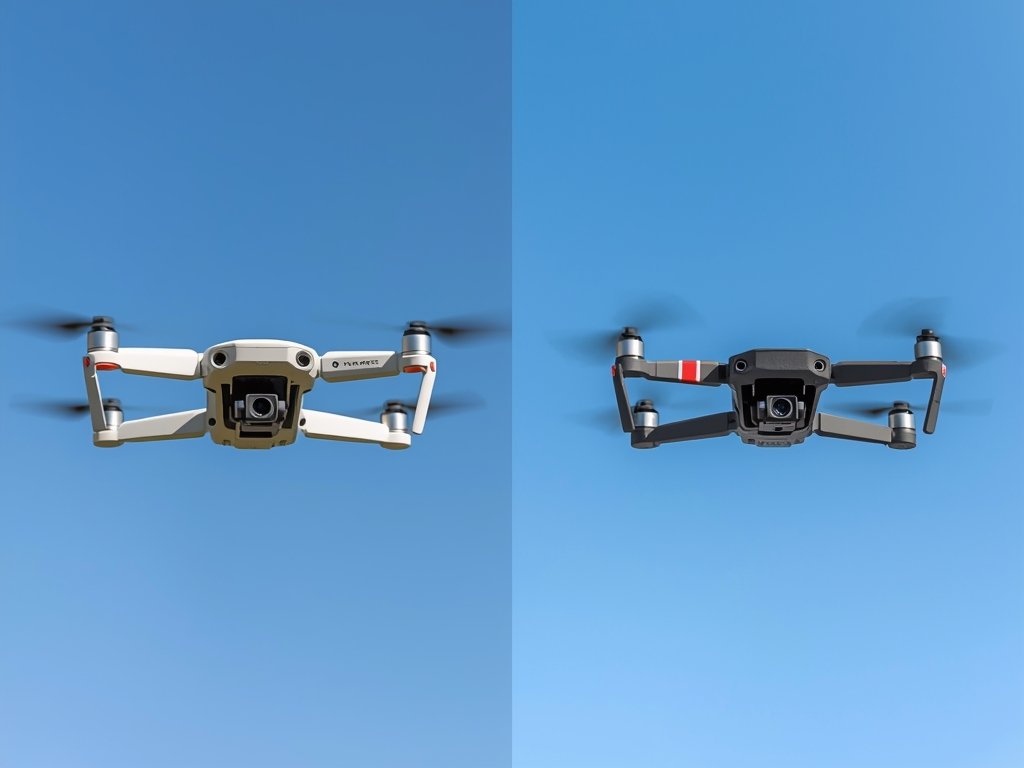
The jet-powered Shahed is the most important development in this attack. It is a newer variant of the familiar Shahed-type strike drone, and it flies faster than the older propeller-driven models, which leaves less time to intercept it. That is consistent with the lower interception rate for jet-powered drones in this raid: 56 of 72, or about 78%, against about 87% overall. Russia also sent 73 jet drones in its attack on 12 November, according to Europa Journal News — so the jet variant is now a regular part of the nightly mix, not an experiment.
The jet drones did the worst of the damage on the night of 21–22 November. In Lozova, in Kharkiv Oblast, jet drones set a house, a shop and a civilian business on fire and damaged other homes, the emergency service reported. An 89-year-old woman there suffered acute stress, oblast head Oleh Syniehubov said. In the city of Kharkiv, a strike drone hit the Kyivskyi district and started a fire, Mayor Ihor Terekhov said. The speed of the jet variant matters most at the sharp end: a mobile fire group that has seconds to engage a propeller drone has less time still against a jet, and the electronic-warfare window shrinks with it.
There is a second reason the jet matters. A jet drone crossed into Moldova twice on 21 November during Russia’s attacks on Ukraine, Moldova’s Defence Ministry said. The drone flew in from Ukraine at 11:20, left five minutes later, then returned at 11:31 for a minute. The ministry recorded 10 air incidents between 14 and 20 November: four unauthorised overflights, four overflights that ended in explosions, and two finds of drone fragments. In October, Moldova declared a Russian embassy staff member persona non grata after a Russian Geran drone crashed near homes. The pattern is familiar from our report on a drone’s unauthorised flight over Moldova — and from Russian missiles and a jet drone breach Poland’s airspace earlier in the autumn. Fast drones that cross borders by accident — or by design — are becoming a regional problem, not just a Ukrainian one.
Dymer: The Strike That Destroyed a Block of Flats
The worst single strike of the night hit Dymer, a town roughly 45 to 50 kilometres north of Kyiv in the Vyshhorod district. A Russian drone attack hit a five-storey apartment building early on 22 November. The strike destroyed one section of the building from the first floor to the fifth and started a fire. Rescuers evacuated nine residents, including a child. The blast also damaged a nearby kindergarten and a shop.
The casualty figures moved through the day as rescuers worked through the rubble, and they should be read as the latest figures reported on 22 November, not as a final toll. President Volodymyr Zelenskyy initially said 14 people remained unaccounted for beneath the debris; rescue workers subsequently revised that figure, with the State Emergency Service later saying it was looking for 11 people who could not be contacted, including two children, while police put the figure at 15. Kyiv Oblast head Tymur Tkachenko confirmed that one body had been recovered, then a second, and by later on 22 November the confirmed toll had risen to three killed and four injured. The injured included a teenager born in 2010 with multiple shrapnel wounds to his arm, a 22-year-old woman and a man born in 1977 hospitalised with a suspected closed head injury. Eight people may still have been under the rubble at one point in the day, the State Emergency Service said, and rescuers were still clearing the rubble with dog units and heavy machinery as the search continued.
Zelenskyy confirmed the attack and noted that nine residents had been evacuated before he posted and that firefighters had contained the blaze at the site. The strike was the deadliest single incident of the night, and it was also the most visible: photographs of rescuers working at the partially collapsed building in Dymer ran across Ukrainian and European news sites through the day. It is the kind of strike that the nightly interception figures hide. An 87% interception rate sounds like success until you count what the other 13% did — and on this night, what it did was bring down a stairwell full of people.
The Energy War Reaches Odesa
Beyond Dymer, the night’s strikes hit homes and businesses from Kharkiv to Zaporizhzhia. In central Ukraine, a drone fell on an enterprise in Kropyvnytskyi, and another struck a private business in Poltava Oblast, with no one reported hurt at either site. In Chernihiv Oblast, a Russian strike on the evening of 21 November set a wood-processing plant on fire. Russia attacked five districts of Dnipropetrovsk Oblast overnight with drones and an aerial bomb, damaging infrastructure, and on 21 November Russian drones and artillery wounded five people in the oblast, one of them a 69-year-old man hospitalised in serious condition. Late on 21 November, Russia attacked Zaporizhzhia, wounding three people, two of them children, the oblast administration said.
The energy war was the other half of the night. Russian strikes damaged the main power lines serving Odesa and nearby districts, grid operator Ukrenergo said on 22 November. It is physically impossible to deliver the power that consumers need, the company said. Air raid alerts and the threat of new strikes keep interrupting repair crews. In the morning, crews began partly restoring power to critical facilities. Ukrenergo scheduled rolling hourly power outages around the clock for all types of consumers in parts of the country on 22 November, blaming Russian attacks, and said the situation in Odesa and Rivne oblasts remains difficult.
The pattern extends beyond Odesa. Zhytomyr Oblast head Vitalii Bunechko said Russian drones struck energy facilities in his oblast four times in a day, and that Russia is trying to leave residents without light and heat. Chernihiv Oblast’s administration reported new attacks on energy sites over the past day. Zaporizhzhia Oblast had two blackouts in a week amid constant attacks, Ivan Fedorov of the oblast’s defence council said. Leaders of Germany, France, the UK and Ukraine had urged Russia on 19 November to spare energy targets this winter. Russian President Vladimir Putin ruled out talks on such a truce the same day. The message of the night of 21–22 November is that the energy campaign is not pausing for winter — it is the winter campaign.
A Different Night From the One Before
It is worth being precise about which night this was, because the numbers are close enough to confuse. On the night of 20–21 November, Russia launched 148 drones and three ballistic missiles at Ukraine; Ukraine’s Air Force said 117 were downed or suppressed. That attack is covered in our earlier report. On the night of 21–22 November — the night this article covers — Russia launched 186 drones, 72 of them jet-powered, and 161 were downed or suppressed. The second night was bigger by 38 drones, had a much larger jet component, and did more damage on the ground.
The two nights also show the two directions of the drone war. On the same night Russia launched its 186 drones, Ukraine was attacking back — and Moscow, for its part, claimed its air defences intercepted 170 Ukrainian drones overnight and that it had struck ports, vessels and energy facilities. That is Russia’s claim, reported as such, and it is not independently verified. The contrast is instructive: Ukraine’s Air Force publishes its interception figures with launch areas, drone types and impact locations, and updates them as the attack continues. Russia’s Defence Ministry publishes a single number. Both sides have reasons to present their figures favourably, and the honest way to read them is as each side’s own account.
There is a wider symmetry too. While Russia was sending 186 drones at Ukraine, Ukraine’s own long-range drone campaign was continuing — including Ukraine’s relay-drone attack on the Kerch Bridge, which used relay drones to bypass Russian defences. The war is now, in large part, a drone war fought in both directions every night, and the nightly tallies are the closest thing to a scoreboard either side has.
What This Means for Ukraine’s Air Defences

For Ukraine’s defenders, the night of 21–22 November was both a success and a warning. Shooting down or suppressing 161 of 186 drones is a high interception rate by any standard, and it was achieved with a mix of aircraft, missile units, electronic warfare, unmanned-systems crews and mobile fire groups. But the 25 that got through hit 18 locations, destroyed a block of flats, set homes and businesses on fire in Kharkiv Oblast, and damaged the grid in Odesa badly enough that Ukrenergo said it could not deliver the power the region needs.
The jet-powered Shahed is the reason the warning matters. At 78% intercepted, against 87% overall, the jet variant is already measurably harder to stop, and Russia is sending more of them — 73 on 12 November, 72 on this night. If that trend continues, the interception rate will fall even if the defenders do everything right, because the threat itself is getting faster. That is why Zelenskyy used the night’s attack to press the same point he has been making all week. On 22 November he said Russia had launched around 2,700 drones, nearly 1,460 glide bombs and 165 missiles over the past week, across 20 Ukrainian regions, and renewed his call for the United States to approve deliveries of Patriot interceptor missiles that allies have already paid for. A significant number of the missiles were ballistic, including North Korean ones, he said, and it is “particularly difficult to understand the delays in supplying anti-ballistic interceptors”.
For the rest of Europe, the night was a reminder that the drone war does not stop at Ukraine’s borders. A jet drone crossed into Moldova twice in a day. The month before, a Russian Geran crashed near homes in Moldova. Poland’s airspace has been breached too. The drones are getting faster, the raids are getting bigger, and the countries next door are getting less warning. That is the context in which Ukraine’s request for more interceptors should be read — not as a shopping list, but as a race against a threat that is visibly accelerating.
What to watch next. The first thing to watch is the final toll in Dymer, where rescuers were still searching the rubble at the end of 22 November and the number of missing was still moving. The second is Odesa’s grid: whether repair crews can restore power faster than the next raid damages it. The third is the jet-drone count in the next few nights — if Russia keeps sending 70 or more jets a night, the interception rate will be the number that tells the story. And the fourth is the Patriot question: whether Zelenskyy’s renewed call, made in the same breath as the week’s figures, produces a decision in Washington.
Frequently Asked Questions
How many drones did Russia launch on the night of 21–22 November? Russia launched 186 drones — Shahed-type strike drones, 72 of them jet-powered, plus Gerbera and decoy drones — between 18:00 on 21 November and the morning of 22 November, according to the Ukrainian Air Force. Air defences shot down or suppressed 161 of them by 08:00, including 56 of the jets. Strikes were recorded at 18 locations and debris fell at 6 more.
What happened in Dymer? A Russian drone hit a five-storey apartment building in Dymer, in the Vyshhorod district north of Kyiv, early on 22 November, destroying one section from the first floor to the fifth and starting a fire. Nine residents were evacuated. By later on 22 November the confirmed toll had risen to three killed and four injured, with 14 people initially reported unaccounted for. Rescuers were still searching the rubble at the end of the day.
Is this the same attack as the 148-drone raid? No. The 148-drone attack was the night before, 20–21 November, and is covered in a separate article. The night of 21–22 November was a different, larger attack — 186 drones, 72 of them jet-powered — with different figures and different damage. Do not mix the two nights’ numbers.
What is a jet-powered Shahed, and why does it matter? It is a newer, faster variant of the Shahed-type strike drone, with a jet engine instead of a propeller. It flies faster, which leaves less time to intercept it: in this raid 56 of 72 jets were downed or suppressed, about 78%, against about 87% overall. Russia sent 73 jet drones on 12 November too, so the variant is now a regular part of the nightly mix.
What did Zelenskyy say about the week as a whole? On 22 November, President Volodymyr Zelenskyy said Russia had launched around 2,700 drones, nearly 1,460 glide bombs and 165 missiles over the past week, across 20 Ukrainian regions, and renewed his call for the United States to approve deliveries of Patriot interceptor missiles that allies have already paid for.
Join Our Pilot Community
Connect with fellow drone enthusiasts, share your aerial shots, and get access to free PDF ebook guides.