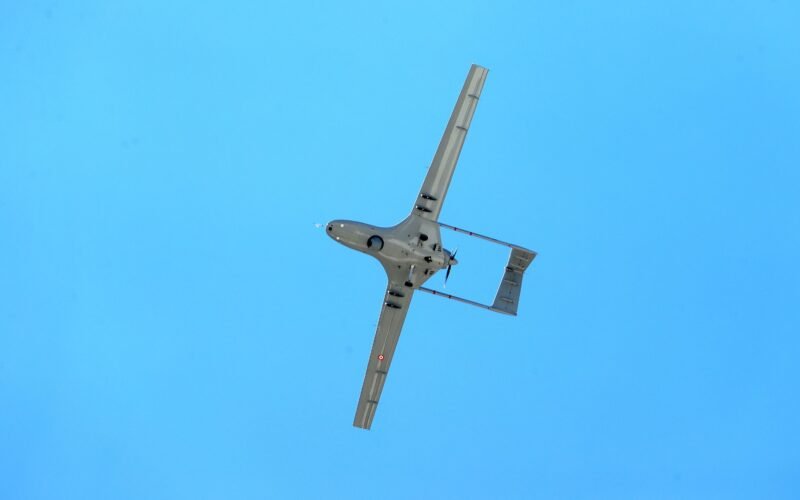
Drones reached St Petersburg overnight on 26–27 November 2026, with residents reporting explosions and air-defence fire in at least eight city districts, and Pulkovo Airport temporarily suspending all arrivals and departures, according to Reflect of Estonia. The districts where explosions and air-defence fire were reported were Central, Petrogradsky, Vasileostrovsky, Primorsky, Vyborgsky, Kalininsky, Krasnogvardeysky and Nevsky, with reports also from Vsevolozhsk and Kudrovo outside the city. By 08:30 local time, 25 departing flights from Pulkovo were delayed by more than two hours and two had been cancelled, and one flight bound for St Petersburg had diverted to Helsinki-Vantaa, according to the reporting.
The numbers in this story conflict, and the conflict is the first thing a reader needs to understand. St Petersburg authorities said 55 drones flew toward the city, with 45 shot down over Leningrad region and St Petersburg and 10 over Novgorod region. The governor later cited 45. Other Russian reports cited 62. One channel claimed 96. Those figures — 55, 45, 62, 96 — cannot all be right, and they have no independent confirmation. This article presents all of them as claims, never as fact, and it does not choose between them. A reader who takes any one of them as the true count is taking a claim as a fact, and that is a mistake this article is careful not to make.
The same caution applies to the targets and the casualties. The targets of the drones are unconfirmed, with claims of a power substation or a warehouse being hit, but no confirmation. The casualty numbers conflict between outlets: one person was taken to hospital after drone debris fell, according to the reporting, and a separate Meduza report says three people were injured in Novorossiysk in the same night’s wider strikes. Those are different places, different reports, and different numbers, and they should not be added together or treated as a single count. The draft presents Russian figures as claims, not facts, and it presents casualty numbers as conflicting reports, not as a settled total.
The night of 26–27 November was a different night, in a different theatre, from the nights this site has covered before. Yesterday’s reporting covered Russian attacks on Ukraine; this story covers Ukrainian drones reaching St Petersburg, in Russia, and it should not be confused with the attacks in the other direction. The theatre is St Petersburg and Leningrad region, the targets are in Russia, and the airport that closed is Pulkovo, in St Petersburg. The distinction matters, because the two directions of the drone war are easy to confuse when the reporting comes thick and fast, and this article states the direction, the place and the date prominently so that they are never confused.
The air-raid alert gives the night its shape. The alert was declared in Leningrad region at about 02:20, and in St Petersburg at about 04:30, and it was cancelled at about 07:30, according to the reporting. That is a window of about five hours in Leningrad region and about three hours in the city itself, from the early hours of the morning until after sunrise. The alert is the framework within which everything else happened: the explosions in eight districts, the air-defence fire, the closure of the Ladoga Bridge, the suspension of flights at Pulkovo, and the warnings of mobile-internet disruption. The rest of this article sets out what happened inside that window, what is claimed and what is confirmed, and what it means for the people who live and fly in St Petersburg.
Every claim in the article is attributed to its source, and every figure is presented as a claim where the reporting presents it as a claim. The sources used here are Reflect of Estonia and UkrMedia News, and the claims they report come from St Petersburg authorities, from the governor, from other Russian reports, from a channel, and from Meduza. Those are different sources with different levels of authority, and this article distinguishes between them. An authority’s statement is reported as an authority’s statement. A channel’s claim is reported as a channel’s claim. A Meduza report is reported as a Meduza report. None of them is presented as an independent confirmation of the others.
The Night Over St Petersburg
Overnight on 26–27 November, drones attacked St Petersburg and Leningrad region, according to Reflect. Residents reported explosions and air-defence fire in at least eight city districts: Central, Petrogradsky, Vasileostrovsky, Primorsky, Vyborgsky, Kalininsky, Krasnogvardeysky and Nevsky. That list covers much of the city, from the centre to the outlying districts, and it shows that the attack was not confined to one part of St Petersburg but was felt across it. Reports also came from Vsevolozhsk and Kudrovo, outside the city, which extends the area affected beyond the city boundary and into Leningrad region.
The phrase “at least eight districts” deserves attention, because it sets a floor, not a ceiling. Explosions and air-defence fire were reported in at least eight districts, which means there may have been more, and the reporting does not rule that out. The eight named districts are the ones where reports were confirmed enough to be named, and the list is given in full so that readers can see the spread: Central, the heart of the city; Petrogradsky and Vasileostrovsky, on the islands; Primorsky and Vyborgsky, to the north; Kalininsky and Krasnogvardeysky, to the east; Nevsky, to the south-east. A drone attack that is heard in eight districts is an attack that is heard across a city, and the breadth of the reports is itself part of the story.
The reports came from residents, and that matters for how they should be read. Residents reported explosions and air-defence fire, which means the reports are first-hand accounts from people who heard the explosions and saw the air-defence fire, not official statements. First-hand accounts are valuable, because they are direct evidence of what happened on the ground, but they are also limited, because a resident in one district cannot see what is happening in another, and cannot tell how many drones there are or where they are going. The eight districts are the districts where residents reported explosions and fire, and the list is a list of reports, not a list of confirmed strikes.
Vsevolozhsk and Kudrovo, the two places outside the city where reports also came from, are worth noting separately. Vsevolozhsk is a town in Leningrad region, to the east of St Petersburg, and Kudrovo is a settlement just outside the city boundary, also to the east. Reports from both places extend the attack beyond the city and into the surrounding region, and they are consistent with the wider picture: the attack was on St Petersburg and Leningrad region, not on the city alone. The reporting does not say what was reported in Vsevolozhsk and Kudrovo — whether explosions, air-defence fire, or both — and this article does not guess. It says only that reports also came from those two places.
The timing of the attack is given by the air-raid alert, which was declared in Leningrad region at about 02:20 and in St Petersburg at about 04:30, and cancelled at about 07:30, according to the reporting. The gap between the two declarations — about two hours — is worth noting: the alert was declared in the region first, and in the city more than two hours later. That suggests the drones were detected in the region before they reached the city, or that the alert was raised in the region as a precaution before the city was threatened. The reporting does not say which, and this article does not guess. What can be said is that the alert lasted about five hours in the region and about three hours in the city, and that it was cancelled at about 07:30, after sunrise.
The attack on St Petersburg should be read alongside the other drone activity of the same night, but it should not be confused with it. The same night saw a drone cross into Latvian airspace near Ludza, an air-threat warning in southern Estonia, and a claim from Leningrad region that more than 40 drones were shot down. Those are separate events, in separate places, and this article does not connect them to the St Petersburg attack. But they happened on the same night, and the coincidence is worth noting, because a night on which drones are in the air over Latvia, Estonia, Leningrad region and St Petersburg is a night on which the whole region’s airspace is under strain.
The Conflicting Counts
The counts of drones in the St Petersburg attack conflict, and the conflict is the central problem of the story. St Petersburg authorities said 55 drones flew toward the city, with 45 shot down over Leningrad region and St Petersburg and 10 over Novgorod region. The governor later cited 45. Other Russian reports cited 62. One channel claimed 96. Four figures — 55, 45, 62, 96 — from four different sources, and no independent confirmation for any of them. This article presents all four as claims, and it does not choose between them, because choosing would be inventing a fact.
The authorities’ figure is the most detailed, and it is worth setting out in full. Fifty-five drones flew toward the city, according to St Petersburg authorities, with 45 shot down over Leningrad region and St Petersburg and 10 over Novgorod region. The arithmetic is neat: 45 plus 10 is 55, which means that on the authorities’ figures, every drone that flew toward the city was shot down, and none got through. That neatness is itself a reason for caution: a figure in which the number shot down equals the number that flew toward the city leaves no room for a drone that got through, and yet residents reported explosions in eight districts, which suggests that something did get through, or at least that something exploded. The authorities’ figures and the residents’ reports do not sit easily together, and this article notes the tension without resolving it.
The governor’s figure is different again. The governor later cited 45, according to the reporting. Forty-five is the same number as the authorities’ count of drones shot down over Leningrad region and St Petersburg, but the governor cited it as a total, not as a partial count. Whether the governor meant 45 in total, or 45 over Leningrad region and St Petersburg with 10 more over Novgorod, is not stated in the reporting, and this article does not guess. What can be said is that the governor’s figure of 45 is lower than the authorities’ figure of 55, and that the two figures cannot both be the total count. One of them is a partial count, or one of them is wrong, or they were given at different times with different information. The reporting does not say, and this article leaves the question open.
Other Russian reports cited 62, according to the reporting. Sixty-two is higher than both 55 and 45, and it is given without a breakdown: the reporting does not say where the 62 were, or how many were shot down, or how the figure was arrived at. It is a figure from “other Russian reports”, a phrase that covers a range of sources without naming them, and it should be treated as a claim from unnamed Russian reporting, not as an official figure. The same applies to the channel that claimed 96, the highest figure of all. One channel claimed 96, according to the reporting, and the reporting does not name the channel, or say how it arrived at 96, or give any breakdown. Ninety-six is a claim from a single unnamed channel, and it should be treated as such.
The range between the figures — from 45 to 96 — is wide, and the width is itself informative. A range of more than two to one between the lowest and highest figures means that the true count is uncertain, and that the uncertainty is large. A reader who quotes 45 as the count is quoting the lowest figure. A reader who quotes 96 is quoting the highest. A reader who quotes 55 is quoting the authorities’ figure. None of them is confirmed, and none of them should be quoted as if it were. The honest position is to give all four figures, with their sources, and to say that they conflict and have no independent confirmation. That is what this article does.
The conflict in the counts is not unusual in drone-attack reporting, and readers of this site will have seen it before. This site has reported on Russia’s claim of 275 Ukrainian drones shot down overnight, and on Russia’s claim of shooting down 699 Ukrainian drones overnight. Those are claims, reported as claims, and they show the same pattern: a large number, given by one side, with no independent confirmation. The St Petersburg figures are smaller, but the pattern is the same, and the standard should be the same: report the claim, name the source, and do not present it as fact.


Pulkovo Airport Closes
Pulkovo Airport temporarily suspended all arrivals and departures, according to the reporting, and the suspension is the most concrete consequence of the night. An airport that suspends all arrivals and departures is an airport that has stopped working, and the suspension affects everyone who was due to fly in or out of St Petersburg that morning. By 08:30 local time, 25 departing flights were delayed by more than two hours and two had been cancelled, according to the reporting, and one flight bound for St Petersburg had diverted to Helsinki-Vantaa. Those are the figures as of 08:30, and they are the measure of the disruption.
The 25 delayed flights and the two cancelled flights deserve to be read together. Twenty-five flights delayed by more than two hours is a large number, and it means that the morning’s departures from Pulkovo were badly disrupted. Two flights cancelled is a smaller number, but a cancellation is a bigger disruption than a delay: a delayed flight still flies, eventually, while a cancelled flight does not fly at all, and its passengers have to be rebooked. The reporting does not say which flights were delayed or cancelled, or where they were going, or how many passengers were affected. It gives the numbers — 25 delayed by more than two hours, two cancelled — and this article gives them as they were given, as of 08:30 local time.
The diversion to Helsinki-Vantaa is the other concrete detail, and it is worth pausing on. One flight bound for St Petersburg diverted to Helsinki-Vantaa, according to the reporting. Helsinki-Vantaa is the main airport of Finland, in Helsinki, across the Gulf of Finland from St Petersburg. A flight that diverts to Helsinki-Vantaa is a flight that was due to land at Pulkovo, could not land there because the airport was closed, and went to the nearest available airport instead. The reporting does not say which flight it was, or where it came from, or how many passengers were on board. It says only that one flight diverted, and this article says only that.
The suspension of all arrivals and departures is described as temporary, and the word matters. A temporary suspension is one that is expected to end, and the reporting does not say when it ended, or whether it had ended by the time the 08:30 figures were given. The 25 delayed flights and the two cancelled flights are the figures as of 08:30, and they may have changed after 08:30, either because the suspension ended and flights resumed, or because more flights were delayed and cancelled. The reporting does not say, and this article does not guess. What can be said is that at 08:30, the airport was still disrupted, with 25 flights delayed by more than two hours and two cancelled.
The closure of Pulkovo is significant for a reason that goes beyond the flights themselves: Pulkovo is St Petersburg’s airport, and St Petersburg is Russia’s second city. An airport closure in a city of that size is a major event, and it is the kind of event that is hard to hide. The flights that were delayed and cancelled, the passengers who were stranded, and the flight that diverted to Helsinki-Vantaa are all evidence that the drone attack on St Petersburg was real, whatever the true count of drones was. The conflicting counts — 55, 45, 62, 96 — are uncertain, but the airport closure is not: Pulkovo suspended all arrivals and departures, and that is a fact that the reporting gives without qualification.
The airport closure should also be read alongside the wider picture of drone attacks on Russian infrastructure. This site has reported on Ukraine’s claim of strikes on five warplanes at Savasleyka, and on a drone strike on a cargo ship in the Gulf of Finland. Those stories describe Ukrainian drones reaching targets in Russia, and the St Petersburg attack is the latest in that series. The theatre is different — a city airport, rather than an air base or a ship — but the pattern is the same: Ukrainian drones reaching into Russia, and Russian air defences responding. The Pulkovo closure is the most visible consequence of that pattern so far.
The City Under Alert
The air-raid alert is the framework of the night, and it is worth setting out in full. The alert was declared in Leningrad region at about 02:20, and in St Petersburg at about 04:30, and it was cancelled at about 07:30, according to the reporting. That is about five hours in the region and about three hours in the city, from the early hours of the morning until after sunrise. The alert is the official recognition that the city and the region were under threat, and it is the trigger for everything else that happened: the air-defence fire, the bridge closure, the airport suspension, and the warnings of mobile-internet disruption.
The Ladoga Bridge over the Neva was closed while mobile air-defence teams operated from it, according to the reporting. The Ladoga Bridge is a bridge over the Neva river, and its closure is a concrete disruption to the city’s transport, as well as a sign of how the air defences were deployed. Mobile air-defence teams operating from a bridge is an unusual sight, and it shows that the defences were not confined to fixed positions but were moved to where they were needed. The reporting does not say how long the bridge was closed, or which teams operated from it, or what they fired at. It says only that the bridge was closed while mobile air-defence teams operated from it, and this article says only that.
Authorities warned of mobile-internet disruption, according to the reporting. That warning is a familiar feature of drone attacks in Russia, where mobile internet is often disrupted during an attack, either because the authorities shut it down to prevent drones from using it for navigation, or because the air defences interfere with it. The reporting does not say whether the mobile internet was actually disrupted, or for how long, or in which areas. It says only that the authorities warned of disruption, and this article reports the warning as a warning, not as a confirmed disruption. A warning of disruption is not the same as disruption, and the distinction should be kept.
The alert, the bridge closure and the internet warning together paint a picture of a city on a war footing for a few hours in the middle of the night. The alert told people to be ready. The bridge closure told them that the roads were affected. The internet warning told them that their phones might not work. Those are the practical consequences of a drone attack on a city, and they are the consequences that affect ordinary people, not just the military. A resident of St Petersburg on the night of 26–27 November would have heard the explosions, seen the air-defence fire, found the bridge closed, and possibly found their phone not working. That is the experience of the night, as far as the reporting allows it to be reconstructed.
The timing of the alert also matters for the question of how much warning the city had. The alert in Leningrad region was declared at about 02:20, more than two hours before the alert in St Petersburg at about 04:30. That gap suggests that the threat was known in the region before it was known in the city, or that the alert was raised in the region as a precaution. The reporting does not explain the gap, and this article does not guess at the explanation. What can be said is that the city had about two hours less warning than the region, and that the alert in the city was declared at about 04:30, when the drones were already close enough to be heard in eight districts.
The cancellation of the alert at about 07:30 marks the end of the night, at least officially. The alert was cancelled after sunrise, when the drones had gone and the air defences had stood down. The cancellation does not mean that the damage was repaired, or that the airport had reopened, or that the flights had resumed: those things take longer than an alert. It means only that the immediate threat was judged to be over, and that the authorities were telling people they could go about their day. The 08:30 flight figures — 25 delayed, two cancelled — show that the consequences of the night were still being felt an hour after the alert was cancelled.


Casualties and Damage
One person was taken to hospital after drone debris fell, according to the reporting, and damage was reported to an upper floor of the Shuvalovsky residential complex. Those are the two casualty and damage facts that the reporting gives for St Petersburg itself, and they are both modest in scale: one person hospitalised, one building damaged. The modesty of the figures is worth noting, because it contrasts with the scale of the attack as described in the counts: 55 drones, or 62, or 96, flying toward the city, with explosions reported in eight districts, and yet only one person taken to hospital and one residential complex damaged. That contrast may mean that the air defences worked well, or that most of the drones were shot down over the region rather than over the city, or that the damage was less than the noise suggested. The reporting does not say, and this article does not guess.
The Shuvalovsky residential complex is the one building named in the reporting, and the damage to it is described as damage to an upper floor, caused by drone debris falling. That is a specific claim: debris fell on an upper floor of the complex, and it caused damage. The reporting does not say how extensive the damage was, or whether anyone was injured in the complex, or whether the complex had to be evacuated. It says only that damage was reported to an upper floor, and this article says only that. A residential complex is a place where people live, and damage to it is a serious matter, even if the reporting gives no casualty figure for it.
A separate Meduza report says three people were injured in Novorossiysk in the same night’s wider strikes, according to the reporting. Novorossiysk is a port city on the Black Sea, far from St Petersburg, and the three injured there were injured in the same night’s wider strikes, not in the St Petersburg attack. That distinction matters, because the three in Novorossiysk should not be added to the one in St Petersburg to make a total of four. They are separate figures, from separate places, in separate attacks that happened on the same night. The reporting gives them separately, and this article gives them separately. Casualty counts conflict between outlets, and the conflict is itself part of the story: different outlets report different numbers, for different places, and the reader should not combine them into a single total.
The targets of the drones are unconfirmed, with claims of a power substation or a warehouse being hit, but no confirmation, according to the reporting. That is the full extent of what is known about the targets: there are claims, but they are unconfirmed. A power substation and a warehouse are very different targets, and the difference matters: a power substation is infrastructure, and a warehouse is a building that may or may not be infrastructure. The reporting does not say which substation, or which warehouse, or where they are, or how badly they were damaged. It says only that there are unconfirmed claims of a power substation or a warehouse being hit, and this article reports those claims as unconfirmed claims, not as facts.
The casualty and damage picture is therefore thin, and the thinness should be acknowledged. One person hospitalised in St Petersburg, damage to one residential complex, three injured in Novorossiysk in a separate attack, and unconfirmed claims of a substation or a warehouse hit. That is all the reporting gives, and it is not enough to draw conclusions about the effectiveness of the attack or the defence. A reader who wants to know how much damage the attack caused will not find the answer in the reporting as it stands, and that is a limitation that should be stated rather than hidden.
The conflict in the casualty numbers between outlets is the other point to note. The reporting says casualty counts conflict between outlets, and that is a warning to the reader: different outlets give different numbers, and the numbers should not be taken as settled. The one person taken to hospital in St Petersburg is the figure given by the reporting used here, and the three injured in Novorossiysk come from a separate Meduza report. Other outlets may give other figures, and later reports may revise them. The honest position is to give the figures with their sources, and to say that they conflict, which is what this article does. More detail on the night is available from UkrMedia News, which also covered the attack.
What This Means for Drone Pilots and Buyers
For civilian drone pilots, the St Petersburg attack is a reminder that the airspace over a major city can be closed by a drone attack, and that the closure affects everyone who flies, not just the military. Pulkovo Airport suspended all arrivals and departures, which means that crewed aircraft could not fly in or out of St Petersburg, and the Ladoga Bridge was closed, which means that the city’s transport was disrupted. A civilian drone pilot in St Petersburg on the night of 26–27 November would not have been flying, and would not have been allowed to fly, and the reason is the same as the reason the airport closed: the airspace was not safe. That is the practical meaning of the attack for anyone who flies, civilian or military: when drones are in the air over a city, the airspace belongs to the air defences, not to anyone else.
For buyers of counter-drone equipment, the St Petersburg attack is a test case in what happens when a large number of drones reaches a major city. The counts conflict — 55, 45, 62, 96 — but even the lowest figure, 45, is a large number of drones to defend against, and the highest, 96, is larger still. A counter-drone system that can stop one drone, or a handful, is not enough for a wave of that size. A buyer needs to know how many drones a system can handle at once, how it deals with a wave that arrives from several directions, and how it performs when the drones are spread across a city rather than concentrated on a single target. The St Petersburg attack does not answer those questions, because the reporting does not say how the drones were stopped, or by what, but it raises them, and a buyer should ask them.
The airport closure is the other lesson for buyers. An airport is one of the places most in need of counter-drone protection, and Pulkovo’s closure shows what happens when that protection is not enough, or when the threat is too large for it. The closure lasted long enough to delay 25 flights by more than two hours and cancel two, and to divert a flight to Helsinki-Vantaa. Those are the costs of a drone attack on an airport, and they are costs that a counter-drone system is meant to prevent. A buyer who protects an airport should ask whether their system could have prevented the closure, and if it could not, what would have been needed. The reporting does not answer that question, but the question is the right one to ask.
For readers who follow the drone war, the St Petersburg attack should be read as the latest step in a pattern that this site has been covering for weeks. Ukrainian drones have been reaching into Russia, and Russian drones have been reaching into Ukraine, and the two directions of the war are both escalating. The St Petersburg attack is the Ukrainian direction, and it follows the Ukrainian strikes on Russian infrastructure that this site has covered, including the strikes on refineries and power plants. The Russian direction is covered in the companion story on this site about the 155 drones launched at Ukraine on the same night. The two stories together give the full picture of the night of 26–27 November: drones in both directions, in large numbers, with damage on both sides.
There is also a lesson in the story about how to read conflicting figures, and it is a lesson that applies to all drone news. The counts in the St Petersburg story conflict — 55, 45, 62, 96 — and the targets are unconfirmed, and the casualty numbers conflict between outlets. A careful reader should not pick the figure they like best and quote it as fact. They should give all the figures, with their sources, and say that they conflict. That is what this article has tried to do, and it is the standard that drone news should be held to, especially when the story involves a major city, an airport closure, and a conflict in which both sides have an interest in the numbers.
Finally, the St Petersburg attack matters for the simple reason that it happened in St Petersburg. A drone attack on a remote military base is one thing. A drone attack on Russia’s second city, with explosions reported in eight districts, an airport closed, a bridge closed, and mobile internet warned of disruption, is another. The attack brought the drone war to a place where ordinary people live, work and fly, and it did so in the middle of the night, when the city was asleep. That is the reason the story deserves attention beyond the night it happened, and it is the reason the conflicting counts should be reported carefully rather than resolved by guesswork.
What to watch next. First, watch for any independent confirmation of the drone counts, since the figures of 55, 45, 62 and 96 conflict and none has independent confirmation — a confirmed count would settle the most basic question about the night. Second, watch for confirmation of the targets, since the claims of a power substation or a warehouse hit are unconfirmed. Third, watch for the casualty updates, since the counts conflict between outlets and the figures given so far are thin. Fourth, watch for when Pulkovo fully resumed normal operations, and whether the delays and cancellations grew beyond the 25 and two reported at 08:30. And fifth, watch for whether Ukrainian drones reach St Petersburg again in the coming nights, and whether the air defences respond differently next time.


Frequently Asked Questions
What happened in St Petersburg overnight on 26–27 November 2026? Drones attacked St Petersburg and Leningrad region overnight on 26–27 November, according to Reflect of Estonia. Residents reported explosions and air-defence fire in at least eight city districts — Central, Petrogradsky, Vasileostrovsky, Primorsky, Vyborgsky, Kalininsky, Krasnogvardeysky and Nevsky — plus Vsevolozhsk and Kudrovo. Pulkovo Airport temporarily suspended all arrivals and departures. The air-raid alert was declared in Leningrad region at about 02:20 and in St Petersburg at about 04:30, and cancelled at about 07:30.
How many drones were involved? The figures conflict and have no independent confirmation. St Petersburg authorities said 55 drones flew toward the city, with 45 shot down over Leningrad region and St Petersburg and 10 over Novgorod region. The governor later cited 45. Other Russian reports cited 62. One channel claimed 96. This article presents all four figures as claims, never as fact, and does not choose between them.
What happened at Pulkovo Airport? Pulkovo Airport temporarily suspended all arrivals and departures. By 08:30 local time, 25 departing flights were delayed by more than two hours and two had been cancelled, according to the reporting, and one flight bound for St Petersburg diverted to Helsinki-Vantaa. The Ladoga Bridge over the Neva was also closed while mobile air-defence teams operated from it, and authorities warned of mobile-internet disruption.
Was anyone hurt, and what was hit? One person was taken to hospital after drone debris fell, and damage was reported to an upper floor of the Shuvalovsky residential complex, according to the reporting. A separate Meduza report says three people were injured in Novorossiysk in the same night’s wider strikes. The targets are unconfirmed, with claims of a power substation or a warehouse being hit but no confirmation. Casualty numbers conflict between outlets.
Is this the same as the Russian drone attacks on Ukraine? No. This story covers Ukrainian drones reaching St Petersburg, in Russia, on the night of 26–27 November. It is a different night, in a different theatre, from the Russian attacks on Ukraine, including the 155-drone attack on Ukraine on the same night. The two directions of the drone war are easy to confuse, and this article states the direction, the place and the date prominently so that they are never confused.
Join Our Pilot Community
Connect with fellow drone enthusiasts, share your aerial shots, and get access to free PDF ebook guides.