Propellers are the cheapest part on an FPV quad — and the one that changes how it flies more than almost any other. Fit a different set of FPV drone propellers, changing nothing else, and the same quad can feel grippy or loose, calm or frantic, quiet or harsh, efficient or hungry for current.
This guide explains how to read the numbers on the packet, what diameter, pitch and blade count do in the air, and how to choose a prop as part of a system with your motors and battery — starting from your build type and flying style, then narrowing down from there.
How to Read a Prop Size
Most FPV props are described by two measurements, both in inches: diameter and pitch, usually written as a four-digit code, sometimes with extra digits or a blade-count suffix.

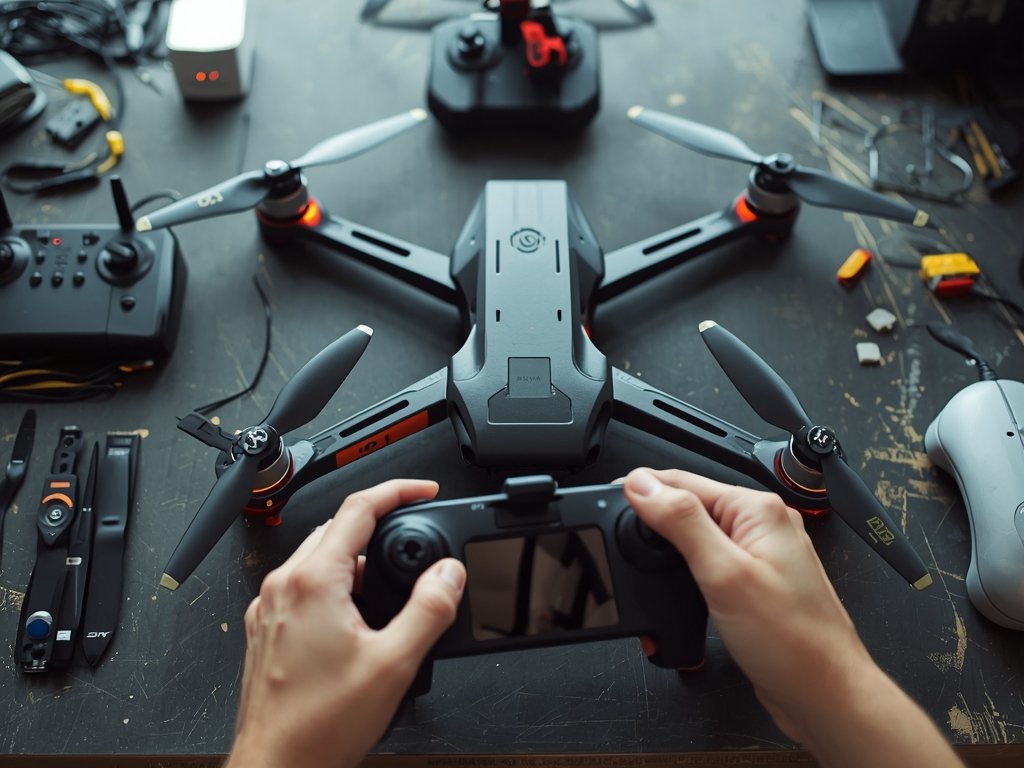
Take 5043. The first two digits are diameter: 50 means 5.0 inches across the circle the prop sweeps as it spins. The last two are pitch: 43 means 4.3 inches. Written out in full as 5×4.3, it means exactly the same thing.
Some props use a longer code. In 51466, 51 is a 5.1-inch diameter and 466 is a 4.66-inch pitch. Other makers separate blade count instead, writing 5043×3, where “x3” means three blades. Conventions vary between brands, so do not rely on the code alone — check the diameter, pitch and blade count stated in the listing. Also check the hub bore matches your motor shaft; most 5-inch props use a 5mm bore. Props are sold as clockwise (CW) and counter-clockwise (CCW) pairs, covered below.
Diameter Explained: The Size of the Disc
Diameter is the size of the circle the spinning prop covers. A larger diameter moves more air per revolution, because each blade is longer and sweeps a bigger area. In flight that generally means more thrust and more grip — a stronger, more connected feel in turns and on throttle punches. The trade-off is load: a bigger prop is harder to spin up and slow down, so response can feel slightly less snappy, and current draw rises.

A smaller diameter moves less air, so low-end thrust can be lower, but the motor changes speed faster — suiting light builds where responsiveness matters more than thrust. In practice, diameter is decided by your frame: a 5-inch frame is built around 5-inch props, and much larger ones would hit the frame or each other. If you are still planning a build, our FPV drone parts list for a custom build shows how frame, motors and props are selected together.
Pitch Explained: How Hard the Prop Bites
Pitch is theoretical: if a propeller were screwing through a solid material, pitch is how far forward it would travel in one revolution. A 4.3-inch pitch prop would, in theory, advance 4.3 inches per turn. Air is not solid, so that never happens exactly, but pitch remains the best shorthand for how aggressively the blade is angled.

- Lower pitch: a flatter blade angle. The prop takes a smaller bite per revolution, loads the motor less, draws less current, and tends to feel smoother and more controlled, with a lower top speed.
- Higher pitch: a steeper blade angle. The prop tries to move more air per revolution, which can raise top speed and thrust, but loads the motor harder, increases current draw, and can feel twitchier and less efficient at cruising throttle.
Think of pitch like bicycle gears: low is easy to turn and good for control, high can go faster but demands more effort. The right pitch depends on whether you value control, speed, flight time, or a balance of all three. Too much pitch or diameter shows up as hot motors, hard battery sag, and shorter flights.
Blade Count Compared: Biblade, Triblade and More
Blade count divides the total blade area. More blades mean more area working the air within the same diameter, which changes grip, efficiency and noise.
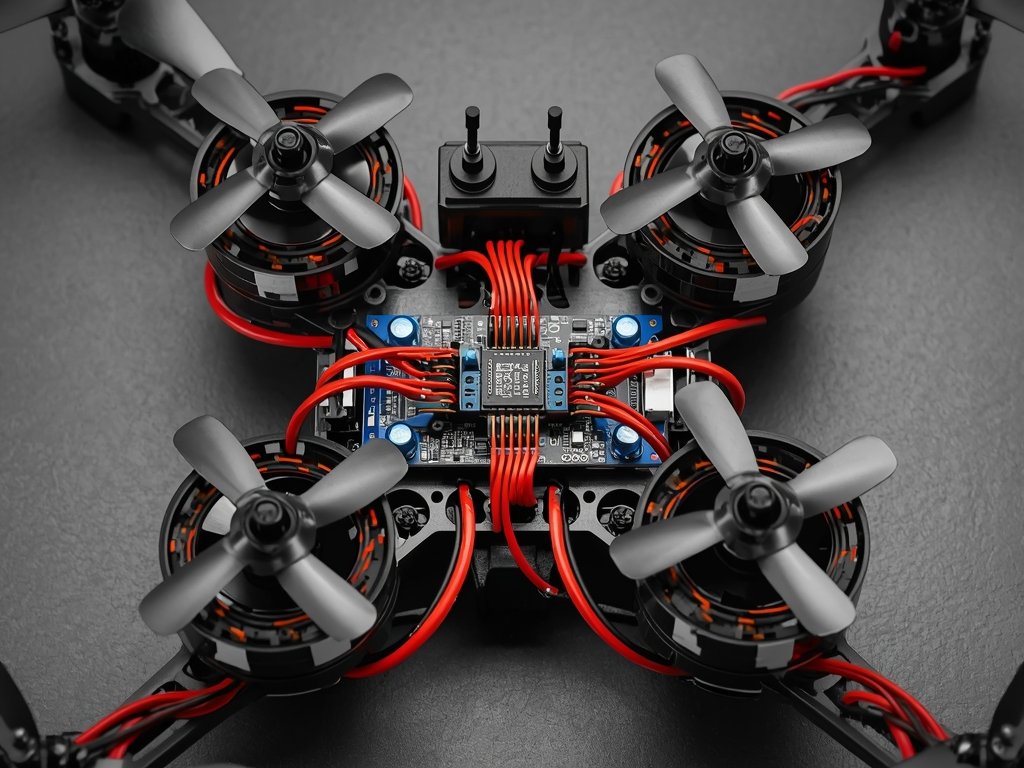
Biblades (two blades) are the efficiency option: less area and drag typically mean lower current draw and longer flight times, at the cost of less grip and a looser feel. Triblades (three blades) are the default for most 5-inch flying: more grip and control, especially in corners and prop wash, for a moderate efficiency cost. Four or more blades add grip and tend to run smoother with a lower tone, but drag and current climb — suiting ducted cinewhoops far more than efficiency builds.
| Blade Count | Grip | Efficiency | Noise | Best For |
|---|---|---|---|---|
| 2 blades (biblade) | Lower, looser in turns | Higher, lower current | Sharper tone | Long-range, efficiency, light builds |
| 3 blades (triblade) | Balanced, locked-in | Moderate | Moderate | 5-inch freestyle and racing |
| 4–6 blades | High, planted at low speed | Lower, higher current | Smoother, lower tone | Cinewhoops, ducted builds |
Treat noise as a tendency, not a guarantee: tip design, pitch, RPM and ducts all affect sound as well as blade count.
Choosing FPV Drone Propellers by Build Type
Start from what the quad is for. Pick diameter to fit the frame, blade count for the feel you want, and pitch for how you fly — then fine-tune one change at a time.
5-Inch Freestyle
Freestyle values grip, prop-wash control and a forgiving feel over raw speed. A mid-pitch triblade in the correct 5-inch diameter is the sensible start: predictable cornering and enough thrust for tricks without excessive current. Rates and filtering also shape feel, as covered in our FPV drone tuning guide.
5-Inch Racing
Racing values acceleration, top speed and gate response. Racers try higher pitch for speed on open tracks, or lighter, lower-loading props for quicker spool-up on tight tracks. As race builds run near their limits, check motor temperature and battery sag whenever you step up in pitch.
Cinewhoop and Ducted Builds
Cinewhoops fly slowly, close to people and property, carrying a camera. Smoothness, low-speed control and sound matter more than speed, so smaller diameters, higher blade counts and modest pitch are typical. Ducts require exactly sized props — always use the diameter the frame manufacturer specifies.
Long-Range Builds
Here efficiency and reliability come first. Biblades or low-pitch triblades in the largest diameter the frame accepts are common, cruising on less current for longer flights. Snappy response matters far less than a prop the motors can turn for many minutes without heat or battery strain.
Props, Motors and Batteries as a System
A prop never works alone. The motor spins it, the ESC feeds the motor, and the battery supplies the current — changing the prop changes the load on all three.
Motor KV is the speed constant: roughly, the RPM a motor tries to turn per volt applied, unloaded. Higher-KV motors spin faster, so they pair with smaller, lower-pitch or lighter props. Lower-KV motors spin slower with more torque, suiting larger or higher-pitch props. Voltage matters equally: 6S raises RPM substantially over 4S, which is why 6S builds typically use lower-KV motors and often lighter props. Our FPV drone motors buying guide covers KV and voltage pairings in full.
The rule: increasing diameter, pitch or blade count increases load and current. Change one thing at a time, then check motor temperature, battery sag and flight time. Warm motors are normal; motors too hot to hold, or a hot, puffy battery, mean the setup is over-propped.
Direction and Mounting: Mistakes That Stop a Quad Flying
FPV quads use counter-rotating propellers: viewed from above, two motors spin clockwise and two counter-clockwise. Props come in CW and CCW versions with mirrored blade angles, so each pushes air downward while spinning its assigned way. Fit a CW prop on a CCW motor and it tries to push air upward instead.
You will also meet props in and props out: front props spinning toward each other over the nose, or away from each other. Both work and the choice is set in firmware — what matters is that the physical props, their direction, and the firmware setting all agree.
- Fitting a prop upside down — the marked, lettered surface is normally the top, and the leading edge should cut into the air in the direction of rotation.
- Swapping a CW prop onto a CCW corner, or vice versa.
- Leaving the prop nut loose, or not fully seating the prop on the hub before tightening.
- Changing props in/out in firmware without physically changing the props to match.
If you are building for the first time, our step-by-step FPV drone build tutorial covers prop fitting in sequence. After any direction change, test motor directions with props off first, then hover gently — a direction error will flip or yaw the quad on take-off, so be ready to disarm.
Materials and care: most modern FPV props are polycarbonate or a polycarbonate blend, balancing stiffness at high RPM with toughness, so they often bend rather than shatter. Some blends add glass fibre for stiffness, at the cost of impact forgiveness; very soft plastics flex, waste energy and feel inconsistent. Store props flat, away from heat, and carry spares. Formal balancing matters most on larger aircraft, but check by eye: look for twists, compare blades for symmetry, and reject anything deformed.
When to Replace a Prop
A bent prop can sometimes be straightened to get you home, but replace it before the next proper flight. Imperfect props waste efficiency, add jello to footage, and make the flight controller work harder. Replace a prop if you see:
- Nicks or chips on the leading edge or tip, even small ones.
- Bends or twists that do not return fully to their original shape.
- White stress marks at the blade root or hub — the plastic has been over-flexed and weakened.
- Cracks anywhere, especially radiating from the hub bore.
- A loose or oval hub bore that no longer sits snugly on the shaft.
- New vibrations after a crash with no other obvious cause — swap props first; it is the cheapest diagnosis.
When in doubt, replace it. Props are inexpensive; motors, bearings and ruined footage are not.
Frequently Asked Questions
Can I use one biblade as a spare on a triblade setup?
No. All four props should match in model, size, pitch and blade count. Mixing unbalances thrust between corners, and the flight controller will constantly fight the difference.
Does higher pitch always mean a faster quad?
Not always. Higher pitch raises theoretical speed only if the motor can spin it and the battery can supply the current. An over-pitched quad can sag so hard it ends up slower, hotter and less efficient in practice.
Are premium props worth it over budget ones?
Up to a point. Better props are more consistent, hold shape at high RPM, and are more accurately moulded, meaning fewer vibrations. Beyond a reasonable level from an established maker, you pay for design and feel, not basic reliability.
Why does my quad vibrate after a prop change?
Usually a prop not fully seated, a loose nut, a subtly bent blade, or one prop of a different type. Check seating and nuts first, inspect each blade against the light, and confirm all four are identical before changing software settings.
How many spare props should I carry?
At least one full set, ideally two if you cannot easily leave the flying site. A single broken blade with no spare ends a flying day.
Conclusion
Choosing FPV drone propellers well comes down to three numbers and one honest question. Diameter sets how much air you move, pitch sets how aggressively you move it, and blade count trades grip against efficiency. The question is what the build is for — freestyle control, racing speed, smooth cinematic work or long-range efficiency — because each answer points to a different combination.
Start with the sensible default for your build type, change one variable at a time, and judge each change by feel, motor temperature, battery behaviour and flight time. Done that way, props become the easiest and cheapest tuning tool on your quad.
Join Our Pilot Community
Connect with fellow drone enthusiasts, share your aerial shots, and get access to free PDF ebook guides.