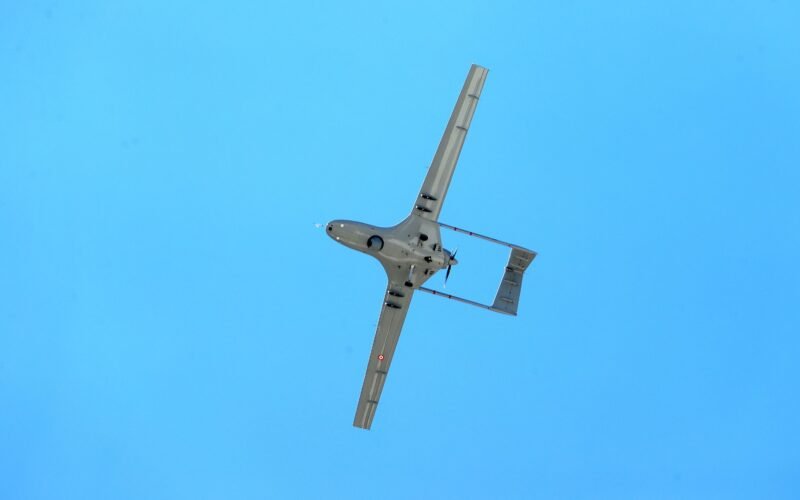
The Canyon County Board of Commissioners in Idaho said on Wednesday 25 November 2026 that it has received numerous complaints from residents about the safety and noise of Amazon’s Prime Air delivery drones flying from the company’s hub in Nampa, according to DroneXL, reporting on the county’s press release. The county also said it has no legal authority to regulate airspace, and it sent residents to the Federal Aviation Administration (FAA) and to Amazon instead. The statement puts a county government in an awkward position that will be familiar to local officials across the United States: residents are complaining to the office they can reach, about aircraft the office cannot control, and the office’s honest answer is that the power to act sits somewhere else entirely.
Two things about this story need to be stated carefully at the start, because they are easy to get wrong. First, the county’s release gives no count of complaints — the word is “numerous”, and no number is attached to it. The detailed flight figures in this story — the passes per day, the noise readings, the altitudes — come from Amazon’s own data, given to the city of Nampa, not from the county, and they must not be presented as the county’s figures. Second, the county’s release ends with a warning that aiming a laser or a rangefinder at a drone is a federal felony. Neither the county’s release nor Nampa’s page, as read on 26 November, says anyone has pointed one at an Amazon drone. This article reports the warning; it does not report an incident, because no incident is reported in the sources.
The drones at the centre of the complaints are Amazon’s MK30 delivery drones, which have flown from the company’s Nampa hub since 30 October 2026, according to DroneXL. The MK30 weighs 83 pounds, DroneXL reports. The county seat is Caldwell, which Idaho News 6 places inside the 7.5-mile (12-kilometre) delivery area along with parts of Nampa and Meridian. That geography matters: the complaints are not about a single street or a single neighbourhood, but about flights across a delivery area that covers three communities, and the county government that received the complaints covers the whole of that area. The rest of this article sets out what the county said, what the city’s data shows, what the permit does and does not limit, and what residents are actually being told to do.
What the County Said — and What It Cannot Do
The Canyon County Board of Commissioners said on Wednesday 25 November 2026 that it has received numerous complaints from residents about the safety and noise of Amazon’s Prime Air delivery drones flying from the company’s hub in Nampa, according to DroneXL, reporting on the county’s press release of the same day. The two words in that sentence that matter most are “safety” and “noise”, because they are the two grounds on which residents are complaining, and they are two different kinds of problem. Safety complaints are about the risk of something going wrong — a drone coming down, or flying too low over a home. Noise complaints are about something that is already happening, every day, whether or not anything goes wrong. The county’s statement covers both, and it answers neither with action, because the county says it has no legal authority to regulate airspace.
That statement of no authority is the core of the story. Airspace in the United States is regulated at the federal level, by the FAA, and a county board of commissioners cannot set its own rules for how high drones fly, how often they fly, or how loud they may be. The county’s press release links Nampa’s drone page for the steps to file a complaint with the FAA and with Amazon. In other words, the county’s practical response to the complaints is to point residents towards the two organisations that can actually do something: the federal regulator, and the company operating the drones. It is a signpost, not a solution, and the county does not pretend otherwise.
Steve Cushman, the county’s director of constituent services, said the board “understands the concerns that have been raised”, according to the county’s release. That is a short sentence, and it is the only quoted reaction from a county official in the sources. It acknowledges the complaints without promising a remedy, which is consistent with the rest of the release: the county is listening, it is recording what residents tell it, and it is directing them onwards. For residents who wrote to the county expecting it to ground the drones or reroute them, that will feel thin. But the release is at least a public record that the complaints exist in numbers the county itself describes as numerous, even though it gives no count, and that record is now part of the public debate about the Nampa hub.
The absence of a count deserves emphasis, because it is the easiest thing to misread in this story. The county says “numerous complaints”. It does not say how many, over what period, or from how many households. The city of Nampa, separately, had received about 20 to 25 calls and emails by 11 November, its communications director told BoiseDev, and the city asked Amazon for its flight data. That city figure is a different number from a different body at a different date, and it must not be folded into the county’s statement as if the county had reported it. The honest picture is that two local bodies have both heard from residents, the city has put a number on what it heard by 11 November, and the county has not put a number on what it heard by 25 November.
The Nampa Hub and the MK30 Delivery Drone


Amazon’s Prime Air delivery drones have flown from the company’s Nampa hub since 30 October 2026, according to DroneXL. The hub is therefore less than a month into operations at the time the county issued its statement, and the complaints have arrived quickly — within the first four weeks of flying. That speed is itself part of the story: residents did not wait months to object, and the county did not wait months to say publicly that it had heard them. The hub’s first month has produced a public record of complaints at both city and county level, a request from the city for Amazon’s flight data, and now a county statement directing residents to the FAA.
The aircraft involved is the MK30, Amazon’s current delivery drone, which weighs 83 pounds according to DroneXL. That weight is worth stating plainly, because it shapes the safety side of the complaints: an 83-pound aircraft flying over homes is not a toy, and residents who worry about safety are worrying about a substantial machine, not a hobby quadcopter. The MK30 is the same model involved in an Amazon MK30 drone crash in Huntington Woods, Michigan, which this site has previously covered, and that earlier incident is part of the background against which residents’ safety concerns should be understood. A crash in one state does not prove a risk in another, but it is reasonable that residents who know about it will ask harder questions about the aircraft flying over their own homes.
Nampa is not Amazon’s only Prime Air hub, and the pattern of a new hub drawing local attention is not new either. Amazon has opened other hubs as it builds out the Prime Air network, including Amazon Prime Air’s third hub in Rossford, Ohio, which this site covered when it opened. Each hub brings the same basic arrangement: a delivery area measured in miles around a warehouse, drones flying regular routes to customers’ homes, and neighbours who did not choose to live under a flight path finding that one now passes over them. What is different about Nampa is how quickly the complaints have reached the county level, and how much detailed flight data the city has already obtained from Amazon and made public.
The delivery area itself covers more than Nampa. The county seat is Caldwell, which Idaho News 6 places inside the 7.5-mile (12-kilometre) delivery area along with parts of Nampa and Meridian. That means the flights cross municipal boundaries: a drone leaving the Nampa hub can pass over homes in Nampa, in Caldwell, and in parts of Meridian, all within the same delivery radius. That is one reason the complaints have landed with the county as well as the city — the county is the level of government that covers all three communities, and residents in Caldwell who hear drones overhead are complaining to the body that represents them, even though that body cannot regulate the airspace above them.
The Numbers Behind the Complaints: Passes, Noise and Altitude
The most detailed figures in this story come from Amazon’s own data, given to the city of Nampa after the city asked for it, and they must be attributed that way throughout. Amazon’s own data, given to the city, showed several addresses near Cherry Creek Estates averaging 63 to 79 drone passes a day within 820 feet (250 metres) in the week of 2–8 November — roughly one every seven to nine minutes. That is the figure that gives the complaints their sharpest edge: not an occasional overflight, but a drone passing within 820 feet of a home every seven to nine minutes, on average, across a full week. It is Amazon’s own data, and it is the data the city obtained when it asked Amazon what was actually flying over its residents.
The noise figures in the same data set are just as specific. Recorded flyover noise peaked at 49.1 to 51 decibels, about 7 to 11 decibels above background noise, and drones flew as low as 194 feet near some homes. Amazon’s own modelling estimates flyover noise closer to 55 decibels. Those two numbers — the recorded peak of 49.1 to 51 decibels and the modelled estimate of around 55 decibels — are both Amazon’s, and the gap between them is worth noting: the company’s model predicts louder flyovers than the recordings captured in that week, which means residents’ experience could be louder than the recorded figures suggest, or the model could be conservative. Either way, the recorded figure sits 7 to 11 decibels above background noise, which is a noticeable increase over the ordinary sound of a neighbourhood, repeated every seven to nine minutes at the most-affected addresses.
The altitude figure completes the picture. Drones flew as low as 194 feet near some homes, according to the data Amazon gave the city. That is low enough that a drone is clearly visible and clearly audible from a garden or a driveway, and low enough that the safety concerns residents raise are easy to understand: an 83-pound aircraft at 194 feet over a home is not a distant speck, it is a machine passing close overhead. Nampa’s planning director Rodney Ashby commented on the altitude data, according to The Robotics Media, and the fact that the city’s planning director is commenting on flight altitudes shows how far this has moved from a customer-service issue into a planning and land-use question — even though the airspace itself is outside the city’s control.
It is important to keep the attribution straight, because the numbers are powerful and it would be easy to attach them to the wrong body. The 63 to 79 passes a day, the 49.1 to 51 decibel peaks, the 194-foot minimum altitude and the 55-decibel model estimate are all Amazon data given to the city of Nampa. They are not the county’s figures, and the county’s release does not repeat them. The county says it has received numerous complaints; the city says it received about 20 to 25 calls and emails by 11 November and asked Amazon for its flight data; Amazon supplied data showing the pattern described above. Each of those three statements belongs to a different body, and this article keeps them separate so that no reader mistakes Amazon’s data for the county’s findings, or the city’s call count for the county’s complaint count.
A Permit With No Limits on Noise, Altitude or Flight Counts


One fact in the sources explains a great deal about why residents feel they have nowhere to go: the current permit for the hub sets no explicit limits on noise, altitude variance, or daily flight counts, according to The Robotics Media. That means the document that allowed the hub to operate does not cap how loud the drones may be, does not set a minimum altitude beyond what the FAA requires, and does not limit how many flights a day may pass over any one neighbourhood. Residents who assumed the permit would protect them on those points were assuming something the permit does not do, and the county’s statement that it cannot regulate airspace sits on top of a permit that does not regulate those things either.
The permit itself was approved by Nampa’s Planning and Zoning Commission, which approved the hub’s conditional use permit 6–1 on 26 May. A 6–1 vote is a clear majority, but it is not unanimous, and the single dissenting vote is a reminder that the hub was contested from the start. The commission’s job was land use — whether a drone delivery hub was an acceptable use for the site — and it answered yes, with one commissioner voting no. What the commission did not do, on the evidence of the permit as described in the sources, was set operating limits on noise, altitude variance or daily flight counts. Those are the very things residents are now complaining about, and they are the things no permit condition covers.
Amazon says it will spread out flight paths to reduce concentration over specific neighbourhoods, but has not specified which routes or when changes take effect. That promise is the company’s response to the concentration problem shown in its own data — the 63 to 79 passes a day over a small number of addresses near Cherry Creek Estates. Spreading flight paths would mean fewer passes over the most-affected homes, which is exactly what those residents want. But a promise without routes and without a date is not yet a change, and residents have no way, from the sources available, of knowing whether their street will see fewer flights next week, next month, or not at all. The gap between the promise and the detail is one of the reasons the complaints have continued.
The combination of a permit with no operating limits, a county with no airspace authority, and a company promise with no timetable leaves residents with the complaint routes the county pointed them towards: the FAA and Amazon itself. The county’s press release links Nampa’s drone page for the steps to file a complaint with the FAA and with Amazon, and residents can reach Amazon at 1-888-280-4331, or through customer-service chat by choosing “Something Else” and then “Amazon Drone Delivery”. Those are real routes, and they are the ones the county is recommending. But they are also routes that put the complainant in direct contact with the regulator and the operator, with no local body in between to press the case on their behalf, and that is the practical meaning of the county’s statement that it cannot regulate airspace.
The Laser Warning: A Federal Felony — With No Incident Reported
The county release ends with a warning that aiming a laser or a rangefinder at a drone is a federal felony. That sentence, placed at the end of a release about complaints, is a warning about what residents must not do in response to the drones overhead, and it is there because the county and the city clearly expect that some residents, frustrated by the noise and the frequency of the flights, might be tempted to act against the drones themselves. The warning is a statement of law, and it is stated without qualification: aiming a laser or a rangefinder at a drone is a federal felony, full stop.
Nampa’s page cites 18 U.S.C. § 39A, which carries up to five years in prison for knowingly aiming a laser at an aircraft, and says golf and hunting rangefinders count. That detail matters, because it closes off a possible misunderstanding: a resident might think a laser pointer is the only thing covered, or that a golf rangefinder is a harmless piece of sporting equipment rather than a laser device. Nampa’s page says otherwise, and it says so explicitly — golf and hunting rangefinders count, and the penalty can be up to five years in prison. The law covers aiming a laser at an aircraft, and a drone is an aircraft for this purpose, so the warning applies directly to the Amazon drones flying over Nampa and Caldwell.
What must be said just as clearly is that neither the county’s release nor Nampa’s page, as read on 26 November, says anyone has pointed one at an Amazon drone. There is no incident in the sources. No resident is named, no date is given, no drone is reported to have been targeted, and no enforcement action is described. The warning is preventive, not a report of something that has happened, and this article must not be read as saying otherwise. A reader who comes away thinking someone in Canyon County aimed a laser at a drone has been misled, and the sources do not support that reading.
The warning also tells us something about the temperature of the dispute, even without an incident behind it. Local authorities do not usually end a press release about noise complaints with a federal felony warning unless they think the warning is needed — unless they believe that frustration is running high enough that someone might act on it. The warning is therefore evidence of how seriously the county takes the complaints, and how seriously it takes the risk that a frustrated resident might do something illegal. It is a sign that the county expects the dispute to continue, and that it wants the record to show, before anything happens, that residents were told in plain terms what the law says.
What This Means for Drone Pilots and Delivery Neighbours

For drone pilots, the Canyon County story is a reminder of a legal line that every pilot should know, whether they fly for fun, for work, or for a delivery company. Aiming a laser at an aircraft is a federal felony under 18 U.S.C. § 39A, carrying up to five years in prison, and Nampa’s page says golf and hunting rangefinders count. That is a rule about what people on the ground must not do to aircraft, and it applies to drones just as it applies to crewed aircraft. It is also a reminder that the airspace above a neighbourhood is federal airspace, and that local frustration, however understandable, does not create a local right to interfere with an aircraft. Pilots who fly delivery routes should know that the law protects them in the air, and residents who are annoyed by those routes should know that the law protects the aircraft, not their annoyance.
For the delivery industry, the Nampa story is a case study in how quickly a new hub can generate organised complaints, and how little local government can do about them once the hub is operating. Amazon’s hub had been flying for less than a month when the county issued its statement, and the city had already received about 20 to 25 calls and emails by 11 November and asked Amazon for its flight data. Amazon’s response — a promise to spread out flight paths, with no routes and no date — is the kind of response that keeps a dispute alive rather than settling it. Other operators planning new hubs should read this story as a warning: the permit may not limit noise, altitude or flight counts, but the neighbours will notice all three, and they will complain to every level of government they can reach, including the ones that cannot help them.
For residents living under delivery routes, the practical lesson is narrower and more useful. The county has told them where to complain — the FAA and Amazon — and Nampa’s drone page sets out the steps. Residents can reach Amazon at 1-888-280-4331, or through customer-service chat by choosing “Something Else” and then “Amazon Drone Delivery”. Those routes exist, and using them creates a record with the operator and the regulator. What residents cannot do, on the evidence of this story, is get the county to set limits the permit does not contain, or get the county to regulate airspace it has no authority over. The county’s statement is honest about that limit, and residents who understand it will spend their effort on the routes that can actually produce a change.
Idaho has already featured in drone-delivery safety news this year, and the Nampa complaints sit in that context. This site has previously reported on an Amazon drone passing over a paramotor pilot’s wing in Idaho, a separate incident in the same state that raised its own questions about how delivery drones share low-altitude airspace with other aircraft. The Nampa story is different — it is about noise and frequency over homes, not a near miss with another aircraft — but the two stories together show that Idaho is becoming a place where the practical questions about drone delivery are being asked in public, by residents, by pilots, and by local government. And the wider delivery market is moving in the same direction everywhere: Uber Eats drone delivery taking off in Texas via Zipline shows that food delivery by drone is expanding well beyond Amazon, which means the questions Nampa is asking — about noise, frequency, altitude and who to complain to — will soon be asked in many more towns.
What to watch next. First, watch whether Amazon names the routes it will change and the date the changes take effect, because the promise to spread out flight paths is the only concrete remedy on offer and it currently has neither. Second, watch whether the city of Nampa publishes more of Amazon’s flight data, or asks for a further data set, now that the first week’s figures are public. Third, watch whether the county updates its complaint count, or says anything further about what it can and cannot do. Fourth, watch for any FAA response to complaints filed through the routes the county pointed residents towards. And fifth, watch the Nampa hub’s next month of operations: the first month produced complaints within weeks, and the second month will show whether the flights settle into a pattern residents accept, or whether the complaints keep growing.
Frequently Asked Questions
What did Canyon County say about Amazon’s Prime Air drones? The Canyon County Board of Commissioners in Idaho said on Wednesday 25 November 2026 that it has received numerous complaints from residents about the safety and noise of Amazon’s Prime Air delivery drones flying from the company’s hub in Nampa. The county also said it has no legal authority to regulate airspace, and it sent residents to the FAA and Amazon instead. The county’s release gives no count of complaints.
How often are the drones flying over the worst-affected homes? Amazon’s own data, given to the city of Nampa, showed several addresses near Cherry Creek Estates averaging 63 to 79 drone passes a day within 820 feet (250 metres) in the week of 2–8 November — roughly one every seven to nine minutes. That figure is Amazon’s data given to the city, not the county’s figure, and it must not be presented as the county’s. Recorded flyover noise peaked at 49.1 to 51 decibels, about 7 to 11 decibels above background noise, and drones flew as low as 194 feet near some homes.
Can the county or the city limit the drones’ noise, altitude or flight numbers? No, on the evidence of the sources. The county says it has no legal authority to regulate airspace, and the current permit for the hub sets no explicit limits on noise, altitude variance, or daily flight counts, according to The Robotics Media. Nampa’s Planning and Zoning Commission approved the hub’s conditional use permit 6–1 on 26 May. Amazon says it will spread out flight paths to reduce concentration over specific neighbourhoods, but has not specified which routes or when changes take effect.
Is it illegal to aim a laser at a delivery drone? Yes. The county release ends with a warning that aiming a laser or a rangefinder at a drone is a federal felony. Nampa’s page cites 18 U.S.C. § 39A, which carries up to five years in prison for knowingly aiming a laser at an aircraft, and says golf and hunting rangefinders count. But neither the county’s release nor Nampa’s page, as read on 26 November, says anyone has pointed one at an Amazon drone — the warning is preventive, and no incident is reported in the sources.
How can residents complain about the drones? The county’s press release links Nampa’s drone page for the steps to file a complaint with the FAA and with Amazon. Residents can reach Amazon at 1-888-280-4331, or through customer-service chat by choosing “Something Else” and then “Amazon Drone Delivery”. The city of Nampa had received about 20 to 25 calls and emails by 11 November, its communications director told BoiseDev, and the city asked Amazon for its flight data.
Join Our Pilot Community
Connect with fellow drone enthusiasts, share your aerial shots, and get access to free PDF ebook guides.