“Fly 50 miles legally” makes a fine headline and a poor mental model. Beyond visual line of sight (BVLOS) flight in the United States is not a distance the FAA grants anyone — it is an operating approval earned through a safety case, held today almost entirely by organizations: utilities, railroads, delivery networks, public-safety agencies. The previous version of this guide dressed BVLOS as an enthusiast adventure with a permit attached, and claimed pilots “typically need advanced certifications beyond the basic Part 107” — no such certificate exists. This rewrite is the real landscape as of late 2026: the waiver system that still governs, the technology a genuine safety case requires, and the Part 108 rulemaking that may replace it all — including the deadlines already missed.

The Legal Landscape Today: Waivers, Exemptions, COAs
- The baseline rule: §107.31 requires the pilot (or a visual observer) to see the aircraft throughout flight. Everything BVLOS is an exception to that sentence.
- §107.31 waivers: the main civil path — an operator applies via FAA DroneZone with a full safety case (concept of operations, detect-and-avoid method, command-and-control link performance, procedures, training). Approvals are operation-specific and have gone to infrastructure inspection (rail, powerline), industrial sites, and increasingly structured shielded operations — BVLOS confined close to structures/terrain that shield it from manned traffic.
- Exemptions (Section 44807 / Part 135): heavier or airline-style operations — package delivery networks fly BVLOS under Part 135 air carrier certification with exemptions (our delivery guide covers that world).
- Public aircraft: agencies fly under Certificates of Waiver or Authorization (COAs); drone-as-first-responder programmes run on expedited public-safety BVLOS waivers — real, routine BVLOS happening today, inside public-safety governance.
- What individuals can do: a Part 107 pilot may apply for a waiver — but approval demands an organizational-grade safety case. A consumer drone, a long-range link and optimism is not one, and flying BVLOS without authorization risks civil penalties and certificate action regardless of how safely the flight went.
The Spectrum, Precisely (BVLOS Is Not One Thing)
- VLOS: the default — pilot/observer sees the aircraft unaided.
- EVLOS (extended VLOS): trained visual observers relay position so the pilot’s effective sight extends — flown under waiver conditions; still human eyes doing the seeing.
- Shielded BVLOS: flight close to structures or terrain features that shield the drone from manned traffic — the obstacle itself is the mitigation, enabling approvals without full airborne DAA.
- True (DAA-based) BVLOS: technology replaces the eye — surveillance feeds and detect-and-avoid systems hold the see-and-avoid responsibility. This is the category Part 108 is being built to normalize.
Most real-world “BVLOS” happening today is shielded or observer-extended, inside tight operational boxes — a fact the 50-miles headline obscures and serious operators quietly build their businesses around.
The Safety Case: What “Detect and Avoid” Actually Demands
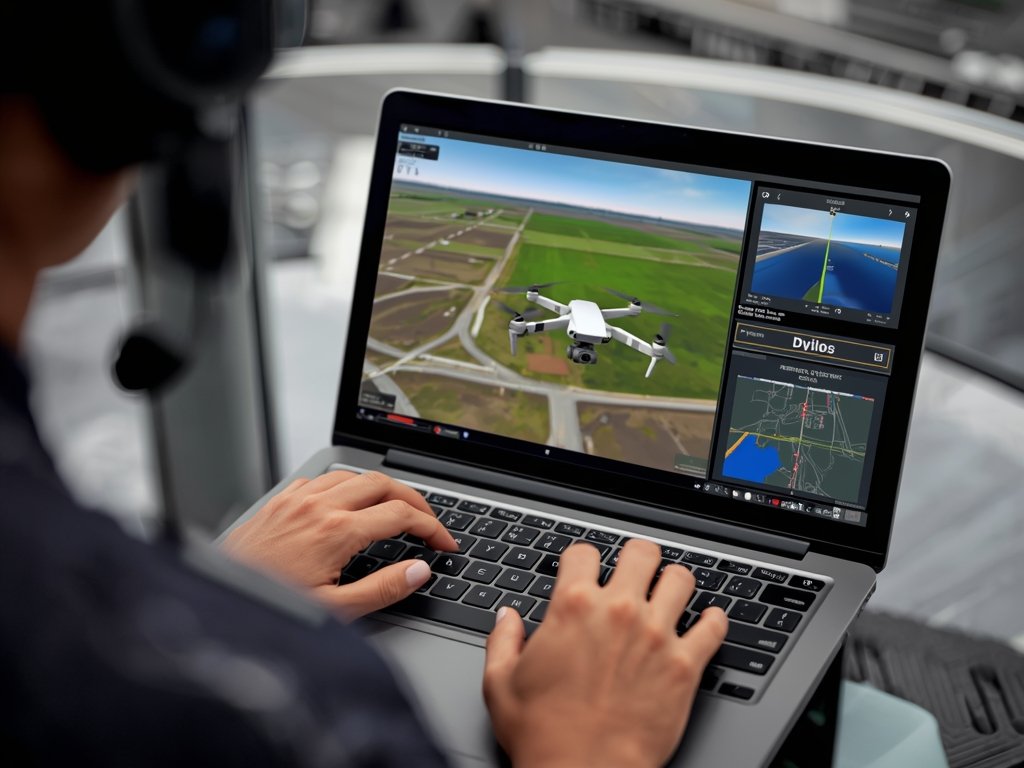
The waiver question is never “how far?” — it is “how do you see?” A credible BVLOS safety case answers, with evidence: air risk (how the operation detects and avoids manned aircraft — ground-based surveillance, onboard DAA sensors per recognized standards, ADS-B In feeds, or shielding that makes the encounter geometry improbable), ground risk (population beneath the route, containment if the aircraft fails), command-and-control link (performance, latency, redundancy — cellular, dual-link, satellite — and a tested lost-link behaviour), and operations (procedures, crew roles, training, maintenance, incident reporting). Visual observers chained along a route historically substituted for DAA in early approvals — an expensive bridge the technology is steadily replacing.

Part 108: Where the Replacement Rule Actually Stands
The FAA and TSA published the proposed Part 108 — “Normalizing Unmanned Aircraft Systems Beyond Visual Line of Sight Operations” — on 7 August 2025 (90 FR 38212), proposing a standing framework: operating permits or certificates instead of one-off waivers, performance-based detect-and-avoid, aircraft up to 1,320 lb, a companion Part 146 for automated data services, and (as proposed) an end to §107.31 waivers once it takes effect. Status, verified for this guide in November 2026: the final rule is not published and Part 108 is not in effect. The executive-order target for the final rule (1 February 2026, EO 14307) passed unmet; the draft final rule reached White House review (OIRA) on 10 July 2026 and remained pending, with FAA officials publicly aiming to publish by the end of 2026. Anyone claiming Part 108 authority today is mistaken — our Part 108 tracker follows the rule’s anatomy and the transition questions in depth.
Why “50 Miles” Is the Wrong Unit
Nobody’s safety case is a single 50-mile dash: command links, battery energy, weather variation and airspace segmentation all argue for segments. The networks actually scaling — delivery and DFR — accumulate miles as repeated short hops between docks and stations, each hop individually contained, monitored and recoverable. Corridor inspection covers distance linearly at low altitude inside a defined volume, not as open-sky cruising. When Part 108 arrives, its operating areas and population-density categories will formalize the same logic: BVLOS as a mosaic of approved volumes, not airmail romanticism. Plan portfolios of segments, and the “range” question dissolves into operations design.
Where BVLOS Is Real Right Now
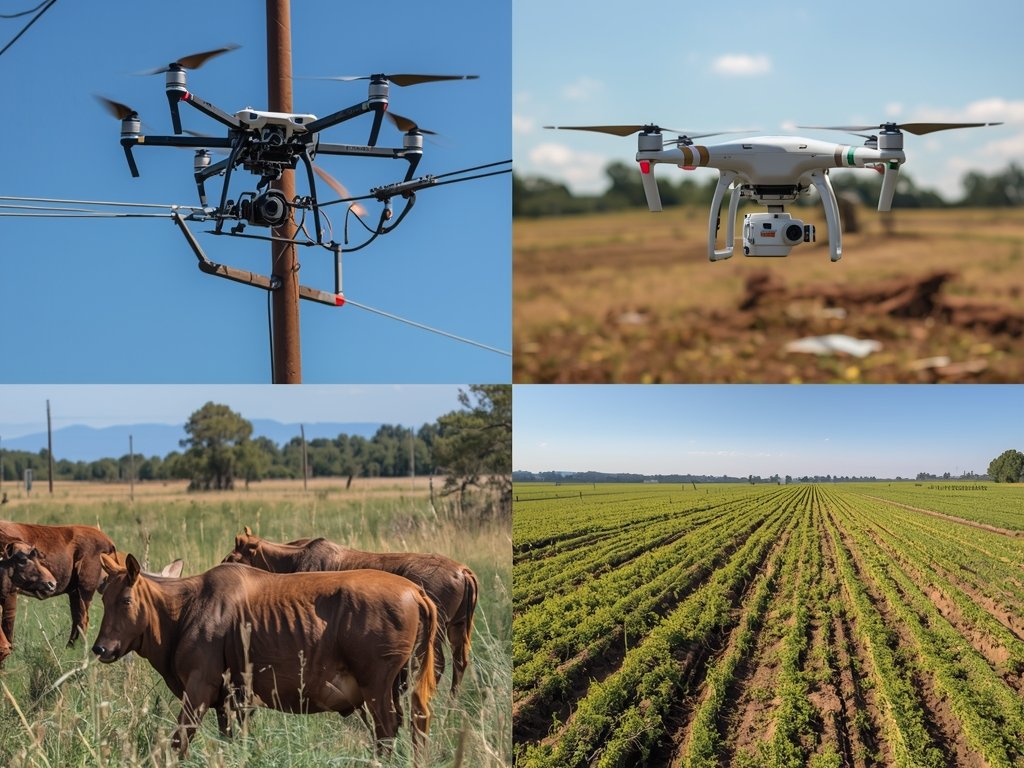
- Linear infrastructure: rail, pipeline and powerline inspection — long, low, rural corridors are the waiver system’s home ground (see our power-line guide for the inspection work itself).
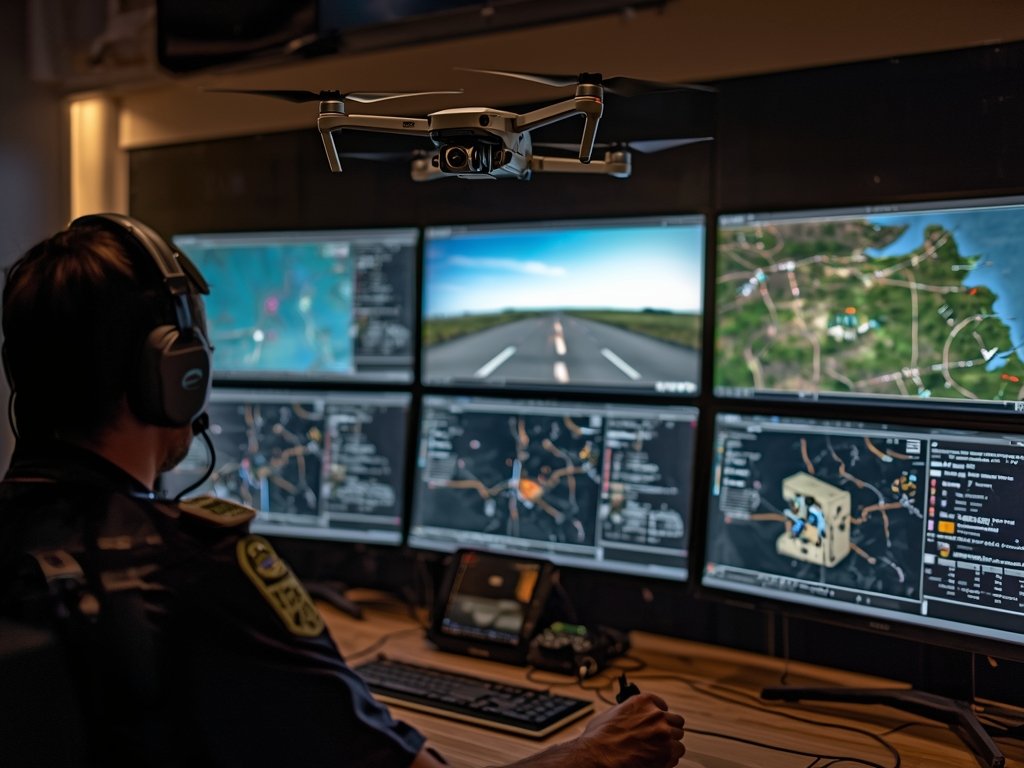
- Public safety / DFR: drones launching from docks to incidents ahead of ground units, under agency waivers — the fastest-normalizing BVLOS use case in the country.
- Delivery: Part 135 networks operating BVLOS as airlines, neighbourhood by neighbourhood.
- Site automation: drone-in-a-box systems on industrial sites under shielded/site-specific approvals (survey, security, progress documentation — including the search-and-rescue missions where BVLOS area coverage saves the hours that matter).
Waiver Application Realities
Three things applicants learn the slow way. First, the FAA evaluates precedent: approvals cluster where a concept of operations resembles one already approved (the agency publishes waiver data, and consultants mine it), so novel operations carry novel-evidence burdens. Second, timelines are measured in months, not days — the FAA asks applicants to submit well ahead (90 days is the standing advice) and iterative questions are normal. Third, the detect-and-avoid answer is where applications live or die: “the pilot watches the telemetry screen” is not a DAA method, and applications saying so stop there. Build the file as if an engineer and a lawyer will both read it — because both will.
If You’re Building Toward BVLOS Work
- Build the VLOS business first — waiver reviewers fund track records, not intentions: documented operations, safety management, incident-free hours.
- Design the operation around a corridor or site where the safety case is winnable (low population, shielded, controlled access) rather than a map-spanning ambition.
- Choose aircraft and C2/DAA architecture with the safety case in the room from day one — retrofitting evidence is the expensive path.
- Join the standards ecosystem (ASTM F38 detect-and-avoid standards are the vocabulary waivers are written in).
- Track Part 108’s final text when it publishes — transition provisions will decide how today’s waiver operations migrate.
The International Picture in One Paragraph
Other regimes reached routine BVLOS by different roads — the EU’s specific-category/SORA risk-assessment system, Canada’s evolving BVLOS provisions for lower-risk operations, the UK’s atypical-airspace concepts — and none of them transfer: a SORA approval is not a §107.31 waiver, and hardware or procedures certified abroad confer nothing in U.S. airspace. Multinational operators run parallel compliance stacks per jurisdiction; travelling pilots should assume BVLOS is prohibited wherever they land until the local framework says otherwise (the FAA’s commercial operators hub is the U.S. anchor reference).
Safety Doctrine That Survives Any Rulebook
Waiver or Part 108, the operating habits are constant: brief the lost-link behaviour until it’s boring; treat the C2 link as a flight-critical system with a monitored health metric, not a hope; keep Remote ID broadcasting (Part 89 applies regardless of sight rules — the FAA’s UAS portal is the standing reference); and log everything, because BVLOS privileges — waivers today, certificates tomorrow — are renewed by evidence, defended by records, and lost by complacency.

FAQ
Can I fly my drone 50 miles away without a waiver?
No. BVLOS without a waiver, exemption or public-aircraft authorization violates §107.31 (and recreational rules equally require line of sight). Distance isn’t the legal unit — authorization is, and no consumer purchase confers it.
Do visual observers make my flight BVLOS-legal?
Observers extend visual coverage — a flight remains VLOS/EVLOS while a qualified observer maintains sight and communication under the rules or waiver terms. The moment no human eye can see the aircraft, you’re BVLOS and need BVLOS authorization; a chain of observers is a waiver design, not a loophole you can self-declare.
What kind of drone do I need for BVLOS flights?
The question only makes sense inside an operation: BVLOS aircraft are selected for the safety case (DAA provisions, C2 link performance, endurance matched to the corridor, containment behaviours), typically industrial platforms integrated with ground systems — not a retail category you can buy into off a shelf.
How much does a BVLOS waiver cost?
The FAA charges no application fee. The real cost is the safety case itself — engineering, documentation, possibly consultants and DAA infrastructure — which is why BVLOS today is an organizational undertaking. Budget also for iteration: most serious applications answer at least one round of FAA questions before decision, and the calendar cost of that loop exceeds the cash cost for most operators.
What are the penalties for flying BVLOS without authorization?
FAA civil penalties and certificate action scaled to the case, with careless/reckless provisions compounding exposure if the flight endangered anyone. The absence of an incident does not make an unauthorized flight legal.
When will Part 108 make BVLOS routine?
Unknown as of November 2026: the final rule sat in White House review with officials hoping for publication by year-end (a statutory reading of the FAA Reauthorization deadline points at early December 2026), after which its own effective/compliance dates will govern. Until publication, the waiver/exemption system in this guide is the law of the land — plan operations on the rules that exist, and treat every “Part 108 is live” claim you meet with a Federal Register check.
BVLOS is earned as an operation, not unlocked as a feature: see-and-avoid answered with evidence, a link you can defend, and paperwork that treats the sky as shared. Build the safety case, fly the segments in front of you, and the miles take care of themselves.
Join Our Pilot Community
Connect with fellow drone enthusiasts, share your aerial shots, and get access to free PDF ebook guides.