



Swedish start-up Nordic Air Defence has unveiled the K200, an autonomous drone interceptor designed to hunt jet-powered attack drones, and the company says the new aircraft is heading for tests in Ukraine. According to Breaking Defense, which reported the launch on 20 November 2026, the K200 is the successor to the company’s Kreuger 100XR and is built to intercept fast, long-range threats including Russia’s Geran-3a. The announcement lands at a moment when jet-powered one-way attack drones have become one of the most difficult problems in Ukrainian air defence — and when the answer, according to the company, is an interceptor that can be built quickly, cheaply and in large numbers. What is not yet known is whether the K200 works as claimed: every performance figure published so far comes from the company itself, and no independent test data has been released.

What Nordic Air Defence Unveiled on 20 November
Nordic Air Defence, known as NAD, is a Stockholm-based start-up founded in 2023 by Karl Rosander, Gustav Wiberg and Oskar Heiwe, according to Breaking Defense. Rosander previously founded Acast, the podcast platform, which makes the company’s background unusual in a defence industry dominated by long-established manufacturers. The K200 is the company’s second interceptor design. Its predecessor, the Kreuger 100XR — also referred to as the K100 — was built to take on slower, propeller-driven one-way attack drones. The K200 is the company’s answer to a threat that has moved on: jet-powered drones that fly far faster than the propeller-driven aircraft the K100 was designed against.
According to Tectonic Defense, which also reported the unveiling on 20 November, the K200 was developed in just 70 days in response to a customer requirement, with the company’s chief executive, Karl Rosander, cited as the source for that figure. A 70-day development cycle is strikingly fast by defence industry standards, where new systems are more often measured in years than in weeks — and it is worth remembering that speed of development is itself a company claim, not something independently verified. What the timeline does suggest, if the company’s account is accurate, is a development model built around rapid iteration rather than long procurement cycles: a small team, a specific requirement from a customer, and a design pushed through in weeks.
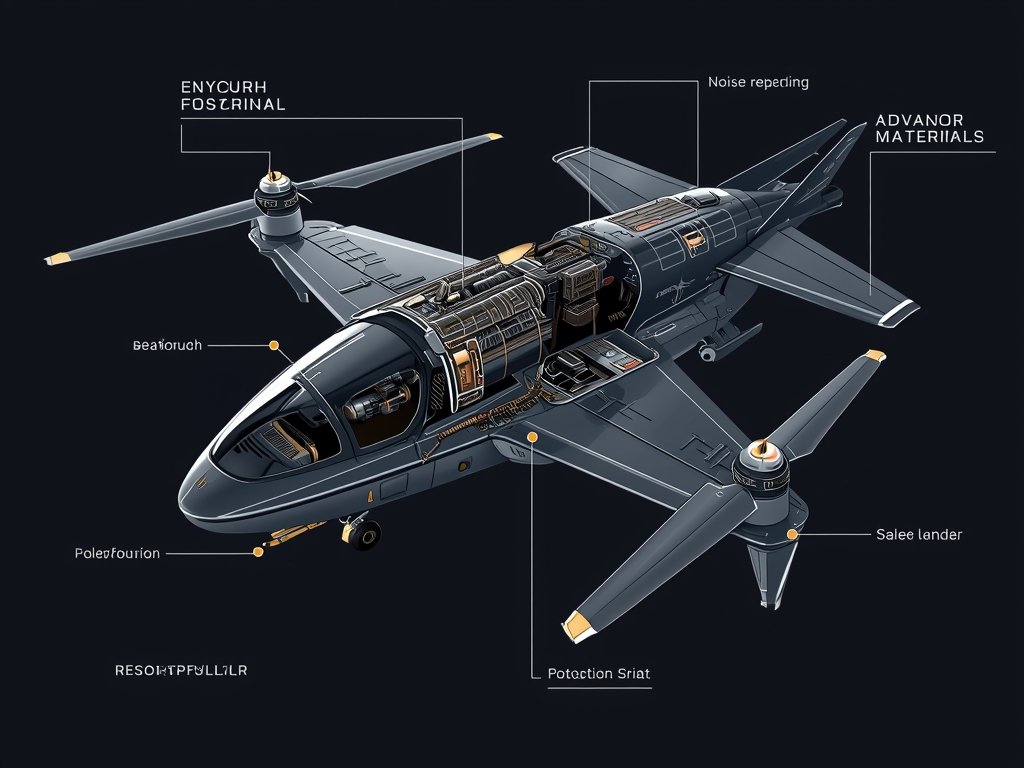
The K200 is about twice the size of the K100, according to Tectonic Defense, and it carries a heavier warhead: 500 grams, or roughly one pound, compared with 250 grams on the K100. The company says the 500-gram payload gives the interceptor a blast radius of 10 to 12 metres, a figure attributed to Rosander. That matters because intercepting a fast-moving drone is not only about reaching it — the warhead has to do enough damage at close range to bring the target down, and a larger blast radius gives the interceptor more margin for error in the final moments of the engagement. The K200 is also faster than the Kreuger 100XR, according to Breaking Defense, although the company has not published a speed figure for the interceptor itself.
The design is a single-propeller, fixed-wing aircraft with autonomous guidance, according to Breaking Defense. That combination — a relatively simple airframe with the intelligence in the guidance system — is consistent with the company’s stated aim of producing interceptors in volume at low cost. The K200 is not a missile in the conventional sense: it is a reusable concept built around a drone airframe, and its cost argument rests on that distinction. The company says it is built to intercept long-range attack drones “at a fraction of the cost of conventional air defence missiles”, a claim that goes to the heart of the economics of the drone war in Ukraine, where defenders have repeatedly faced the problem of spending expensive missiles on cheap attacking drones.
How the K200 Is Designed to Hunt Jet-Powered Drones
The interception sequence described by the company starts before the K200 leaves the ground. According to Breaking Defense, external radars and electro-optical/infrared cameras — EO/IR sensors — steer the interceptor toward a threat, and then an onboard infrared camera provides terminal guidance in the final phase of the engagement. In plain terms, ground-based sensors find the incoming drone and point the K200 in the right direction, and the interceptor’s own heat-seeking eye takes over for the kill. That division of labour matters: the ground sensors do the wide-area searching, while the interceptor only needs to see its target once it is close.
The system is also designed to keep trying if the first attempt fails. According to Breaking Defense, the K200 can “re-engage” if it misses its target — that is, it can turn around and make another attempt rather than being spent in a single pass. That is a meaningful design choice for an interceptor aimed at fast targets, where the first pass is the hardest part of the problem. The company says the K200 supports three kinds of engagement geometry: tail-chase, in which it pursues the target from behind; head-on, in which it meets the target coming the other way; and crossing engagements, in which it cuts across the target’s path. Each of those geometries demands different timing and different guidance behaviour, and the claim that one airframe can handle all three is part of what the Ukraine tests will need to prove.
Launch flexibility is another part of the design. According to Breaking Defense, a family of launchers could support deployment from vehicles, fixed sites and vessels, which would let the same interceptor be used to protect a convoy, a fixed installation or a ship. That matters because the threat the K200 is aimed at does not stay in one place: jet-powered attack drones have been used against cities, infrastructure and military targets alike, and a defender needs interceptors that can be positioned where the threat appears rather than only where a permanent installation exists.
It is important to be clear about what is and is not established here. The guidance sequence, the re-engagement capability, the three engagement geometries and the launcher options are all described by the company and reported by Breaking Defense and Tectonic Defense. None of them has been demonstrated in public, and no independent test data has been published. The company has cited a test-hit figure of nine out of ten, according to the reporting, but that figure is a company claim only: there is no published test record behind it, no independent observer has confirmed it, and it should be treated as unconfirmed until the Ukraine trials produce results that can be checked. The same caution applies to every performance claim in this article — speed, warhead effect, intercept capability and blast radius are all presented as the company describes them, not as proven facts.

Why Ukraine Is the Proving Ground
The most consequential part of the announcement may not be the aircraft itself but where it is going next. According to Breaking Defense, Nordic Air Defence has opened a staffed office in Ukraine, and testing there will inform further development before the K200 is introduced across multiple markets. That sequence — test in Ukraine first, then sell more widely — is now a familiar pattern for drone and counter-drone companies, and it is easy to see why. Ukraine is the one place in the world where interceptor aircraft face real, sustained attacks by the exact class of drone the K200 is designed to defeat, every night, in large numbers. No test range can reproduce that.
The scale of the threat is the reason the K200 exists at all. According to Defence Blog, Russia launched about 1,400 jet-powered Geran drones at Ukraine in the first months of 2026, compared with 180 in all of 2025 — a steep rise that shows how quickly the threat has grown. The Geran-3, the jet-powered variant at the centre of this story, flies at 350 to 550 kilometres per hour, or 217 to 342 miles per hour, according to the same reporting. That speed is what makes the older generation of interceptors inadequate: a propeller-driven interceptor designed for slower targets struggles to catch, or even to reach, an aircraft travelling at several hundred kilometres per hour. The K200 is, in the company’s telling, the answer to that specific problem — an interceptor fast enough to chase down a jet-powered drone.
The timing of the announcement underlines the point. Overnight on 19–20 November, Russia launched more than 400 attack drones and more than 110 missiles at Ukraine, according to the reporting around the launch. The K200 was unveiled into the middle of that reality, not into a quiet news cycle. And the company is not alone in seeing Ukraine as the testing ground for jet-powered interceptors: President Zelenskyy told the Financial Times last month that Kyiv is testing five locally produced jet-powered drone interceptors of its own. The K200 will therefore be measured, sooner or later, against Ukrainian-built alternatives designed for the same job — which is another reason the coming tests matter. A system that performs in Ukraine earns credibility that no press release can buy; a system that does not will be found out quickly.
For readers following the wider war, the K200 also sits in a crowded field. Our coverage of long-endurance military drone systems explains how endurance and range have shaped the current generation of military drones, and the K200 is part of the other side of that story: the race to stop them. Ukraine’s allies have been supplying drone capability as well as interceptors — the UK’s 1,000-drone pledge to Ukraine, worth £260 million, is one of the larger recent commitments — and the K200 announcement adds a Swedish, privately developed system to a supply picture that has so far been dominated by government-to-government transfers.
The Scale of the Threat: Russia’s Jet-Powered Geran Drones
To understand why a small Swedish start-up believes it can matter in this war, it helps to understand what has changed about the Geran. The original Geran drones — propeller-driven, relatively slow, and comparatively easy to intercept with gunfire, electronic warfare and older interceptor drones — were already a major burden on Ukrainian air defences because of the sheer numbers involved. The jet-powered Geran-3 changes the maths. At 350 to 550 kilometres per hour, it crosses defended airspace far faster, gives defenders less time to react, and outruns many of the interceptor drones that were built for its slower predecessors. The reported jump from 180 jet-powered Geran launches in all of 2025 to about 1,400 in the first months of 2026 suggests Russia has moved decisively toward the faster variant.
That shift has a direct cost consequence for defenders. Conventional air defence missiles are effective against fast targets, but they are expensive, and their stocks are finite. Using a missile that costs many times more than the drone it destroys is sustainable for a handful of interceptions and ruinous as a routine. That is the economic argument Nordic Air Defence is making: an interceptor built on a drone airframe, produced in volume, can be cheap enough to use against every incoming Geran rather than only the most threatening ones. Whether the K200 actually achieves that cost advantage is unproven — the company has published no price — but the logic of the argument is the same one driving interceptor development across Europe, including the five Ukrainian-built jet-powered interceptors President Zelenskyy described to the Financial Times.
The Geran is not the only Russian drone system shaping this market. Our reporting on Russia’s Lancet drones in Mali shows how the same loitering-munition technology has spread beyond Ukraine, and the lesson for interceptor makers is that the threat is not confined to one battlefield. A system proven in Ukraine has potential customers far beyond it — which is presumably why Nordic Air Defence says the Ukraine tests will come before introduction “across multiple markets”. The company’s own words point the same way. Rosander said: “As those drones become faster and attacks grow larger, Europe needs interceptors that can keep pace and be produced in volume.” That is a statement about Europe’s air defence gap as much as it is about one product, and it frames the K200 as a response to a structural problem rather than a single contract.
There is also a limit the company itself acknowledges. The K200 is “not for the Geran-5 yet”, according to Rosander, as reported by Tectonic Defense. That remark is worth noting because it shows the company does not claim to have solved the whole problem: the threat keeps evolving, and each new Geran variant sets a new bar. A reader should take that as a sign of honesty about the system’s limits — and as a reminder that the interceptor race is a moving target, not a finish line.
Production Plans and the Road to 1,000 a Month
If the K200 works, the next question is how many can be built, and how fast. According to Tectonic Defense, citing Rosander and UNITED24, the company is targeting production of 1,000 interceptors a month by March 2027. That is an ambitious figure for a start-up founded in 2023, and it is worth pausing on what it would require: production partnerships, supply chains for motors, airframes, sensors and warheads, and a manufacturing footprint that can scale from prototype volumes to four figures a month within about four months of the announcement. The company says it has production partnerships in Poland, the UK and Ukraine, while development and final assembly stay in Sweden, according to the reporting.
The geography of that plan is deliberate. Keeping development and final assembly in Sweden gives the company control over its core technology, while partnerships in Poland, the UK and Ukraine spread production across three countries that are all closely involved in supporting Ukraine. The Ukraine partnership is particularly significant: building interceptors in the country where they will be used shortens the supply line and lets production respond directly to feedback from the tests. None of this has been independently confirmed — the partnerships, like the production target, are company statements reported by Tectonic Defense — but the shape of the plan is consistent with how European defence start-ups have organised themselves since 2022: design at home, build across allied countries, test in Ukraine.
The March 2027 target should also be read with care. It is a target, not a delivery commitment, and the company has published no delivery date for the first production systems and no number of systems for the Ukraine trials. Those gaps matter. A production target without a published order book, a price, or a test schedule is an ambition, not a programme — and readers should not mistake it for a guarantee that 1,000 interceptors a month will be rolling off a line in March. What the target does tell us is how the company thinks about the market: it believes the demand is there, in the thousands per month, and it is positioning itself to meet it if the tests go well.
There is a broader pattern here that regular readers will recognise. The drone industry has repeatedly shown that small, focused companies can move faster than large defence primes, and the K200’s reported 70-day development cycle is the latest example of that pattern — if the company’s account is accurate. Our guide to the best autonomous drone with smart tracking covers the autonomy technology that underpins systems like this on the civilian side, and the same themes recur: autonomous guidance, sensor fusion and low-cost airframes are now available to small teams, and the barrier to building a capable interceptor is lower than it was five years ago. The barrier to proving one, in combat conditions, is as high as ever — which is why the Ukraine tests are the real story here.
What It Means for Drone Pilots, Buyers and the Defence Market
For most civilian drone pilots, the K200 will never be something they fly or buy. It is a military interceptor, not a consumer product, and it will not appear in a hobby shop. But its story still matters to the wider drone community, because the technology and the market forces behind it shape the industry everyone flies in. Autonomous guidance, infrared terminal seekers, radar cueing and high-speed fixed-wing airframes are all technologies with civilian roots, and the money now flowing into interceptor development is accelerating them. The same autonomy that lets a K200 chase a Geran is descended from the tracking and obstacle-avoidance systems in consumer drones — and advances funded by defence work tend, over time, to find their way into civilian products.
For buyers and industry watchers, the more immediate lesson is about the direction of the market. The K200 announcement is one more sign that counter-drone systems are becoming a distinct and fast-growing segment of the drone industry, alongside the delivery, surveying and inspection markets that dominate civilian coverage. The economics are driving it: as attack drones get faster and more numerous, the demand for interceptors that are cheap enough to use at scale grows with them. Companies that can build interceptors in volume, at low cost, and prove them in Ukraine are likely to find customers across Europe and beyond. Companies that cannot prove their systems will struggle, however good their press releases sound.
For policymakers and defence planners, the announcement raises a familiar question: how should Europe buy interceptors? The traditional model — long development programmes, large primes, small numbers of expensive systems — is poorly matched to a threat that arrives in the hundreds per night. The K200’s pitch is the opposite model: fast development, volume production, and testing in the country under attack. Whether that model delivers depends on the tests, and the tests have not happened yet. Rosander’s second quoted remark frames the stakes plainly: testing in Ukraine “will help us improve the system against real threats”. That is both a promise and an admission — the system will improve because it has not yet faced the real threat, and its current form is a starting point, not a finished answer.
The honest position for a reader today is therefore a narrow one. The K200 is a real aircraft from a real company, unveiled on 20 November 2026, with a plausible design and a clear target. Its stated performance, its production ambitions and its cost advantage are claims, not facts, and the Ukraine tests are the moment of truth. Until those tests report results — and until those results are published or independently confirmed — the K200 should be described as a promising interceptor heading for its first real trial, not as a proven solution to the Geran threat.
Frequently Asked Questions
What is the K200 drone interceptor? The K200 is an autonomous drone interceptor unveiled on 20 November 2026 by Swedish start-up Nordic Air Defence. According to Breaking Defense, it is a single-propeller, fixed-wing aircraft designed to intercept jet-powered drones, including Russia’s Geran-3a, and it is the successor to the company’s Kreuger 100XR.
How does the K200 find and hit its target? According to Breaking Defense, external radars and EO/IR cameras steer the K200 toward a threat, and an onboard infrared camera provides terminal guidance. The company says the interceptor can re-engage if it misses, and that it supports tail-chase, head-on and crossing engagements. These capabilities are company claims and have not been independently verified.
When will the K200 be tested in Ukraine? No test schedule has been published. Breaking Defense reported that Nordic Air Defence has opened a staffed office in Ukraine and that testing there will inform further development before the K200 is introduced across multiple markets. No date, and no number of systems for the trials, has been announced.
How many K200 interceptors will be built? The company is targeting production of 1,000 interceptors a month by March 2027, according to Tectonic Defense, citing chief executive Karl Rosander and UNITED24. That is a production target, not a confirmed order or delivery commitment, and the company has published no price.
Is the K200 proven against the Geran-3? No. All performance claims — including speed, warhead effect, intercept capability and a test-hit figure of nine out of ten cited by the chief executive — are company claims only, with no independent test data published. The K200’s real-world effectiveness is unproven until the Ukraine tests report results.
Join Our Pilot Community
Connect with fellow drone enthusiasts, share your aerial shots, and get access to free PDF ebook guides.




