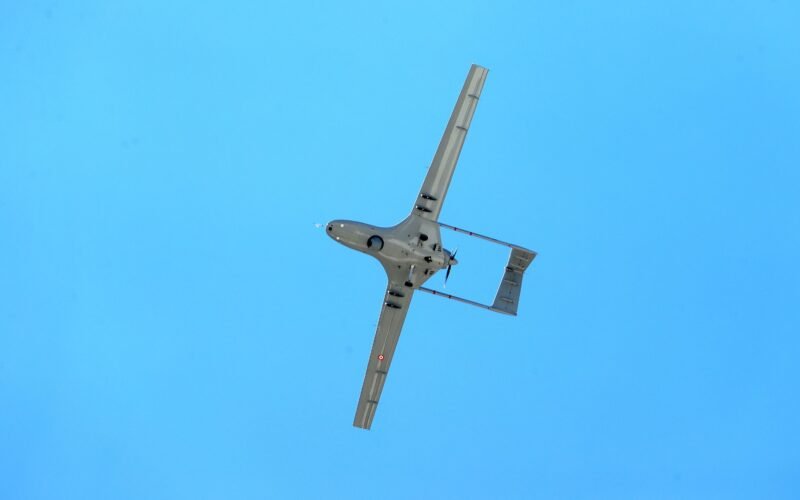
A small number of drone pilots have posted reports that their DJI drones shut off in flight, some of them after recent firmware updates — but as of 18 November 2026, nobody has confirmed that a DJI firmware update is causing drones to crash. That is the central fact of this story, and it belongs in the first paragraph, because the reports circulating online are easy to misread as a confirmed defect. They are not. According to US Drone Supply, reporting on 18 November 2026: “As of November 18, 2026, nobody has confirmed that a DJI firmware update is causing drones to crash.” DJI has made no public statement about the reports, and no flight log, test, or statement from the company ties any crash to the firmware. What exists is a cluster of pilot reports, posted over a few days, describing drones falling from the sky — and a great deal of uncertainty about what caused them.
This article sets out what pilots have claimed, what is known about the firmware updates involved, and what is not known. It does not present the firmware-crash link as fact, because it is not a fact on the evidence available. It also does not advise readers either to skip firmware updates or to install them. The practical guidance at the end of this article is neutral: back up flight logs, note the firmware version, and report any issue with logs attached, so that whatever is happening can be investigated properly.

What Pilots Are Reporting — and What Is Not Confirmed
According to US Drone Supply, a small number of pilots have posted about Air 3S, Mavic 4 Pro, Matrice 4T and Matrice 4TD drones shutting off in flight, some of them after recent updates. Some of the posts include photographs of crashed Matrice 4 series drones. The reports involve both consumer drones and enterprise models: the Air 3S and the Mavic 4 Pro are consumer aircraft, while the Matrice 4T and Matrice 4TD are enterprise machines used for commercial and public-safety work, which makes any suggestion of a mid-flight shutdown more serious, since those aircraft are often flown over people and property.
Two posts in particular are cited in the reporting. One operator wrote on 17 November that three pilots they know had this happen the same day. Another post, also dated 17 November, describes several drones going down in one area on one day. The clustering matters: several incidents reported on the same day, in the same area, could point to a common cause, or it could be a coincidence, or it could reflect the way reports spread online, with one post prompting others to share similar experiences. The reporting does not resolve that question, and this article does not try to resolve it either.
What has not happened is the step that would turn a cluster of reports into a confirmed defect. No individual crash report has been verified with flight logs. No test has reproduced the alleged fault. DJI has made no public statement, and the company’s position is known only from one pilot’s account of support calls: that pilot says DJI support told them twice that it is not aware of any issue. That is a second-hand account of a private conversation, not a statement from the company, and it should be read as such. It is possible that DJI is investigating and has said nothing publicly, and it is possible that the company genuinely has no record of a problem. The published information does not distinguish between those possibilities.
It is worth pausing on the distinction between a report and a confirmation, because it is the distinction this whole story turns on. A pilot posting that their drone shut off in flight is reporting an event they experienced. That report is real evidence that something happened to that pilot’s drone. It is not, on its own, evidence about why it happened. A drone can shut off in flight for many reasons — a battery fault, a loose connection, a propeller or motor problem, a damaged cell, interference, or pilot error — and the fact that a firmware update happened recently does not show that the update caused the shutdown. The timing is suggestive, and it is the reason pilots are asking questions, but suggestion is not proof, and the reporting is careful to say so. The same caution applies to the photographs of crashed Matrice 4 series drones that accompany some of the posts: a photograph shows a crashed drone, not the cause of the crash.
For pilots dealing with a drone that has actually shut down or crashed, the immediate questions are usually practical rather than causal. Our guide to drone propeller error and motor overload fix covers one common class of in-flight fault, and our guide to DJI Fly app crashing fixes covers the software side when the app rather than the aircraft is the problem. Neither guide addresses the reports in this story directly, because the cause of the reported shutdowns is not known.

The Timeline of the Firmware Updates
The firmware updates at the centre of the reports were released in early and mid-November 2026. The timeline, as reported by US Drone Supply, runs as follows. On 5 November, firmware version 19.01.00.07 was released for the Matrice 4T and Matrice 4E. On 13 November, updates were released for seven consumer drones: the Air 3S, at version 01.00.1900; the Mavic 4 Pro, at version 01.00.1000; and the Mini 4 Pro, Mini 5 Pro, Avata 360, Avata 2, and Neo 2. The pilot reports of drones shutting off in flight were posted around 17 November, a few days after the consumer updates and about twelve days after the Matrice update.
That timing is the reason the firmware is under suspicion. When a drone shuts off days after an update, the update is the most recent change, and it is natural to ask whether it caused the fault. But the timing also cuts the other way. The consumer updates went out on 13 November to a large number of aircraft, and the reports describe a small number of pilots. If the update itself were causing drones to shut off, the reporting would be expected to describe a wider pattern, with many more pilots affected. The fact that the reports are few in number does not prove the firmware is innocent, but it does suggest that if the firmware is involved at all, it is not failing on every aircraft, or that the failures depend on some other factor as well.
The version numbers matter for any pilot trying to work out whether their own aircraft is affected. The Matrice 4T and 4E update is version 19.01.00.07, released 5 November. The Air 3S update is version 01.00.1900 and the Mavic 4 Pro update is version 01.00.1000, both released 13 November. The reporting does not give version numbers for the Mini 4 Pro, Mini 5 Pro, Avata 360, Avata 2, or Neo 2 updates, and this article does not supply them. Pilots who want to check their own aircraft should look at the firmware version shown in the DJI Fly app or DJI Pilot 2 and compare it with the numbers given here, and should keep a note of it if they report a problem.
One other point in the timeline deserves attention. The Matrice 4T and 4E update came out on 5 November, eight days before the consumer updates, and the reports of Matrice 4 series crashes are part of the same cluster as the consumer reports dated 17 November. If a single firmware fault were responsible for all of the reported shutdowns, it would have to span two different update releases, on different dates, for different product lines. That is possible — the two releases could share a common component — but it is not the simplest explanation, and the reporting does not claim that they share one. The possibility that the consumer and enterprise reports have different causes should be kept in mind.
The Matrice 4E Update and What DJI Said About It
Separately from the crash reports, the Matrice 4E firmware update has been reported on its own terms. According to TechTimes, reporting on 16 November, DroneDJ reported that the firmware brings “regulatory-related changes and general bug fixes”, and DJI has not said which regional regulations the changes address. The TechTimes report is the source for the details in this section, and the quotation about regulatory-related changes comes from DroneDJ as cited there.
The Matrice 4E is an enterprise drone, and the details reported about it reflect that role. It has a 4/3-inch 20-megapixel wide-angle camera with a mechanical shutter, a specification that matters for mapping and surveying work, where a mechanical shutter reduces the distortion that can appear in images taken from a moving aircraft. The Matrice 4T, the thermal variant of the same airframe, adds a thermal camera, a near-infrared auxiliary light, and a laser rangefinder. Those are the hardware facts reported in the TechTimes article, and they are included here because they describe the aircraft at the centre of some of the crash reports: the Matrice 4T is one of the models named in the pilot posts.
The firmware release also included companion updates, according to the same report: version 19.01.00.08 for the RC Plus 2 Enterprise controller, version 19.01.00.58 for the O4 Ground Station, and DJI Pilot 2 version 19.1.0.45. Those are the controller, ground station, and app software that work with the Matrice 4 series, and they were updated alongside the aircraft firmware. The TechTimes report also notes that the Matrice 4T faces a 100 percent United States tariff, a trade measure that is separate from the firmware question but that affects the same aircraft and the same buyers.
The most important point in this section is what DJI has not said. DJI has not said which regional regulations the firmware changes address, and it has not made any public statement about the crash reports. The “regulatory-related changes” description comes from DroneDJ, not from a detailed statement by DJI, and the absence of detail leaves room for speculation about what the changes do. That speculation should be resisted. The reporting says only that the changes are regulatory-related and that DJI has not identified the regulations. Nothing more should be read into it.
The lack of a public statement from DJI is itself a fact worth reporting, but it should not be over-interpreted. Companies often say nothing while they investigate, and silence in the first days after a set of reports does not show that the company has found a fault, or that it has found nothing. It shows only that no public statement has been made. Pilots waiting for an answer from DJI should watch for a statement from the company, a service bulletin, or a further firmware release, and should treat any of those as the authoritative source when they appear.
A Separate, Confirmed Problem: Third-Party Batteries
Amid the unconfirmed crash reports, the reporting describes one problem that is confirmed, and it is different from the alleged mid-flight shutdowns. A Matrice 4 owner said that the 5 November update refused take-off with a third-party battery. The aircraft was grounded, not crashed. The report comes from US Drone Supply, citing DroneXL, and it describes a take-off refusal, not a failure in the air.
The distinction between a take-off refusal and a mid-flight shutdown is important, and it is worth spelling out. A drone that refuses to take off is an inconvenience and, for a commercial operator, a lost job. A drone that shuts off in flight is a safety hazard, because the aircraft falls. The third-party battery problem, as reported, is the first kind: the aircraft would not take off with a third-party battery after the 5 November update. It is a real problem for the owner affected, and it may affect other owners who use third-party batteries, but it is not evidence that the firmware causes drones to crash, and it should not be reported as if it were.
The battery issue also illustrates a broader point about firmware updates and third-party accessories. Manufacturers sometimes change the way their aircraft check batteries, and those changes can affect batteries that are not made by the manufacturer. That is a known pattern in the drone industry, and it is one reason operators who use third-party batteries pay close attention to firmware release notes. But the reporting does not say why the 5 November update refused the third-party battery, whether the refusal was deliberate, or whether it affects all third-party batteries or only some. Those details are not given, and this article does not supply them.
For pilots, the practical lesson of the battery report is narrower than the crash reports but more certain. If you fly a Matrice 4 with a third-party battery, the 5 November update may prevent take-off, and you should be aware of that before you update or before you plan a job. If you fly with DJI batteries, the report does not describe a problem. And for any pilot, the episode is a reminder to read firmware release notes and to check community reports before updating an aircraft that is needed for a job the next day — not as a rule to skip updates, but as a reason to update when there is time to test the aircraft afterwards.
Could Anything Else Explain the Reports?
One other explanation is mentioned in the reporting, and it deserves a fair hearing. The United States National Oceanic and Atmospheric Administration, NOAA, forecast minor geomagnetic storms for 17–18 November, the same dates as the pilot posts. Geomagnetic storms can affect navigation systems, and a pilot reading the reports might wonder whether space weather played a role. The source notes, however, that storms that small rarely bother a drone. That is the assessment in the reporting, and this article repeats it without adding to it: minor geomagnetic storms are a possible factor to note, and they are not a likely explanation for drones shutting off in flight.
Other explanations are possible in principle but are not discussed in the reporting, and this article will not invent a list of them. The general point is simpler and worth stating plainly. A drone shutting off in flight can have many causes, and the reporting available does not rule any of them in or out. A battery fault, a damaged cell, a loose connector, a motor or propeller problem, or interference could each produce the symptoms described, and none of them is confirmed or excluded by the information published so far. The only way to narrow the list down is with flight logs, and no flight log has been published or verified in connection with these reports.
That is why the absence of flight logs is the most important gap in the story. A DJI flight log records what the aircraft was doing, what the battery was doing, and what the firmware was doing, second by second, and it is the evidence that would show whether a shutdown was caused by the firmware or by something else. Without logs, the reports remain what they are: accounts of events, not diagnoses. Pilots who experience a shutdown should preserve their logs, and anyone reporting an incident should attach them. That is the single most useful thing a pilot can do to move this story from claims to evidence.
There is also a question about how the reports spread. The posts described in the reporting appeared within a few days of each other, and at least two of them are dated 17 November. When one pilot posts about a crash, other pilots who have had similar experiences are more likely to post theirs, and the result can look like a sudden outbreak even when the underlying rate of incidents has not changed. That does not mean the reports are false. It means that counting posts is not a reliable way to measure how common a problem is, and that the small number of reports should be read with that in mind. Our guide to how to calibrate a drone IMU is a reminder of how much of drone reliability comes down to calibration and maintenance, and how many faults have mundane causes.
What Pilots Should Do Now
This article does not advise readers either to skip firmware updates or to install them. Both choices carry risks, and the evidence available does not support telling pilots to do one or the other. What follows is neutral, practical guidance for any pilot who owns one of the models named in the reports, or who is deciding what to do about a recent update.
First, back up your flight logs. DJI flight logs are stored in the DJI Fly app or DJI Pilot 2, and they can be synced or exported. If your drone shuts off in flight, the log is the evidence that will show what happened, and it is far more useful than a description of the crash alone. Backing up logs regularly is good practice whether or not these reports turn out to mean anything, and it costs nothing.
Second, note the firmware version on your aircraft, your controller, and your app, and keep a record of when you updated. The version numbers in this article — Matrice 4T and 4E version 19.01.00.07, Air 3S version 01.00.1900, Mavic 4 Pro version 01.00.1000 — are the ones reported, and knowing which version you are flying is the first step in working out whether a problem affects you. If you report an issue, include the firmware version, the model, and the date of the update, along with the log.
Third, if you experience a shutdown or a crash, report it with the logs attached. Report it to DJI through the company’s support channels, and consider sharing it with a community source that is collecting reports, so that the pattern, if there is one, can be seen. A report without a log is a claim; a report with a log is evidence, and evidence is what is missing from this story so far.
Fourth, keep the usual pre-flight checks in place. A shutdown in flight is alarming, but the routine checks — battery condition, propeller condition, firmware and app versions, and a short hover test before a job — are the habits that catch most faults before they become incidents. Our guide to the Skyrover V1 DJI alternative is included here for readers who are weighing their options more broadly, not as a recommendation to switch aircraft on the basis of unconfirmed reports. Switching aircraft because of an unconfirmed claim would be an overreaction, and this article does not recommend it.
Finally, watch for an authoritative update. The sources to watch are DJI itself, through a public statement or a service bulletin, and the community reporting that first surfaced the claims. If DJI confirms a fault, the right response will be to follow the company’s guidance. If DJI says the firmware is not at fault, that too will be worth reporting. Until one of those things happens, the honest position is the one stated at the top of this article: pilots have reported drones shutting off in flight, and nobody has confirmed that a firmware update is causing it.
Frequently Asked Questions
Has DJI confirmed that a firmware update is causing drones to crash? No. As of 18 November 2026, nobody has confirmed that a DJI firmware update is causing drones to crash, according to US Drone Supply. DJI has made no public statement about the reports, and no flight log, test, or DJI statement ties any crash to the firmware.
Which drones are named in the pilot reports? The reports mention the Air 3S, Mavic 4 Pro, Matrice 4T and Matrice 4TD shutting off in flight, some after recent updates. Some posts include photographs of crashed Matrice 4 series drones. The reports describe a small number of pilots, not a widespread failure.
What firmware versions are involved? The Matrice 4T and 4E firmware version 19.01.00.07 was released on 5 November. Seven consumer drones were updated on 13 November, including the Air 3S at version 01.00.1900 and the Mavic 4 Pro at version 01.00.1000. The reporting does not give version numbers for the other five consumer models updated on 13 November.
Is there a confirmed problem with the 5 November update? One confirmed issue is reported separately from the crash claims: a Matrice 4 owner said the 5 November update refused take-off with a third-party battery. The aircraft was grounded, not crashed. That is a take-off refusal, not a mid-flight shutdown, and it should not be confused with the unconfirmed crash reports.
Should I skip the firmware update? This article does not advise either skipping or installing firmware updates. The practical steps are neutral: back up your flight logs, note the firmware version you are running, test the aircraft after any update, and report any problem with the logs attached so it can be investigated properly.
Join Our Pilot Community
Connect with fellow drone enthusiasts, share your aerial shots, and get access to free PDF ebook guides.