
Taking Flight: How Drones Are Transforming American Industries
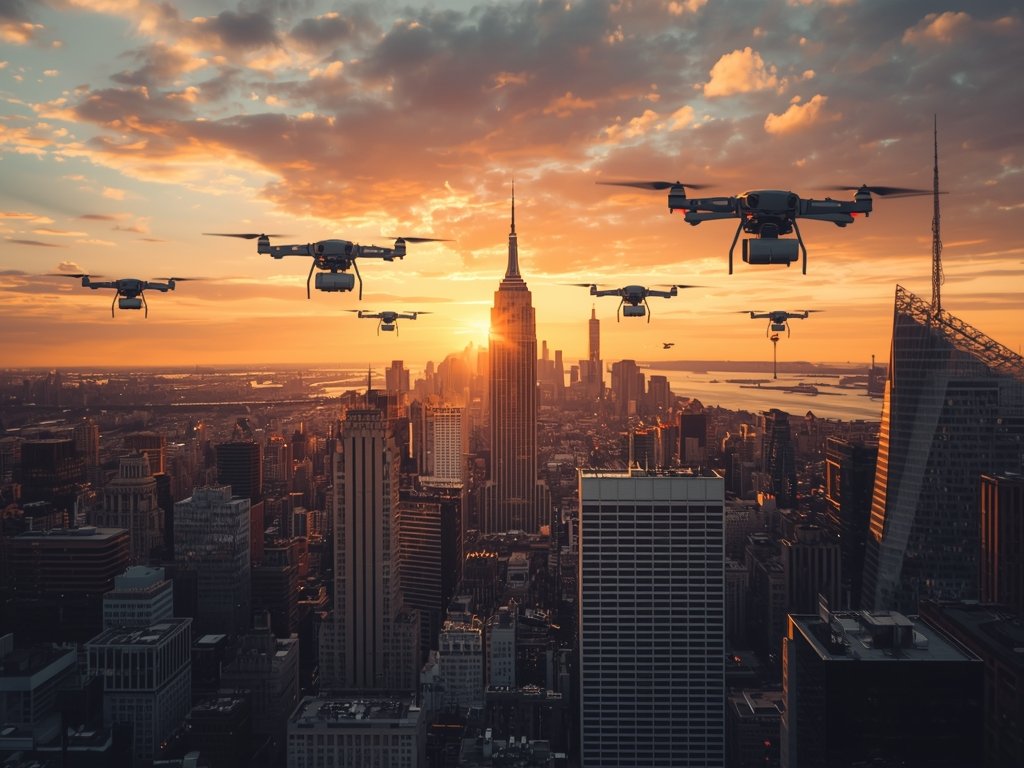
From Hollywood blockbusters to your neighbor’s backyard, drones have become an integral part of the American landscape. But beyond the recreational buzz, commercial drone technology is revolutionizing industries across the nation. These unmanned aerial vehicles (UAVs) are no longer just toys for enthusiasts; they’re powerful tools driving innovation, efficiency, and growth in sectors as diverse as agriculture, construction, and public safety.
Eyes in the Sky: Unlocking New Perspectives

One of the most significant advantages of commercial drones is their ability to provide unique, bird’s-eye perspectives. Equipped with advanced cameras and sensors, these devices can capture high-resolution imagery and collect valuable data from vantage points that were once inaccessible or prohibitively expensive.
In agriculture, for instance, drones are being used to monitor crop health, identify pest infestations, and optimize irrigation systems. By providing real-time insights, farmers can make data-driven decisions, increase yields, and reduce environmental impact. Similarly, in construction, drones are transforming site surveys, progress monitoring, and safety inspections, enabling project managers to identify potential issues early and keep operations running smoothly.
Precision Agriculture: Feeding a Growing Nation
As the world’s population continues to grow, the demand for food is increasing exponentially. In the United States, where agriculture is a cornerstone of the economy, farmers are turning to drone technology to meet this challenge. By leveraging UAVs, growers can:
- Monitor crop health and identify diseases before they spread
- Optimize fertilizer and pesticide application, reducing waste and environmental impact
- Conduct soil analysis and mapping, enabling precise planting and irrigation strategies
From the vast cornfields of the Midwest to the orchards of California, drones are helping American farmers work smarter, not harder, to feed a growing nation.
Building the Future: Drones in Construction and Infrastructure
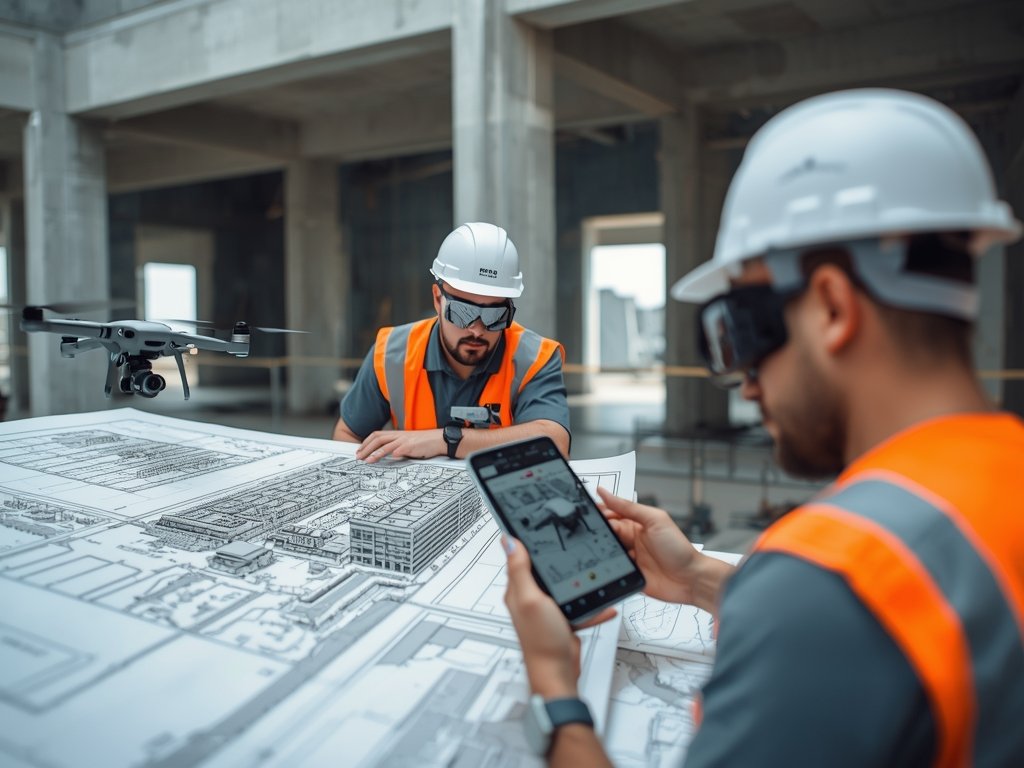
The construction industry is another sector experiencing a drone-driven revolution. With their ability to capture detailed imagery and generate 3D models, UAVs are transforming the way projects are planned, executed, and monitored.
Drones enable construction professionals to:
- Conduct site surveys and generate accurate topographic maps
- Monitor project progress and identify potential delays or issues
- Inspect hard-to-reach areas, such as rooftops and bridges, ensuring safety and compliance
By providing real-time data and insights, drones are helping construction companies reduce costs, improve efficiency, and deliver projects on time and within budget.
Infrastructure Inspection: Keeping America Moving
Beyond construction, drones are playing a critical role in maintaining the nation’s infrastructure. From bridges and highways to power lines and pipelines, UAVs are being used to inspect and monitor critical assets, ensuring their safety and reliability.
For example, in the aftermath of natural disasters like hurricanes or earthquakes, drones can rapidly assess damage and identify areas in need of repair. This enables emergency responders and utility companies to prioritize resources and restore services more quickly, minimizing disruption to communities and businesses.
Protecting Communities: Drones in Public Safety and Emergency Response
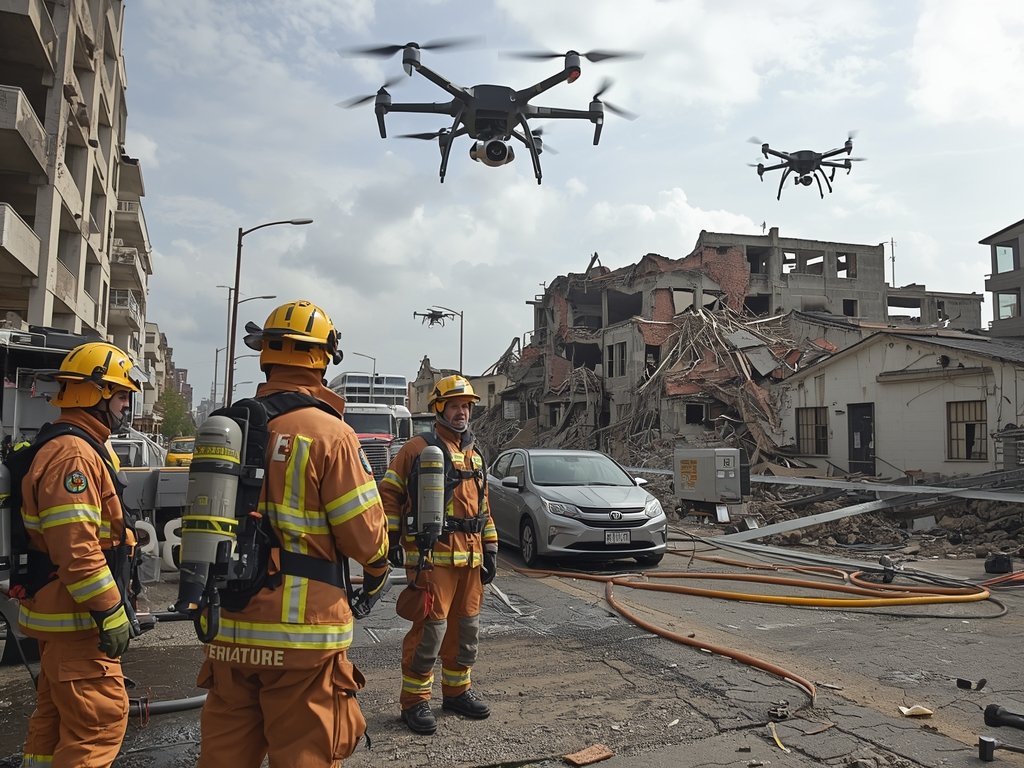
In the realm of public safety, drones are proving to be invaluable tools for emergency responders. From search and rescue operations to disaster response and crime scene investigation, UAVs are enhancing situational awareness and enabling faster, more effective decision-making.
Law enforcement agencies are using drones to:
- Conduct aerial surveillance and monitor large events or crowds
- Assist in search and rescue operations, locating missing persons or suspects
- Investigate crime scenes and gather evidence, reducing the risk to officers
Meanwhile, fire departments and emergency medical services are leveraging drones to assess disaster zones, deliver medical supplies, and provide real-time updates to incident commanders.
Disaster Response: Rapid Assessment and Recovery
In the wake of natural disasters, every minute counts. Drones are enabling emergency responders to rapidly assess damage, identify hazards, and locate survivors, even in the most challenging conditions. For example, after Hurricane Harvey devastated Houston in 2017, drones were used to survey flooded areas, assess structural damage, and guide rescue efforts.
By providing real-time data and imagery, UAVs are helping communities recover more quickly and efficiently, reducing the impact of disasters and saving lives.
Navigating the Skies: Regulations and Best Practices

As commercial drone technology continues to evolve, so too does the regulatory landscape. The Federal Aviation Administration (FAA) has established guidelines and requirements for UAV operations, ensuring safety and accountability in the national airspace.
To operate a drone commercially in the United States, pilots must:
- Obtain a Remote Pilot Certificate from the FAA
- Register their UAV with the FAA, if it weighs more than 0.55 pounds
- Follow all applicable federal, state, and local regulations
By adhering to these guidelines and best practices, businesses can harness the power of drone technology while minimizing risks and ensuring compliance.
Drone Pilot Training: Developing the Next Generation of Experts
As demand for drone services grows, so too does the need for skilled pilots and operators. Many organizations are investing in training programs and certifications, developing the next generation of experts who can safely and effectively operate UAVs in a variety of industries.
From online courses to hands-on workshops, these programs cover topics such as:
- Drone flight operations and maintenance
- Data collection and analysis techniques
- Regulatory compliance and safety best practices
By equipping professionals with the knowledge and skills they need, these initiatives are helping to drive innovation and growth in the commercial drone industry.
FAQ
What are the primary applications of commercial drones in the United States?
Commercial drones are used in various industries across the United States, including agriculture, construction, public safety, and infrastructure inspection. They provide unique perspectives, collect valuable data, and enhance efficiency in these sectors.
How are drones used in precision agriculture?
In precision agriculture, drones monitor crop health, identify diseases, optimize fertilizer and pesticide application, and conduct soil analysis. This data-driven approach helps farmers increase yields, reduce waste, and minimize environmental impact.
What role do drones play in disaster response and recovery?
Drones rapidly assess damage, identify hazards, and locate survivors in disaster zones. They provide real-time data and imagery, enabling emergency responders to prioritize resources, guide rescue efforts, and support community recovery.
What are the FAA requirements for commercial drone operations?
Commercial drone pilots must obtain a Remote Pilot Certificate, register their UAV (if over 0.55 pounds), and follow federal, state, and local regulations. Adherence to these guidelines ensures safe and compliant operations in the national airspace.
How can businesses ensure safe and effective drone operations?
Businesses should invest in drone pilot training, follow regulatory guidelines, and implement best practices for flight operations and data management. This comprehensive approach minimizes risks and maximizes the benefits of drone technology.
Join Our Pilot Community
Connect with fellow drone enthusiasts, share your aerial shots, and get access to free PDF ebook guides.