This guide’s original got its central legal claim wrong and missed the field’s defining development entirely. Wrong first: its FAQ stated police drones require warrants “in most cases.” They don’t — most police drone flights (responding to calls, documenting crash and crime scenes, searching for missing people, overwatch of public events) operate from public airspace over public places and need no warrant at all; the genuinely contested zone is narrower and specific, covered below. Missing second: Drone as First Responder (DFR) — aircraft launching from station rooftops to 911 calls, streaming the scene before officers arrive — is how modern police drone programs are actually built, and it appeared nowhere in the original text. What follows is the operations guide with the law stated carefully and the models named.

The Two Aviation Paths (the Original Named One)
An agency flies under one of two FAA frameworks, and the choice shapes everything. Part 107 — the same rules as commercial operators: certificated remote pilots, visual line of sight, standard airspace authorizations; simplest to start, and what most small programs use. Public aircraft operations under a Certificate of Authorization (COA) — the agency operates as a public aircraft operator under Part 91 with FAA-approved provisions, which is the framework that can carry tactical beyond-visual-line-of-sight approvals for DFR within defined areas. Layered on top: emergency SGI (Special Governmental Interest) authorizations for disaster airspace, night operations under the current rules, and Remote ID compliance either way. Our privacy-laws guide covers the citizen-side statutes; the operational home base is faa.gov/uas.

What Police Drones Actually Do, Ranked by Reality
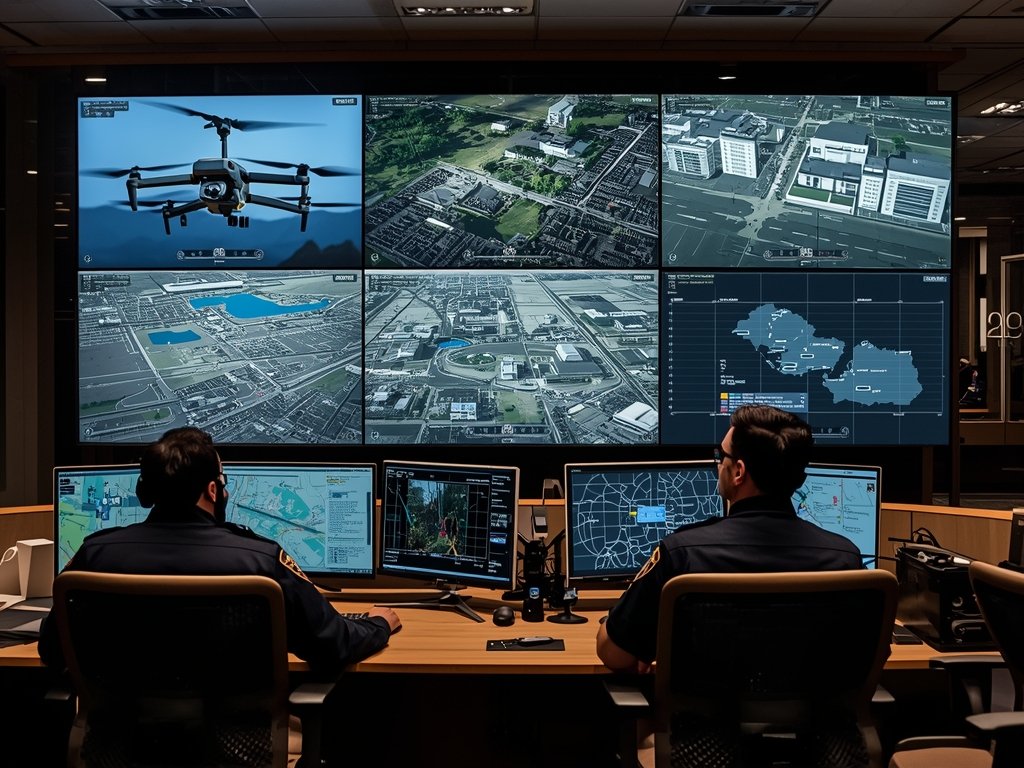
Drone as First Responder — the model program is Chula Vista, California (operating since 2018–19 under FAA BVLOS approvals): drones launch from rooftops to priority calls, arrive in roughly a couple of minutes on average, and stream live video to responding officers and dispatchers — clearing false alarms, sizing scenes, and tracking suspects from above, often resolving calls before patrol arrives. The staffing model matters: a teleoperator/pilot operation, integrated with dispatch — the technology our drone-in-a-box analysis covers from the automation side. Search and rescue — thermal-equipped aircraft finding missing children, hikers, and dementia walk-aways (doctrine in our SAR guide). Scene documentation — crash reconstruction and crime-scene photogrammetry that clears roads faster and preserves scenes measurably. Tactical overwatch — barricades, warrants service, perimeter containment, where the drone takes the risk a helicopter or an officer’s eyes would. Disaster and hazmat standoff assessment — the thermal/fire-service overlap in our firefighting guide. Note what’s absent from the honest list: routine patrol surveillance of neighborhoods — the use case the public fears most is the one legitimate programs are structured not to do.
The Warrant Question, Answered Properly
The framework has three layers. Federal constitutional baseline: observing what is exposed to public view from public airspace has generally not been treated as a Fourth Amendment “search”; the Supreme Court’s older aerial-surveillance cases involved manned aircraft, and no definitive Supreme Court drone ruling exists — honest guides say so. The pressure points are the curtilage of the home (the doctrine behind Florida v. Jardines, though that case involved physical intrusion with a drug dog) and prolonged, targeted tracking (the logic of Carpenter on long-term digital records) — sustained surveillance of a specific home is where lawyers, and some lower courts and legislatures, draw lines. State law: many states have enacted drone-specific surveillance statutes (Florida’s Freedom from Unwarranted Surveillance Act is the named example) that restrict using drones to record individuals or private property in violation of reasonable expectations of privacy, with law-enforcement exceptions often keyed to warrants, emergencies, or specific missions. Department policy: the layer citizens actually experience — mission-limited flight purposes, retention limits, audit logs. So the correct short answer: routine incident flights — no warrant; deliberate prolonged surveillance of a home or person — warrant territory under state law, policy, and emerging doctrine. The citizen-side view is our guide to drone privacy rights.
Training and Staffing: The Program Behind the Pilot
Qualification is a system, not a certificate. Mature programs layer: the FAA credential (Part 107 or COA checkout); agency mission training (scene documentation standards, tactical integration, thermal search technique); recurrent proficiency and night currency; and — uniquely police — evidence discipline: chain of custody for imagery, discovery obligations, and testimony readiness, because drone footage becomes court record. DFR adds its own specialty: teleoperators working inside dispatch, prioritizing calls, narrating scenes to responding units, and knowing when the drone should stand down (weather, airspace conflicts, a helicopter entering the call). Programs budget for attrition and training pipelines the way they budget for aircraft; a two-pilot program is a schedule, not a capability.

Privacy by Design — and the Procurement Reality
Programs that survive public scrutiny share a pattern: a published policy naming permitted missions; flight-log transparency (several DFR programs publish public dashboards of flights and purposes); short data-retention defaults for non-evidentiary footage; audit trails tying every flight to a call or case number; and restraint on contested tech — the original anticipated facial recognition as a natural upgrade; in reality it is restricted or banned for many agencies and is a policy decision for legislatures, not a feature rollout. Procurement has its own hard constraint the original missed: NDAA compliance and state approved-drone lists — Florida’s rule famously required agencies to retire Chinese-made fleets (grounding DJI aircraft) in favor of approved manufacturers, a budget shock that reshaped many programs’ hangars overnight. Any 2026 operations guide that doesn’t mention where the aircraft may legally be bought from is out of date.
Failure Modes: How Programs Get Paused
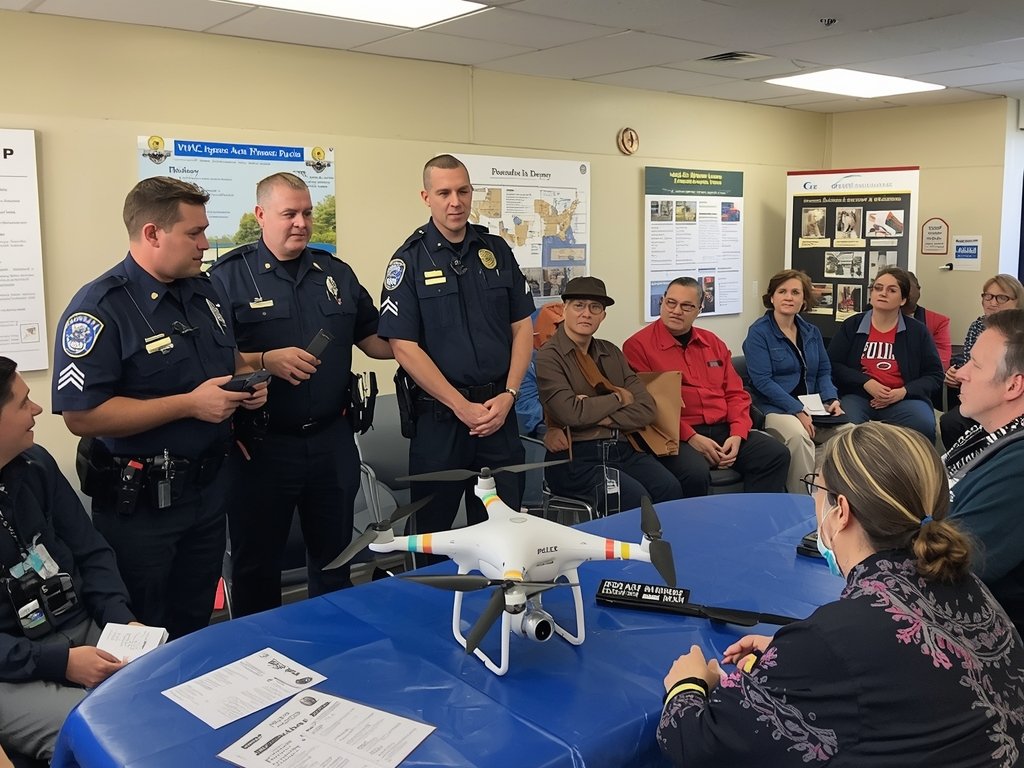
The post-mortems rhyme. Programs stumble by launching without a published policy and meeting their public at a hostile council hearing; by mission creep — aircraft bought for search and rescue appearing over protests, converting a rescue asset into a surveillance controversy; by data surprises, when retention practices surface in records requests that contradict earlier assurances; and by procurement shocks, when an approved-manufacturer rule grounds a fleet the budget can’t replace. None of these are aviation failures. The counter-pattern is equally consistent: publish the policy first, tie every flight to a call, release the flight data routinely, and let the rescue stories — documented, with case numbers — make the argument. Community engagement in the original was framed as public relations; in practice it is the program’s operating license, renewed continuously or revoked.
Budgets deserve the same honesty. A basic Part 107 unit can start with aircraft costing a few thousand dollars each — and that is where the cheap part ends. A DFR program adds rooftop docks or launch systems, detect-and-avoid provisions, dispatch integration, software subscriptions, teleoperator staffing across shifts, and the data platform — a six-to-seven-figure annual commitment at city scale, typically justified against helicopter flight hours (hundreds to thousands of dollars per hour) and response-time gains. Grant funding starts many programs (federal and state public-safety grants), but sustainment — batteries, replacements under the approved-manufacturer list, training hours — is the budget line that decides year three.
FAQ
What are the primary uses of police drones?
Drone as First Responder response to 911 calls; search and rescue; crash and crime scene documentation; tactical overwatch of high-risk incidents; disaster and hazmat assessment. Routine neighborhood patrol surveillance is not a standard legitimate mission — programs are structured around dispatched incidents.
Do police drones require a warrant to conduct surveillance?
Not for most operations: flights responding to incidents, over public places, or documenting scenes generally need no warrant. Prolonged, targeted surveillance of a home or individual is the exception zone — restricted by many state drone-surveillance statutes, department policy, and emerging Fourth Amendment doctrine. The honest answer is mission-dependent, not “usually yes” or “never.”
How do police departments ensure drone pilots are qualified?
Two paths: Part 107 remote pilot certificates (the commercial standard) for programs flying under civil rules, or agency training and checkouts under a public-aircraft COA for government operations — in both cases layered with department mission training, and for DFR, teleoperator procedures integrated with dispatch.
What measures are in place to protect citizen privacy during drone operations?
Published mission policies, flight logs tied to calls/cases, public flight dashboards (in leading programs), short retention for non-evidentiary footage, audit trails, and state surveillance statutes. Facial recognition is restricted or banned for many agencies rather than standard equipment.
Can police drones be used for traffic enforcement?
For traffic work, yes — crash reconstruction, scene measurement, and monitoring traffic conditions. Writing moving-violation tickets from drones is not standard practice and automated-enforcement authority varies by state; the drone’s traffic role today is documentation and safety, not ticketing.
A police drone program is a legal instrument that happens to fly: the agencies that thrive chose their FAA path deliberately, answered the warrant question precisely, and published their data before they were asked.
Join Our Pilot Community
Connect with fellow drone enthusiasts, share your aerial shots, and get access to free PDF ebook guides.