The Sky’s the Limit: Unmanned Aerial Vehicles Take Flight in Global Defense
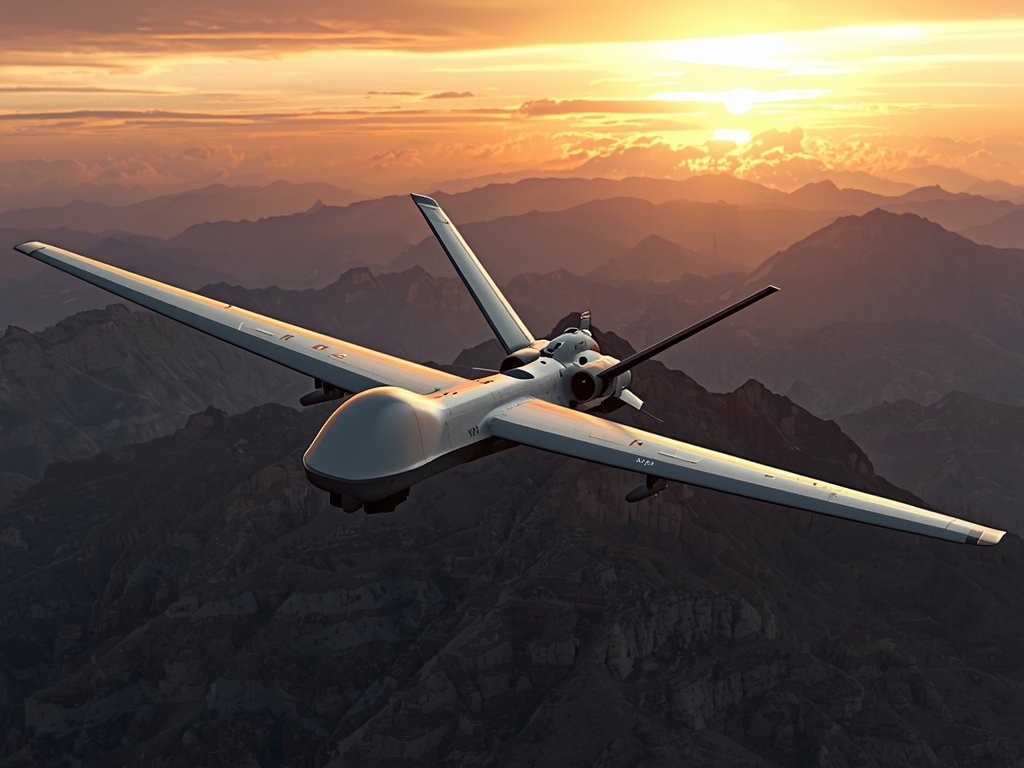
The global military drone market is experiencing unprecedented growth, driven by the increasing demand for advanced surveillance, reconnaissance, and combat capabilities. As nations around the world prioritize defense modernization, unmanned aerial vehicles (UAVs) have become a critical component of modern warfare. In the United States, the Department of Defense (DoD) has been at the forefront of drone technology, investing heavily in research, development, and procurement.
With the rise of asymmetric threats and the need for precision strikes, military drones have proven to be a game-changer. From the battlefields of Afghanistan to the skies over the South China Sea, these versatile platforms have demonstrated their effectiveness in a wide range of missions. As the market continues to evolve, it’s essential to understand the key trends, drivers, and challenges shaping the global military drone landscape.
A Bird’s-Eye View: Market Size and Growth Projections
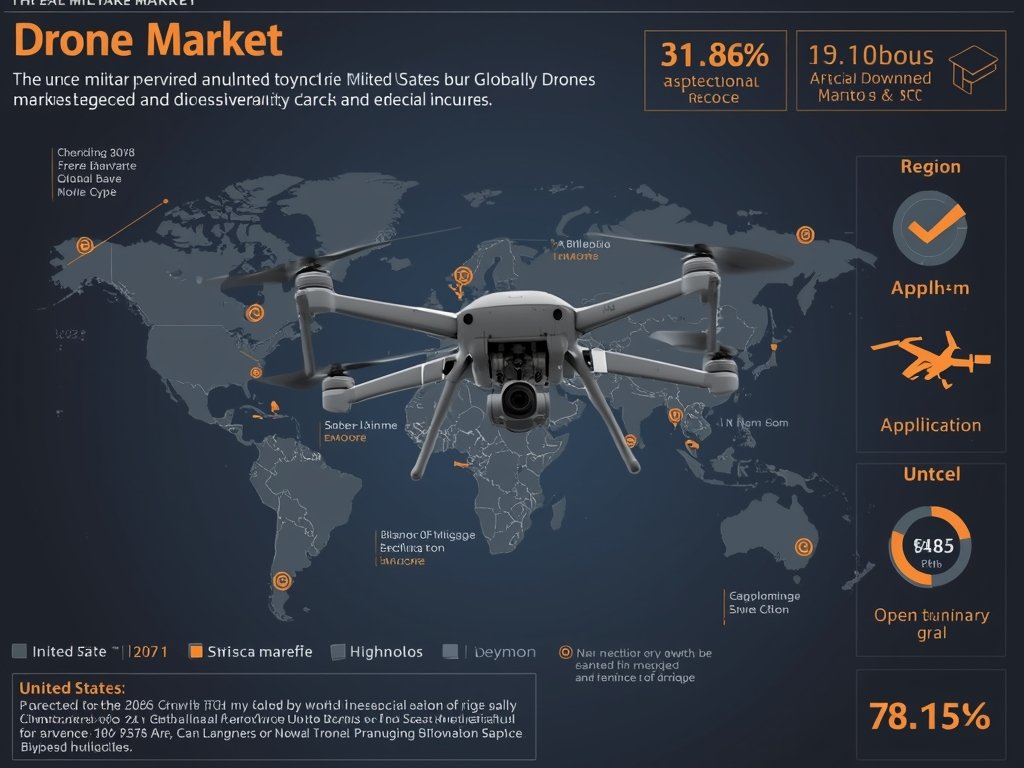
The global military drone market is projected to reach new heights in the coming years, with a compound annual growth rate (CAGR) of over 8% from 2023 to 2030. North America, led by the United States, is expected to maintain its dominant position, accounting for more than 40% of the market share. The U.S. military’s extensive use of drones in combat operations, intelligence gathering, and border surveillance has been a major driver of this growth.
According to recent reports, the U.S. DoD allocated over $10 billion to drone-related programs in 2022, highlighting the country’s commitment to maintaining its technological edge. As other nations follow suit, the global market is poised for significant expansion, with Asia-Pacific and Europe emerging as key growth regions. The increasing adoption of drones for maritime surveillance, counter-insurgency operations, and disaster response is expected to fuel demand across various sectors.
Drone Dynamics: Key Players and Technological Advancements
Major Players in the U.S. Market
The U.S. military drone market is dominated by established players such as General Atomics, Northrop Grumman, and Lockheed Martin. These companies have been instrumental in developing cutting-edge UAVs like the MQ-9 Reaper, RQ-4 Global Hawk, and MQ-1C Gray Eagle. Their expertise in aerospace engineering, systems integration, and software development has enabled the U.S. military to maintain its technological superiority.
In recent years, smaller firms and startups have also entered the market, bringing innovative solutions and disrupting traditional business models. Companies like Skydio, Shield AI, and Anduril Industries are leveraging advances in artificial intelligence, machine learning, and autonomous systems to develop next-generation drones tailored to specific mission requirements.
Technological Innovations and Trends
The global military drone market is characterized by rapid technological advancements, with a focus on improving endurance, payload capacity, and situational awareness. Key trends include the development of stealth drones, swarm technology, and advanced sensor suites. The integration of artificial intelligence and machine learning algorithms is enabling drones to operate more autonomously, making them ideal for complex missions in contested environments.
Another significant trend is the increasing use of drones for electronic warfare, signals intelligence, and cyber operations. As the U.S. military seeks to maintain its edge in the electromagnetic spectrum, drones equipped with advanced electronic warfare payloads are becoming essential tools for disrupting adversary communications and gathering critical intelligence.
Navigating the Regulatory Landscape: Challenges and Opportunities

The global military drone market is subject to a complex web of regulations, export controls, and international agreements. In the United States, the Federal Aviation Administration (FAA) and the DoD work closely to ensure the safe and responsible integration of drones into national airspace. However, the lack of standardized regulations across countries poses challenges for manufacturers and operators seeking to expand their global footprint.
Export control regimes, such as the Missile Technology Control Regime (MTCR) and the Wassenaar Arrangement, impose restrictions on the transfer of drone technology to certain countries. These regulations aim to prevent the proliferation of advanced military capabilities but can also hinder legitimate commercial and defense cooperation. As the market continues to grow, there is a need for greater international coordination and harmonization of drone regulations.
Use Cases and Applications: Drones in Action

Surveillance and Reconnaissance
Military drones have revolutionized surveillance and reconnaissance operations, providing real-time intelligence, situational awareness, and target acquisition. In the United States, drones like the RQ-4 Global Hawk and MQ-9 Reaper have been extensively used for border patrol, counter-narcotics operations, and disaster response. Their ability to operate at high altitudes, cover vast areas, and transmit high-resolution imagery has made them indispensable tools for law enforcement and defense agencies.
The use of drones for maritime surveillance has also gained traction, with the U.S. Navy and Coast Guard deploying UAVs to monitor shipping lanes, detect illegal activities, and support search and rescue operations. As the demand for persistent surveillance grows, drones equipped with advanced sensors and communication systems are expected to play an increasingly important role.
Combat Operations and Strike Capabilities
Drones have become a cornerstone of modern combat operations, enabling precision strikes, close air support, and targeted killings. The U.S. military’s use of armed drones in Afghanistan, Iraq, and other conflict zones has demonstrated their effectiveness in neutralizing high-value targets while minimizing collateral damage. However, the ethical and legal implications of drone strikes remain a subject of debate, with concerns about transparency, accountability, and the potential for unintended consequences.
As drone technology continues to evolve, we can expect to see the development of more advanced weapons systems, including directed energy weapons, electronic warfare payloads, and swarm-enabled strike capabilities. The integration of drones into joint all-domain operations (JADO) will further enhance their role in multi-domain warfare, enabling seamless coordination across air, land, sea, space, and cyberspace.
The Future of Flight: Emerging Trends and Forecasts
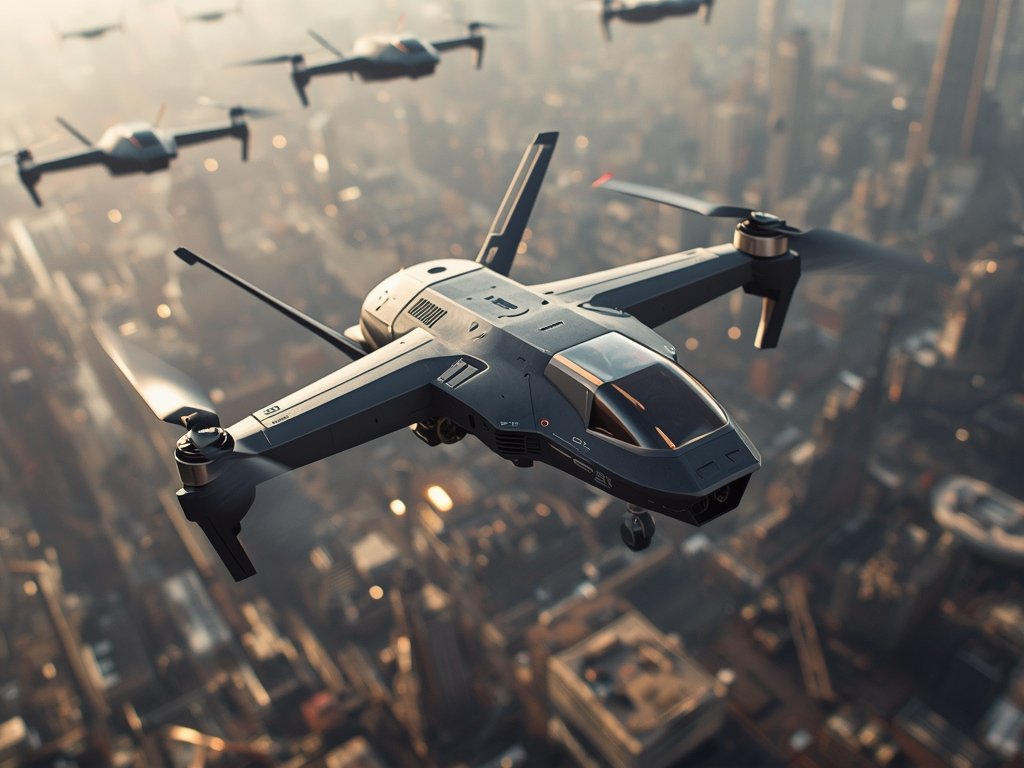
The global military drone market is poised for continued growth and innovation, driven by emerging trends such as autonomous systems, swarm technology, and hypersonic drones. As the U.S. military pursues its vision of a more agile, networked, and lethal force, drones will play an increasingly important role in achieving strategic objectives.
The development of autonomous drones, capable of operating without human intervention, is expected to revolutionize military operations. These systems will enable faster decision-making, improved situational awareness, and enhanced mission effectiveness. However, the integration of autonomous drones into existing command and control structures will require significant investments in training, infrastructure, and policy development.
Another key trend is the rise of drone swarm technology, which involves the coordinated operation of multiple drones to achieve a common objective. Swarm-enabled drones can overwhelm adversary defenses, provide redundant capabilities, and enhance overall mission resilience. As the U.S. military explores the potential of swarm technology, we can expect to see the development of new tactics, techniques, and procedures for employing these systems in combat.
FAQ
What is the current size of the global military drone market?
The global military drone market is projected to reach over $15 billion by 2025, driven by increasing demand for advanced surveillance, reconnaissance, and combat capabilities.
Which countries are leading the adoption of military drones?
The United States, China, Israel, and the United Kingdom are among the top adopters of military drones, with significant investments in research, development, and procurement.
What are the key applications of military drones?
Military drones are used for a wide range of applications, including surveillance, reconnaissance, combat operations, electronic warfare, and humanitarian assistance.
How are regulations impacting the global military drone market?
Regulations, export controls, and international agreements are shaping the global military drone market, with varying levels of restriction and coordination across countries.
What is the future of military drone technology?
The future of military drone technology is expected to be driven by advances in autonomous systems, swarm technology, and hypersonic capabilities, enabling more agile, networked, and lethal operations.
Your definitive resource for drone technology. From expert reviews of the latest DJI models to professional Part 107 flight training and industry regulations