
The Sky’s the Limit: Drones Take Over Skyscraper Cleaning

Imagine a world where the daredevil window washers, dangling from skyscrapers, become a thing of the past. A new era of building maintenance is upon us, and it’s taking to the skies. Giant drones, equipped with advanced cleaning technology, are revolutionizing the way we maintain our towering urban landscapes. This innovative approach not only ensures spotless exteriors but also prioritizes safety and efficiency, marking a significant shift in the industry.
A Bird’s-Eye View of the Problem

For decades, window washing has been a high-risk job, requiring workers to brave extreme heights and unpredictable weather conditions. The traditional methods, while effective, pose significant safety concerns. According to the Bureau of Labor Statistics, window cleaning has one of the highest fatal injury rates in the US, with falls being the leading cause.
The physical demands of the job are immense, and the work is often time-consuming, especially for larger buildings. As cities continue to reach for the sky with architectural marvels, the need for a safer, more efficient solution has become increasingly apparent.
The Rise of Drone Technology
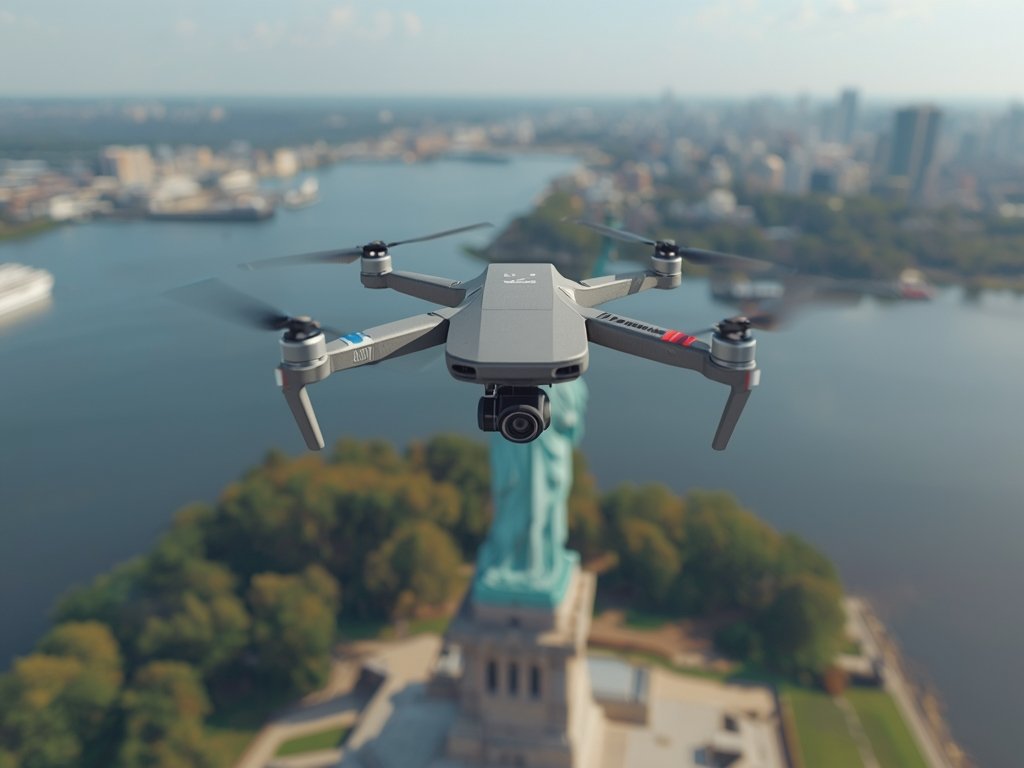
Enter the world of unmanned aerial vehicles (UAVs), commonly known as drones. What started as a hobbyist’s toy has evolved into a powerful tool with countless applications. Drones have already made their mark in various industries, from filmmaking to agriculture, and now they’re set to transform the way we clean our skyscrapers.
These flying machines offer a unique perspective and unparalleled maneuverability, making them ideal for tasks that were once considered too dangerous or difficult for humans. With advancements in technology, drones are becoming more sophisticated, capable of carrying heavier payloads and performing complex tasks with precision.
Meet the Skyscraper Cleaners of the Future
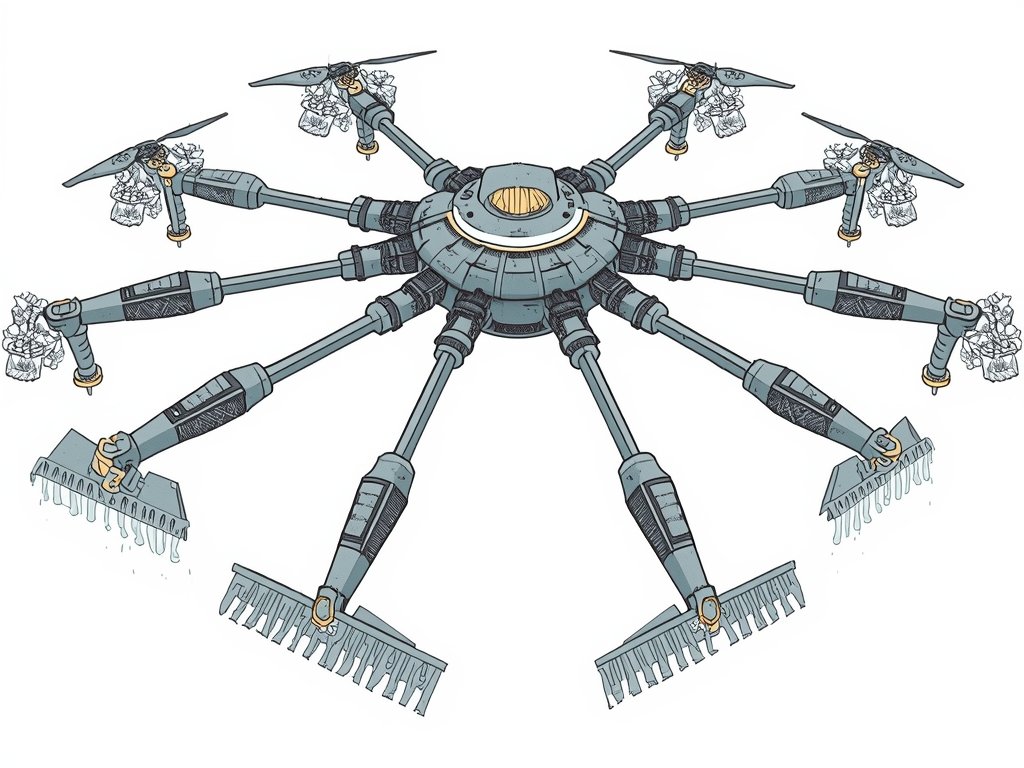
The drones designed for skyscraper cleaning are a far cry from the small, recreational models. These are industrial-grade machines, built to handle the demands of high-rise maintenance. Equipped with an array of cleaning tools, they can tackle dirt, grime, and even stubborn stains with ease.
Here’s a breakdown of their impressive features:
- Size and Power: These drones are significantly larger than their consumer counterparts, with powerful motors to support their size and the weight of cleaning equipment.
- Cleaning Arsenal: They boast an array of tools, including high-pressure water jets, specialized brushes, and advanced cleaning solutions, ensuring a thorough clean.
- Precision Navigation: Advanced GPS and sensor systems allow them to navigate complex urban environments, avoiding obstacles and maintaining stability even in windy conditions.
- Safety Features: Redundancy is key. Multiple rotors and fail-safe mechanisms ensure that these drones can handle emergencies, preventing crashes and potential damage.
A Day in the Life of a Drone Operator
Behind every successful drone mission is a skilled operator. These professionals undergo extensive training to master the art of drone control and maintenance. A typical day involves pre-flight checks, mission planning, and real-time monitoring of the drone’s performance.
Operators work in teams, ensuring constant communication and quick response times. They analyze weather conditions, plan flight paths, and coordinate with building management to ensure a smooth and safe cleaning process. It’s a high-tech, high-stakes job that requires a unique blend of technical skills and situational awareness.
Benefits Beyond the Shine
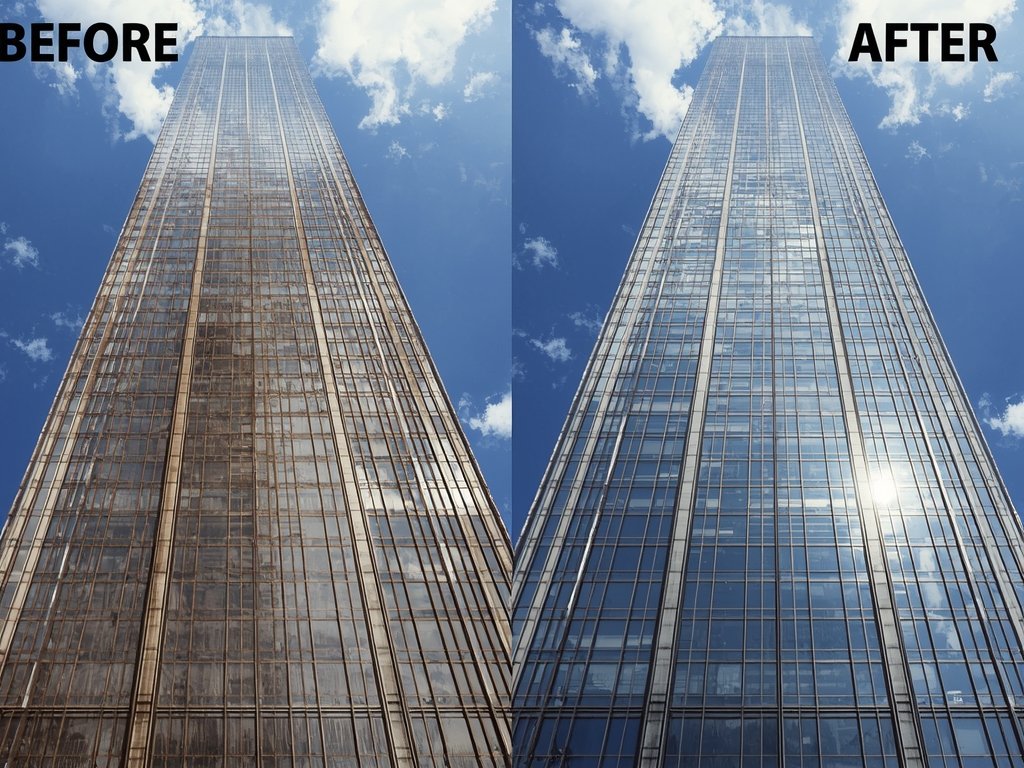
The introduction of drones in skyscraper cleaning brings a multitude of advantages, impacting not just the buildings but also the people and environment around them.
Safety First
The most significant benefit is the reduction in risk for workers. By removing the need for humans to scale buildings, we eliminate the dangers associated with traditional window washing. This shift can potentially save lives and reduce the physical toll on workers, making the industry more sustainable in the long term.
Efficiency and Cost-Effectiveness
Drones can cover large areas quickly, reducing the time required for cleaning. Their precision and maneuverability mean less water and cleaning solution waste, making the process more environmentally friendly. Additionally, the reduced need for scaffolding and other traditional equipment can lead to significant cost savings for building owners.
Accessibility and Reach
These flying cleaners can access hard-to-reach areas with ease, ensuring a consistent clean across the entire building. No more missed spots or uneven cleaning. Drones can navigate around architectural features and obstacles, providing a comprehensive solution for even the most complex structures.
The Human Touch: A New Role for Window Washers
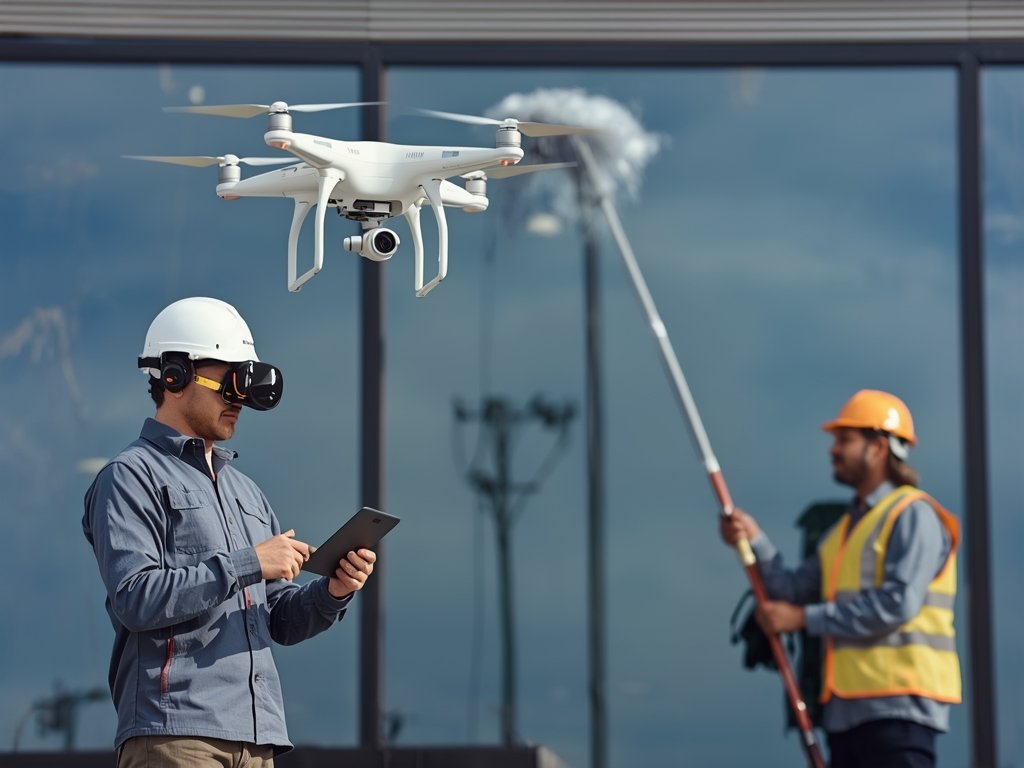
As drones take over the physical task of cleaning, the role of window washers evolves. These experienced professionals become supervisors and technicians, ensuring the drones perform optimally. Their expertise is invaluable in maintaining the equipment and troubleshooting any issues that may arise.
This transition allows workers to leverage their skills in a safer environment, contributing to the development and improvement of drone technology. It’s a testament to the industry’s adaptability and the potential for human-machine collaboration.
Training and Education
The shift towards drone-based cleaning creates a demand for specialized training programs. Educational institutions and industry leaders are developing courses to equip workers with the necessary skills. These programs cover drone operation, maintenance, and safety protocols, ensuring a smooth transition into this new era of building maintenance.
The Future of Urban Maintenance

The adoption of drone technology for skyscraper cleaning is just the beginning. As cities continue to grow vertically, the applications of drones in urban maintenance are endless. From inspection and repair to security and emergency response, these aerial vehicles are set to become an integral part of our urban infrastructure.
Imagine a city where drones work in harmony with humans, ensuring our buildings are not just clean but also safe and well-maintained. This vision is not far from reality, and it’s an exciting prospect for both the industry and the public.
FAQ
How do these drones navigate around obstacles?
Advanced drones use a combination of GPS, cameras, and sensors to create a real-time map of their surroundings. This allows them to detect and avoid obstacles, ensuring a safe and efficient cleaning path.
Are these drones affected by weather conditions?
While drones can operate in various weather conditions, strong winds and heavy rain may impact their performance. Operators carefully monitor weather forecasts and plan missions accordingly to ensure safety and optimal results.
What happens if a drone malfunctions during a mission?
Drones are equipped with fail-safe mechanisms. In the event of a malfunction, they can automatically return to a safe landing zone or be manually guided back by the operator. Regular maintenance and pre-flight checks minimize the risk of such incidents.
How do drones contribute to environmental sustainability?
Drone cleaning reduces water and chemical usage compared to traditional methods. Their precision application means less waste, and their efficiency leads to lower energy consumption overall, making them a greener choice for building maintenance.
Can drones clean at night?
Yes, drones can operate at night, equipped with powerful lights to illuminate their work area. Night-time cleaning can be advantageous, causing less disruption to building occupants and taking advantage of cooler temperatures.
Join Our Pilot Community
Connect with fellow drone enthusiasts, share your aerial shots, and get access to free PDF ebook guides.